Designation: PET5374
English name: Cyprinus carpio
National origin: China
Epidemic: pox, skin, skin inflammation, etc.
Life: a brief description of the 70-carved species
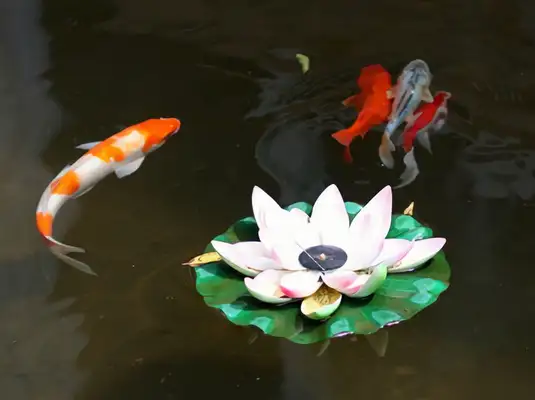
Carp, also known as Cyprinus carpio. And it's not very difficult to raise the walls.
Gate: Pipeline gate
Platform: irradiated fin fisheries
IM: Wall
Two words: Cyprinus carpio
Crawling: Carp
communities; animals
Amen: vertebrate Amen.
APOA: Apocalyptic fins
Section: Wallwork
The walls are the outer features of the walls.
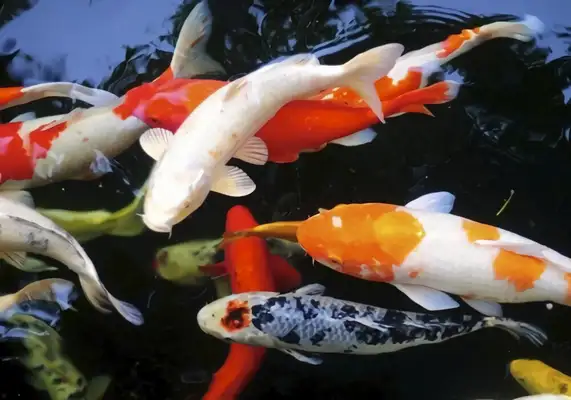
There's a lot of breeds that have been bred by people, and there's a lot of names for "live stones in water," "swam art," so how many colors are there? Let me give you a brief introduction.
Carpfish are highly valued fish, a very large branch with many different species. The carp is very beautiful and complex. Classified by colour stripes, mainly monochrome, bicolour and trichrome. Among them, the real walls are red and white, red and fresh, white and bright.
Some of the walls are pure, thick and oily. In red and white, for example, the red white of the big sun system, with oranges in red, appears relatively bright, while the red white of the cactus system is thicker and darker and darker.
On the basis of the colour of the walls, the walls were divided into red and white, big and bright, Zhao and Zhao, other light, light yellow and autumn, gold, skin-skind walls, gold and silver, Dantops, etc. But as a wall, color is a very important focus of appreciation. The quality of the reverse watch color is also an important criterion for the appreciation of quality walls. What's the point?
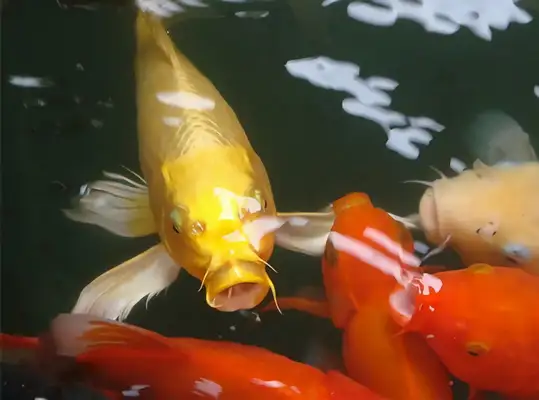
Although the walls are not so demanding in terms of water quality as they are not difficult to raise, they are important to keep their culture alive and bright.
First, the temperature and quality of water are less stringent than those of goldfish, and the water level of life is 2-30 degrees Celsius. While environmentally adaptable, there are weaknesses that are resistant to sudden changes in water temperature, such as prolonged artificial feeding, water ups and downs of 2 to 3 degrees Celsius, fish are vulnerable to disease when temperatures fall or rises by more than 2 to 3 degrees Celsius, and when temperature rises to 7 to 8 degrees Celsius, fish fall under the bottom of the water, die even immediately if the temperature mutation is greater, and the water most suitable for life is 20 to 25 degrees Celsius. In this temperature, fish are active, hungry, healthy and colourful. Controlling the most desirable water temperature allows fish to grow quickly and in a comfortable environment. Since the gold wall lives in water by absorbing oxygen soluble in the water, producing energy from the trophication of the food that is delivered to the fish and absorbed to sustain life, the availability of sufficient oxygen in the water is the key to good fish, requiring 35 mg/L per hour of water temperature at 5-6°C, thus demonstrating higher water temperatures and greater oxygen consumption.
2. New tanks or ponds should be careful to change more water each day, and if the water is better fed, it can be changed twice a week.
Third, care is taken every day to observe the state of the fish and to consider whether the fish is ill if they do not eat or are lying on the ground.
iv. When moving fish, the Fountainnet is commonly used. It is not easy to cause damage to fish.
v. When fish are seen rubbing, they usually have parasites and can be considered for insecticidal.
VI. If water is seen to have been mixed, it should be considered whether there is a problem with the filtering system.
7. When the fish are ill, do not rush isolation. If isolation is required, there should be a fully filtration system.
8. Do not buy fish from different fisheries in large quantities over a period of time to prevent cross-infection.
9. The family should prepare common medicines such as salt, Japanese yellow powder, potassium permanganate, antibiotics and insecticides.
When buying fish, account is taken of the size of their water bodies and the efficiency of their filtration systems, and fish density is not too high.
Eleven, how to keep the walls bright.
1. Maintenance of clean water breeding
Elimination of nitrites in water as far as possible; enhancement of biofiltration and maintenance of pure water quality for rearing, possibly by daily discharge of bottom water from fish tanks or ponds with fresh water that passes through violent oxygen; enhancement of the aerobics of water rearing and increased air circulation in the rearing environment; maintenance of softness of water rearing; complete removal of iron from water; and appropriate increase in the feeding of calcium.
2. How to make red spots shine
To keep water between 7.0 and 7.2, coral sands or oyster shells can be placed in filtration tanks or water circuits; appropriate amounts increase feed feeding with natural carrots.
Three. How to keep the black spots thick.
Maintaining relatively low water temperature and slightly lower than PH than 7.2; reducing the direct exposure of the walls to sunlight; reducing the feeding of fat-bearing feed, which reduces the excretion of the walls; and increasing the hardness of water rearing during a given period by increasing the appropriate hardness and then using the original hardness to enhance the ink of the black slab. Carved environment
What are the requirements for raising the walls, which are less demanding in terms of water quality, diet, easy to reproduce, healthy, colourful and able to live 60-70 years? Newly constructed cement fish pools are to be removed from the alkalin base on the wall before being used. The alkaline route is used to fill the pool with 0.25% phosphate solution, so long as it is immersed for one to two days, before washing the wall with water. I'll give you something to eat.
Although it is a groceries fish, it is important to be careful about feeding, not to feed anything blindly, to feed it with anything that will ensure its color is not lost, and to keep it healthy. The editor will tell you how to select feed for the wall and how to feed it. As we always go to supermarkets to buy rice in our daily lives, we have to choose the best colours, the noose-free, and the taste of fish, in addition to the smell of fish.