Designation: PET3113
English name: Red and white Bubble-eye
National origin: China
Vulnerability to diseases: albino disease, rotting tail disease
Life: Overview of flower bubble varieties 3-5 years
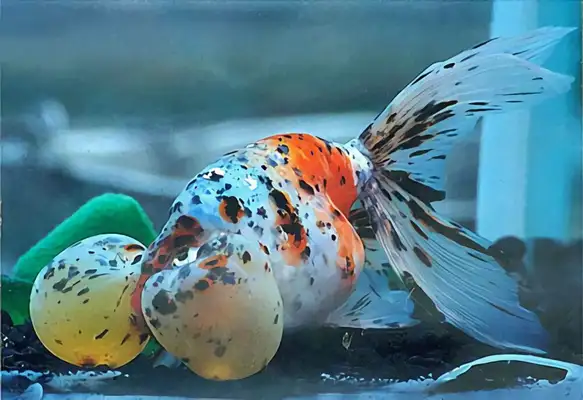
Flower bubbles are a species of goldfish, and the colour of our well-known blisters is very rich, and the blisters are embedded in red and white. As with other goldfish, the breeding of flower bubbles is less difficult than that of other goldfish, with attention to such issues as feeding and the environment.
English name: Red and white Bubble-eye
Type: Goldfish, temperate freshwater fish
Origin: China
Reproduction: Eggs
Water quality: PH 7.2 ~ 7.5
difficulty of raising: easy
Fits to water temperature: 10-30°C flower bubbles
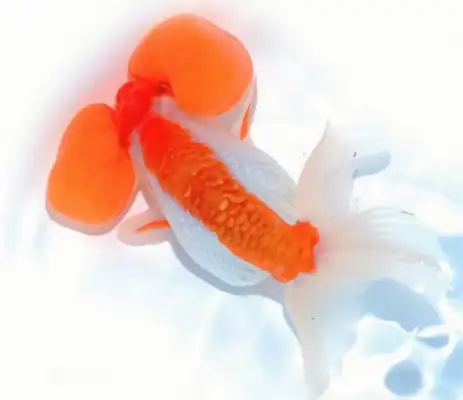
Bubbles belong to the goldfish species, which are well known, while bubbles are superior to red and white. Plumbing not only pays attention to the size of the bubble, but also to its color in order to identify the good bubbles.
The flower bubbles have a soft and hard slab. Soft scales are transparent scales, separated mostly from goldfish; hard scales are normal scales. The species is clearly red and white, with a round, left and right symmetry of the water under the eyeball, clear internal fluid, smooth back of the body and swinging like two colour balls in the water. Plumbing environment
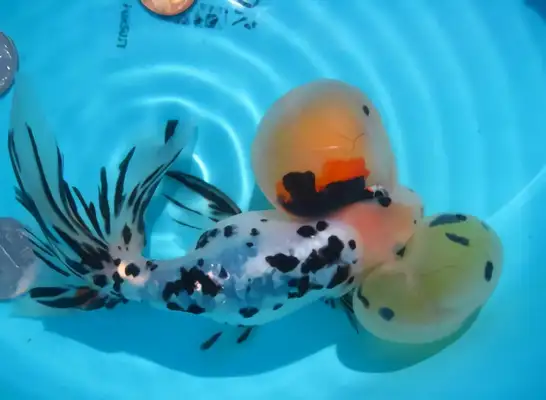
Plumbing requires special attention to their water bubbles, which, because they are particularly weak and when broken, not only reduce their value, but also lead to death. Care must be taken not to cause bubbles to break because of problems in the external environment.
The currents need to ease the flow of their feed, which can directly affect the size and symmetry of the flower bubble. In addition, attention must be paid to the regulation of the hardness of water quality in order to ensure the elasticity of the bubbles. The water body needs to be relaxed so that the pollen-eye goldfish live in a loose water body. The water depth is controlled at about 15 cm in order to avoid excessive pressure from the water on the bubbles and inhibit their increase. Plumbeye goldfish require higher levels of dissolved oxygen in the water body, are less resistant to low oxygen, and are prone to abscess or goldfish death in low oxygen. Plumb feeding points
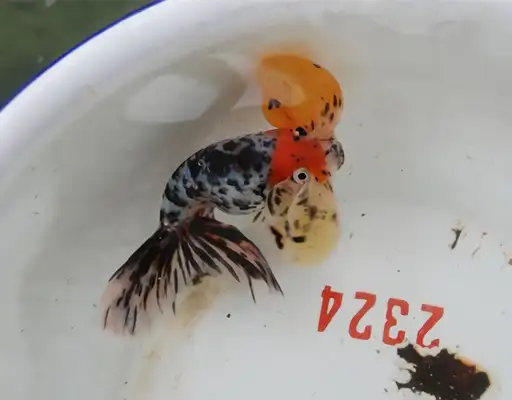
Plumbs are raised not only for the setting of the breeding environment, but also for science. How can the right feeding make flower bubbles healthier and more beautiful? Let me tell you something.
The methods used for raising pollen goldfish of all ages vary. In the case of juvenile fish in the same year, the use of low-eating feeding feeding methods to maintain a saturation ratio of 78 per cent, and the increase in the amount of young fish feeding motors contribute to the development of robust motor power. After the age of June, the feeding rate is gradually increased to promote physical strength. The following year, the use of live baits to enhance feed nutrition and the static “towns” of water contributed to the further development of flower bubbles. For over three years of age, bubbles are large, can hardly move, and food is difficult to find. Feeding should take into account the food convenience of fish, feed fleas or micro-particle feed, and take care of oxygen soluble in water to avoid “suffocation” and cause aerobic mortality in fish.