No.: PET5490
English name: Crownedrinerturtle
Character: lively
Origin: Pakistan, Bangladesh, India, Nepal
Vulnerability to disease: decomposition
Life: An overview of the species of crownback turtles for about 50 years
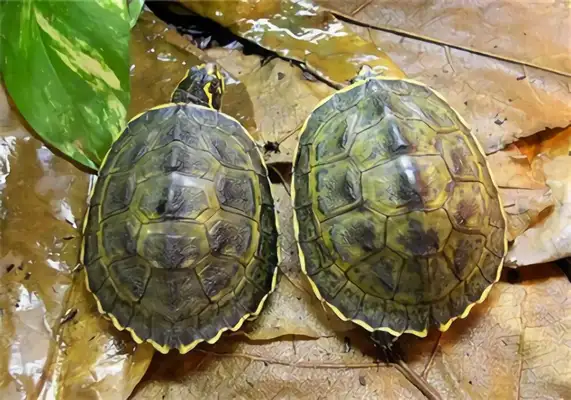
The coronary turtle, which is also known as the aqueous turtle, is a turtle that is less difficult to raise, but for a number of reasons the prevalence of breeding is low and does not give rise to a strong desire to breed.
It is also known as a florist in Pakistan, Bangladesh, India, Nepal, living in marshes, ponds, lakes, rivers, and food. Food-fed plants, such as platinum, water peanuts, Sudanese grass, etc. A few meats.
Chinese name: Backback turtle
It's a common name.
English name: Crownedrinerturtle
Latin name: Hardellathurjii
Context: Animals
Gate: Pipeline gate
Amen: vertebrate Amen.
Programme: climb
Tortoises.
C: Turtles
Specs: Back turtles
Geographical distribution: Pakistan, Bangladesh, India, Nepal.
Reproduction: Eggs
Practice: Living in marshes, ponds, lakes and rivers, food is a variety. Food-fed plants, such as platinum, water peanuts, Sudanese grass, etc. A few meats.
Eating: Food is groceries and is grown up to feed plants, such as pixie, water peanuts, Sudanese grass. A few meats.
Care: Straw turtles belong to aquatic turtles, with a certain gradient in the range of rearing equipment that allows turtles to rise to shore and not be flooded, and not more than one third of the depth of the turtle's back, with pools of all kinds available, of all sizes. Capricorn morphological characteristics
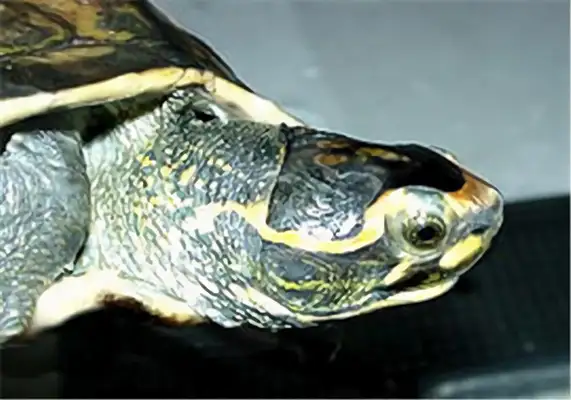
The head of the back turtle is sharper, with a rough and uneven stripe on the edge of the head, with orange red on the center of the head, with a “one” font, with orange irregular stripes on both sides of the nostrils; black on the back, with white stripes on the edge, with a sharp twilight on the centre of the back nail; yellow on the abdomen, with large spots on each shield, two white stripes on both sides of the edges of the limbs, black on the limbs, and rich fingers and toes. Conservation knowledge of crownback turtles
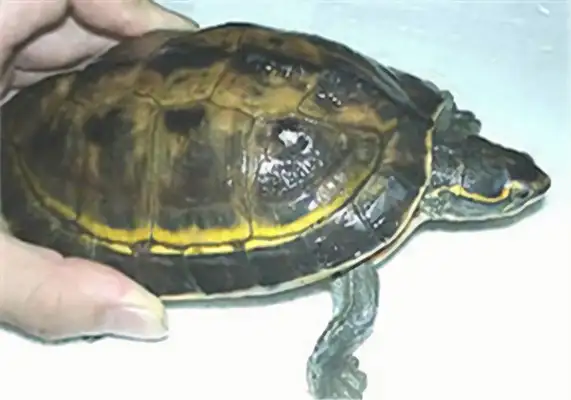
The crownback turtle does not have a wild presence in the country, so the larvae we see come from imports abroad. The individual colours of the coronary turtles are not uncommon, so there are not many breeders, especially young turtles, who are prone to disease and death.
Selection and purchase of juvenile turtles
Small quantities of juvenile turtles still appear on the market, mainly from individuals in Bangladesh. The larvae is less difficult to raise, but mortality is higher among new entrants because of their greater vulnerability to aquatic infections. As long as the individual is healthy, it is not different from other turtles. In general, corset turtles tend to be vegetarian and feed vegetables and water turtle feed. Growth is not fast. However, the female tortoise shape is more than half larger than that of the male, with considerable differences. Temperature changes are sensitive and winter temperature is particularly important for young children.
II. rearing conditions for crownback turtles
Slow-flowed rivers or marsh areas are the main habitat for the capback turtles. Most of them spent time in the water, except for sun and eggs. Thus, the aquariums that feed the crownback turtles must contain more than 70 per cent of the sedimentary areas and must be equipped with off-water areas for the sun-burning turtles in order to avoid attack by aquatic bacteria and algae. Essentially as long as the water quality is clean, the moderate temperature is a suitable artificial environment. Some tropical turtles, such as ninjas, die below 20 degrees Celsius, so it is important to keep warm in winter. The excreta of turtles is highly polluting and efficient filtration and oxygen delivery systems are important. Reduced aquatic growth can reduce the incidence of disease.
III. FOOD FOR CORRECT TORTURE
In day-to-day breeding, some plumes and other water herbs are placed in the water, mainly in the feeding plants, which can be fed in small quantities to fish, shrimp, snails, mackerel, etc. Spring and summer shifts, especially in summer, should be carried out and disinfected, and should not be carried out in farming to prevent turtles from growing because of changes in the environment. In winter, at about 14°C, turtles enter hibernation. Therefore, at about 18°C, a small amount of food is required. During hibernation, turtles can be placed in wet sand at temperatures above 5°C. The living environment of the crownback turtles
The requirements for the quality of water are not high, but there are certain requirements for setting up the environment, such as the setting of the tan, the requirements for water depth, the control of water temperature, etc. The requirements for the environment are described below.
I. Environmental requirements under artificial farming
The cortex is a water turtle, and the rearing equipment must have a certain slope, so that the turtle has land to stay on shore and is not flooded, and the depth of water cannot exceed one third of the turtle's back, and can be of all types and size. Spring and summer shifts, especially in summer, should be carried out and disinfected, and should not be carried out in farming to prevent turtles from growing because of changes in the environment. In winter, at about 14°C, turtles enter hibernation. Therefore, at about 18°C, a small amount of food is required. During hibernation, turtles can be placed in wet sand at temperatures above 5°C.
II. HOLDING IN THE FIELD
Slow-flowed rivers or marsh areas are the main habitat for the capback turtles. Most of them spent time in the water, except for sun and eggs. Thus, the aquariums that feed the crownback turtles must contain more than 70 per cent of the sun-drunk area and must be laid off for the turtles in order to avoid attack on the shells by aquatic bacteria and algae.
Essentially as long as the water quality is clean, the moderate temperature is a suitable artificial environment. Some tropical turtles, such as ninjas, die below 20 degrees Celsius, so it is important to keep warm in winter. The excreta of turtles is highly polluting and efficient filtration and oxygen delivery systems are important. Reduced aquatic growth can reduce the incidence of disease. I'll feed you some.
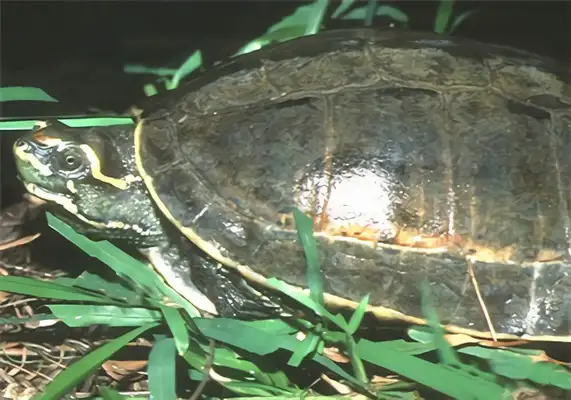
The diet of the back turtles is complex, but it is easier to raise, either by providing some meat food, or by providing fruit and vegetables, or even some turtle food, but by taking care to avoid disease when feeding.
Food choices
In the wild environment, it is impregnable and eats worms, snails, shrimps and small fish, as well as the leaves of plants, living in marshes, ponds, lakes, rivers and, relatively, meat. Food-fed plants, such as platinum, water peanuts, Sudanese grass, etc. A few meats.
Food-feeding concerns
Over-fed feed, resulting in spoilt baits, and failure to remove them in a timely manner, rapidly deteriorating water quality can lead to disease, as in high-temperature and high-density rearing environments, turtles have high and high food intakes, large quantities of salvage baits, residues scattered in water, and turtles excreta, increasing the amount of organic matter accumulated in the pool and deposited at its bottom, creating ammonia through anaerobic fermentation, and blackening the pool. In addition, there is often an oil membrane on the upper limit of the water surface in the greenhouses ' turtle ponds, which is detrimental to the turtle ' s breathing and to the gas exchange. Therefore, every day before the bait is delivered, the film is removed and, if most of the film is replaced, the water is completely replaced.
If over-fed protein baits are not fully absorbed, they not only cause waste but can also have indigestion effects. Fat metabolism can occur in the long run when turtles are fed by spoiled or spoiled baits, usually after two months, with a mortality rate of around 20 per cent.