Designation: PET5231
English name: Rana grylio
Origin: United States
Vulnerability: red spots
Life: 5-6 years ' profile of swine frog species
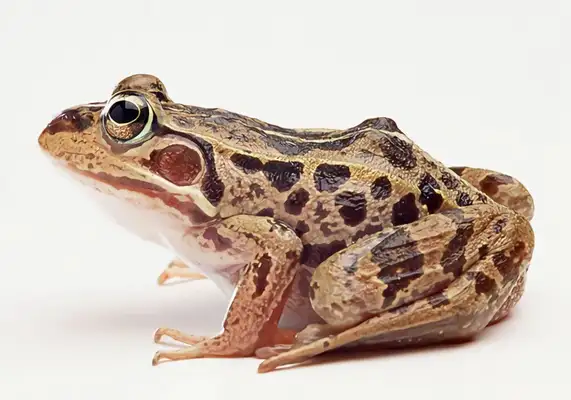
The pig-frog, by definition, has a voice similar to that of the pig, and is therefore named. Pig frogs also have a number of aliases, such as American frogs (not American bull frogs), pig frogs, swamp green bull frogs, etc. Pig frogs, which used to live mainly in the south-west of the United States, were later introduced into many places. The frog is still relatively common at present and is therefore not included in the list of endangered species.
Piggy frogs belong to the large frog category, and their lives are almost indissociable from water, and dry places are absolutely not suitable for their survival. Pig frogs that live in nature usually live in places such as lakes, and sometimes go to the lake to “disperse and breathe”. Piggy frogs are night animals, and in high temperatures they continue to scream, especially during reproductive times, when male frogs call on female frogs.
Chinese literary name: Pig Frog
Two words: Rana grylio
Context: Animals
Gate: Pipeline gate
Amen: vertebrate Amen.
Programme: amphibious programmes
ANALYSIS: SLUE ASPECTS
Objective: No tails.
AA: New Toad
Section: Toad Section
From Rana
Castes: Characteristics of the morphology of a pig's frog
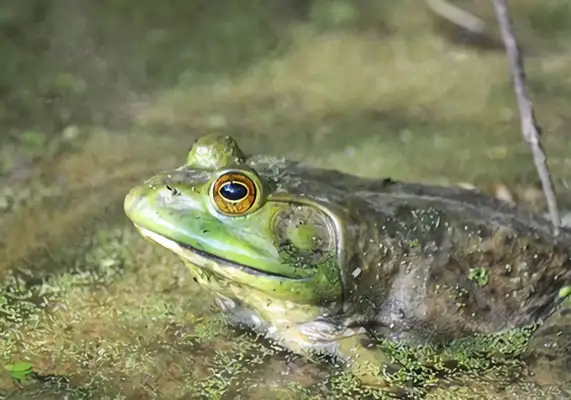
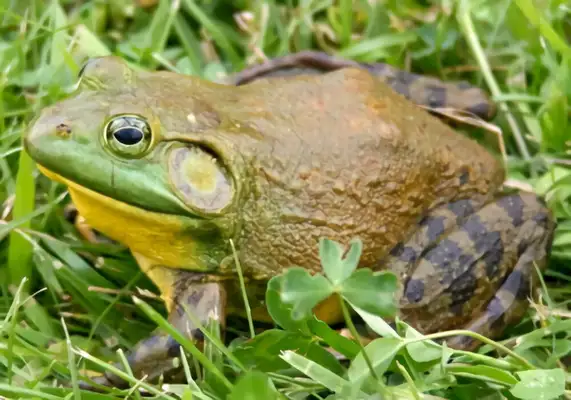
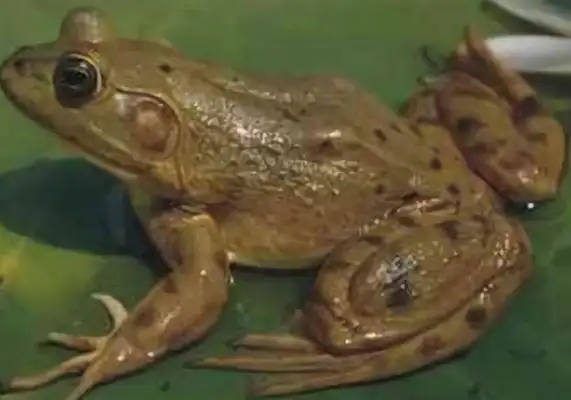
The pig-throwing frogs are called the swamp green bull frogs, so do they have the same morphological characteristics as the bull frogs? In appearance, there are indeed similarities between pig frogs and bull frogs, which are often confused. However, the shape of the pig-throwing frog is clearly not at the same level as that of the bull-frog, although it is a large frog, but the size of the pig-throwing frog is generally not more than 150 mm, although it is already “absolute” in relation to many other frog species.
A detailed morphological description of the pig's frog.
Head: small and flat.
Eyes: Small but prominent.
Drum membrane: Not particularly developed.
Front limbs: smaller.
Back limbs: Large. Back limbs and feet length up to toe end.
Body: flat. It's green or gray and has the creeps of black and brown.
Weight: around 500 g.
Despite the fact that the back legs of the pig-throwing frogs are thick, and the muscles look strong, jumping is not their strength, so you won't see the pig-throwing frogs jumping away. In the late 1980s, we introduced pig-throwing frogs, which were raised in most parts of the country, although in the South (Gangdong, etc.) more people are raising such frogs. If you're interested in pig frogs, you have to be fully familiar with the morphological and personality characteristics of pig frogs, or else you can easily be deceived by some bad traders. Pork frog nursing knowledge
The care of pig frogs consists mainly of three aspects: environmental setting, feeding and disease control. If one of these is wrong, it could lead to an unexpected situation of pig-throwing frogs, and even to their death.
I. Quality of environmental decision survival
The life of pig-throwing frogs is closely linked to the water, so when setting up the environment for pig-throwing frogs, the feeder takes water quality first into account. The inability to use piped water directly for frogs is an old topic that most feeders know well. In addition to preventing direct use of piped water for pig frogs, feeders must be careful to keep water quality clean, and regular water exchange is the best and simplest way.
Scientific feeding
When the pig-throwing frogs are at different times, the masters must make corresponding changes in their diets. For example, young frogs can feed some animal feeds, such as earthworms, bread worms, and even shrimps, which are the food of pig-throwing frogs. For frogs, they like shrimp crabs, etc., and conditional owners can provide them with such food. In addition, frogs are sold for feed on the market, which the owner needs to identify for purchase.
III. Combating disease
In general, pigs are less vulnerable to disease as long as the environment is sound and the food is properly fed. However, if there is any problem with a pig-throwing frog, the feeder must first separate the sick pig-throwing frog from the animal and seek solutions at the first moment. The most common disease in pigs frogs is gastrointestinal inflammation, etc. Living environment of a pig's frog
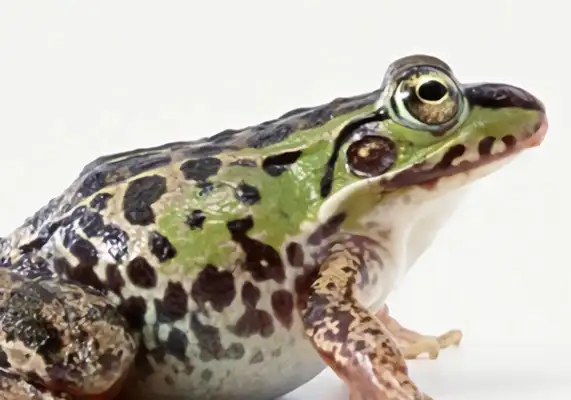
In order for pigs to grow healthy, feeders must create a good living environment for pigs. If there is little knowledge of pig frogs, it is important that before raising them, the feeders review more information about the environment that is most suitable for their growth. The environment in which a pig-throwing frog can live in nature may not be realistic, but the feeder can try to create conditions that will make the pig-thrower better adapted to rearing life.
If the pig frogs raised by the feeders are under 100 grams of weight, they can be considered as young frogs. Since their ejection is not particularly good, the feeder may not be required to pursue the height of the frog when preparing the frog. In addition, because pig-throwing frogs belong to the large frog category, too small a trough cannot be chosen, and a small space can make pig-throwing frogs uncomfortable.
Pork frogs spend most of their time living in water, the quality of which determines their health. When water quality is slightly contaminated, the feeder immediately changes the water. When changing water, be careful not to use piped water directly for pig frogs, but first to remove chlorine. In order to avoid excessive exposure to sunlight, feeders can also choose to plant some plants, although, in addition to green plants, they can also choose to use sunnets.
In order to improve the living environment of pig-throwing frogs, the feeder also regularly cleans up the frogts, which are important because of the presence of pig-throwing frog excrement, which accumulates for a long time and which not only smelt, but also cause plant death, bacteria and so on. What's the point?
When feeding a pig to a frog, the feeder usually uses a living body because a pig toad is very sensitive to the live bait. On the contrary, dead baits are less likely to attract the attention of pig-throwing frogs. So the dead bait can't feed the pig frog? Of course not. In fact, a pig's frog eats dead bait, if the owner needs to have a certain feeding technique.
I. MASS OF FISH
The live bait is mixed with the dead bait to feed the pig frog, which eats the live bait while eating it. It needs to be noted that the ratio of dead bait to live bait should be controlled. At first, the percentage of dead baits was smaller, and if it was too large, the pig frogs would not eat bait. The percentage of dead baits will gradually increase when the pig frogs adapt for some time.
II. Imposing
For dead baits floating on the surface, the feeder can use regular drops to make surface fluctuations, with the effect of waves, the dead baits drift, and the pig-throwing frogs can swallow them quickly when they see them as living baits.
III. Attention to death baits
The dead baits are treated with certainty because of the need to ensure that there are no problems with the pig frogs. By way of example, if breadflies are fed to pig frogs after a longer time of death, they may cause intestinal inflammation, etc.
IV. Dry bait feeding
Some feeders may feed pig-throwing frogs dry baits, and when dry baits are dropped, the feeder needs to be careful that dry baits float into the water, when the pig-throwing frog moves, and when the pig-throwing frogs see them, they eat.