Designation: PET3714
English name: Zebra turkeyfish
National origin: India, Pacific Ocean, Taiwan
Epidemic diseases: anchor disease, aqueous disease, albino disease
Life: 4-5-year profile of flowering species
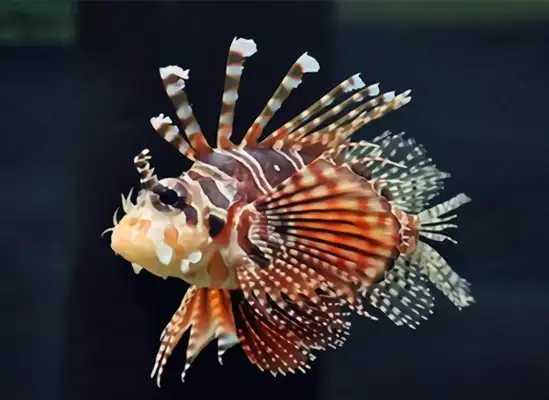
The velvet shape is very special, with some aggressiveness, and the velvet males are very strong in the field and drive them out. However, due to the special distribution of bouquets, aquariums are not very common.
Chinese: Fabian
Famous alias: Famous short fins
English name: Zebra turkeyfish
Geographical distribution: Indian, Pacific, Taiwan
Forms of reproduction: Pygmy and pomegranate properties
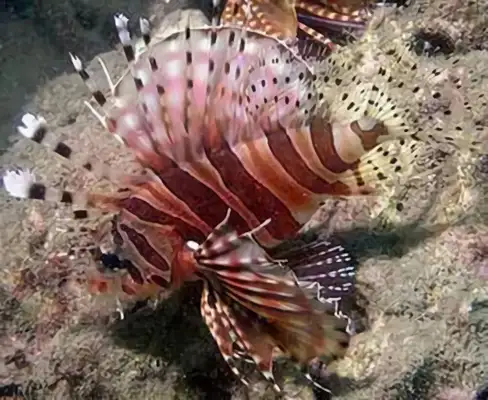
Due to the certain aggressive nature of the velvet, the male is highly territorial. Since foliage is a lionfish, the fins and thorns of the foliage are toxic and have a painful fever when stabbed, and great care must be taken when interacting with them.
The bouquets of fish are 25 cm long. The fish has an eye-to-eye tentacle longer than an eye-to-eye angle, a skin petal and 7-8 dark brown bands. The front cap and the immediate surface are black spots, with the longest back fin thorns of the fish exceeding its height and many dark stripes of the chest fin. Frozen breeding environment
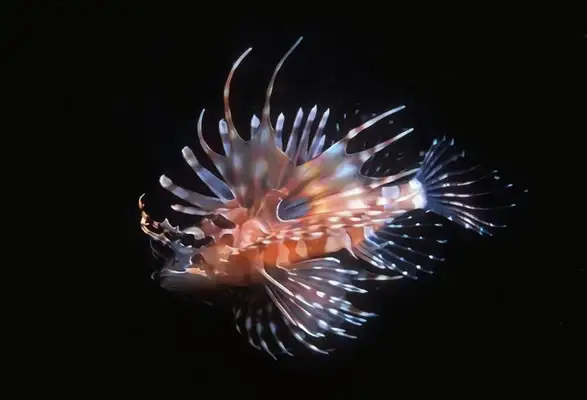
The bouquets need to be careful that their fins and hard thorns are toxic when they are planted and that they have a painful fever when stabbed. So it's important to be safe to interact with flowers when they grow.
There is a certain aggression in the bouquet, where the fish seeks to mate and lay eggs at night, and the male is strong in the field and can drive other males out to protect his area. The water temperature is 24-27, the PH is 8.1-8.4 and the weight is 1.020-1.025. The smallest aquarium size is 250 litres. When you've just entered the tank, you'll be seducing it with live saline shrimp. I don't know.
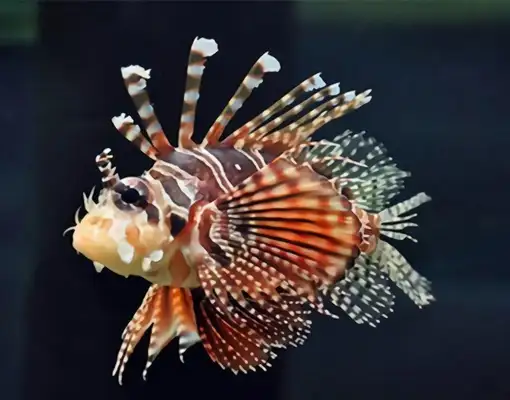
The bouquets are meaty fish, and they feed them. Care is taken not only to provide them with a living environment similar to that in the wild, but also to provide for food baits and feeding methods in order to produce healthy flowers.
In the aquariums, veggies can be used to absorb drifting fish shrimp. When the bouquets enter the tank, they can be lured with live saline shrimp. When stable, live shrimp, live fish, sometimes fresh bees.