No.: PET6104
English name: Trichogaster Tricho pterus
National origin: Malaysia in South-East Asia, Sumatra in Indonesia, Thailand, Southern Viet Nam and India in South Asia Land
Vulnerability to diseases: fish plague, white cloud disease, skin disease, rotting tail disease, etc.
Life: 4-5 years Blue Star species profile
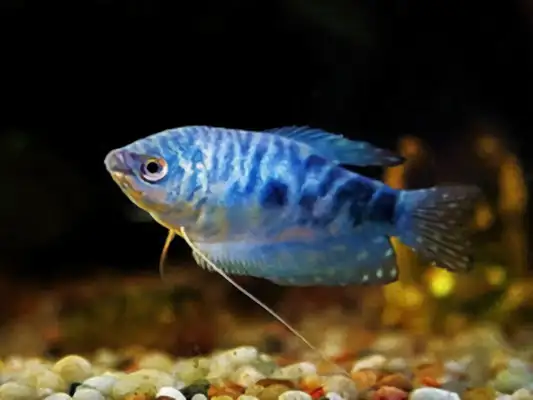
Bluefish are less difficult to breed, and their greatest feature is that their abdominal fins have deteriorated to long filaments, so they are also known as silk. Bluefish are larger in size, so large aquariums are also recommended for raising, and because bluefish prefer to be quiet, some weeds are recommended.
English name: Trichogaster Tricho pterus
Latin name: Trichogaster Trichopterus
Chinese literary name: Sniffy hairy
I'm sorry.
Context: Animals
Co: Spectacular
I'm sorry.
Type: Tropical freshwater fish
Origin: Malaysia from South-East Asia, Sumatra from Indonesia, Thailand, Southern Viet Nam and India from South Asia.
Reproduction: Eggs
Water quality: No special requirements for water quality
Difficulty of raising bluefish: easy to shape
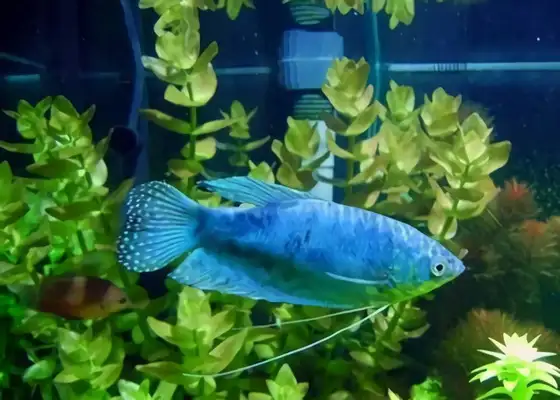
The greatest feature of bluefish is that its abdominal fins have been degraded to long filaments, so bluefish are known as silk. There are three distinct black domes on the side of the bluefish, which decorate the bluefish body more beautifully, so the bluefish have the aliases of "tristar fish" and "blue three stars".
Bluefish can be 10-15 cm long, tall and flat, with long arcs in the abdomen to the tail. The abdominal fin filamentary chest, the corresponding frontal hips, the fin base length up to the base of the tail, short tail, slightly split fork. It is blue and gray, with three large black spots behind the cap, in the middle of the torso and in the tail. Light yellow. There are orange red broad edges in reproductive hips. Bluefish are at 22-26°C and have no special requirements for water quality. There is oxygen that can be used in the air, and there is a lack of oxygen for tax purposes. It is greasy, with fish insects, earthworms, dry feed, shrimp crab seed. Bluefish love quiet, not moving. It is therefore not appropriate to mix with good fish, such as zebra fish.
They are elliptical, flat on the side, medium head, large eye, in the centre of the head, with long arc at the abdomen to the end of the tail. The chest of the abdominal fin has been degraded to the end of the silk and acts as a tactile organ. The size of the adult fish is about 10-15 centimetres. Its abdomen are blue grey, its abdomen are light yellow, and the body is radiantly radiantly purple with three black spots on its side, its back, its hip and its tail gray, and its fins bear white pearl-like spots. The back fin is short and high, slightly yellow, and spreads as a small flag. The hips are long, extending from the chest backwards to the tail base, light yellow, with bright oranges and wide edges, and soft skirts floating in the wind. Light fork in tail fin, light yellow and transparent in base. The glitter of blue glitter. Bluefish breeding environment
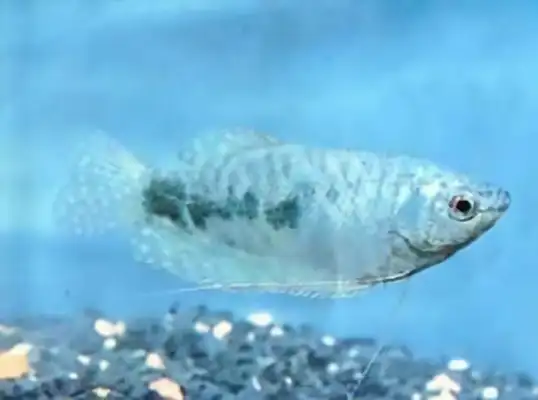
Bluefish are very resilient, and bluefish are warmer and tend to swim regularly to the surface in aquariums. Since bluefish prefer to bully their own smaller sizes, care must be taken when breeding.
Bluefish have the same aerobic requirements as the lilies and pearls, which are assisted respiratory organs, located above the cavity, made up of complex wrinkles of mucous membranes, and can live in less oxygen-intensive water, and can float to the surface to swallow air when the water lacks oxygen, so they are not worried about oxygen deficiency in water. Bluefish prefer to live in less mobile or completely static natural waters with no special requirements for water quality. The required water temperature is high, but it is more resistant to temperatures and occasionally survives at temperatures (14°C), with a lethal lower temperature of 11.5°C. The most appropriate water temperature is 23 to 26°C.
The size of the bluefish body and the quietness of their bodies make it easier to raise aquariums, where it is best to plant some waterweeds, which can be made of beautiful stones, which can both hide the bluefish and give rise to a “view liner”. Bluefish are resilient and mild and regularly swim to the surface. Because they often abuse fish of smaller size than their own, they cannot be co-fed in the same aquarium with fish of particularly small individual sizes, such as Paulian lanterns, red and green lanterns, but they can be mixed in with other species of tropical viewing fish of the same size. Blue Starfish feed.
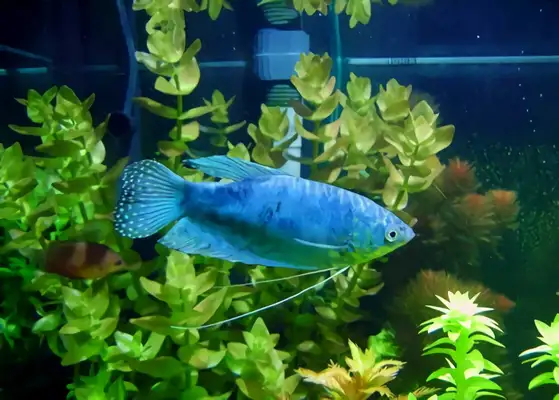
Bluefish are blue gray, their abdomen are light yellow, so when raising bluefish, care is taken not only about setting up the environment but also about the science of feeding bluefish.
Bluestar fish are greasy fish that can receive a variety of live baits, such as larvae, nematodes, earthworms and daphnia; they also eat artificial baits, even live fish seedlings, and even shrimp crab seed grains, but do not chase insinuable fish. But bluefish are still the best feed on the surface.