Designation: PET1475
Vulnerability to disease: decomposition
Life: A brief description of the species of red-edged turtles for about 50 years
Red-striped turtles, or southern turtles, are known by many as Nan-jin, which is a relatively common species in the United States, with simple methods of raising and a high rate of survival, usually raised by Brazilian turtles. The length of the vest is 10-25 cm, a small water turtle. It has smooth backs, flat ellipses, colours from green to black, and some sub-species have red stripes. Red stripe turtle morphological characteristics
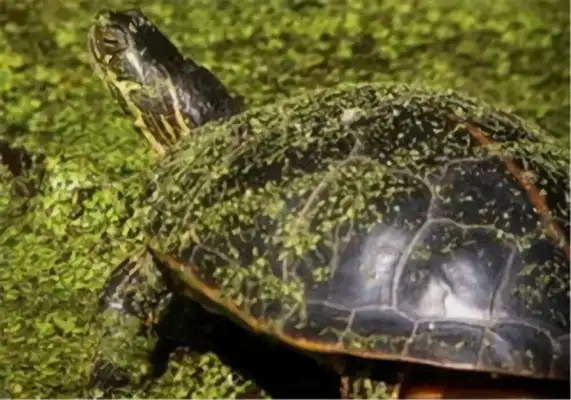
There is a red stripe on the back of the red turtle, which is the most important feature distinguishing the red striped turtle, known as the southern turtle, with small red stripes on the back and light yellow in the abdomen.
The length of the red-coloured turtle is approximately 12.7 cm, with the longest record being 15.5 cm, the smallest subgenerous species. It ranges from the southern state of Illinois and the state of Missouri, on both sides of the Mississippi River, south to the state of Louisana and east to Alabama. It is characterized by a long-range red, orange or yellow stripe along the back nail, which is quite significant, and a simple yellow abdomen.
There are no isolated spots behind the eyes of the red-striped turtle, with white stripes. No stripes in the center of the head. The top stripes on the neck are pink, the bottom stripes are yellow and the limb stripes are pink. The vertebrae and the rib shield are normally staggered, with the thicker yellow red line on the back, which is the most visible feature of the South Cane ' s distinction with other turtles, and as a result, Nan Cane is called the Red Ribbon or the Red Ribbon. The edge of the shield is red and extends down to the red zone, which is a grey and black spot in the middle of the red zone, which is another characteristic of the Southern Ribbon as distinct from other turtles. The southern turtle's abdomen are yellow, partially black spots. Red-striking turtle nursing knowledge
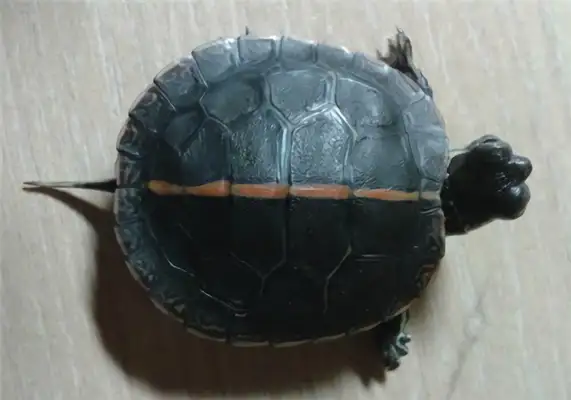
It is easy and cheaper to raise red-grain turtles, but it is recommended that when you buy turtles, you pick as many of them as you can, and when you're young, the turtles are beautiful, but they are also relatively difficult to raise, with a higher rate of survival guaranteed.
I. Life habits of red-striped turtles
Red-grand turtles like ponds, swamps, creeks and lakes, where the flow is slow, soft sludge is laid at the bottom, and suitable tan sites and abundant aquatic plants are available. Red-grand turtles are solar-style and sleep at night at the bottom of the pool or on objects partially immersed in water. When the sun rises, they become active, tan for a few more hours and then feed later in the morning. By evening they may be feeding again.
II. The knowledge of Red Sea Turtles in Care
Owing to their small size and adaptive capacity for artificial capture, red-grain turtles are often raised as pets. They have interesting personality and sometimes make funny moves. Red-grained turtles can be raised in aquariums around 4 feet, equipped with ultraviolet lamps, incandescent lamps, heaters, filters, as well as tan platforms and hideouts made of rocks, with pebbles laid beneath them.
III. The edible nature of red-striped turtles
The diets of southern red-red turtles vary with age. Plants account for 13 per cent of the diet of juvenile turtles and 88 per cent of adult turtles. This may suggest that juvenile turtles prefer meat, but only by eating larvae or something. A map turtle with a common habitat has similar feeding habits associated with negative age. The plants most commonly eaten by adult red-grain turtles are platinum and algae, while the most commonly eaten animals are dragonflies and freshwater lobsters. Red-striped turtle living environment
Wild red turtles like ponds, swamps, creeks and lakes, where the flow is slow, the bottom is covered with soft silt, with suitable tan sites and abundant aquatic plants. Red-striped turtles like sunbacks. There were as many as 50 red-coloured turtles piled up over one tree. Even a childish turtle is seen in the sun. There's a lot of significance in the sun. The heat keeps the turtle at the right body temperature. Ultraviolet rays, on the other hand, can be removed from the skin parasite and are also elements of synthetic vitamin D3. The point of red-grand turtle breeding.
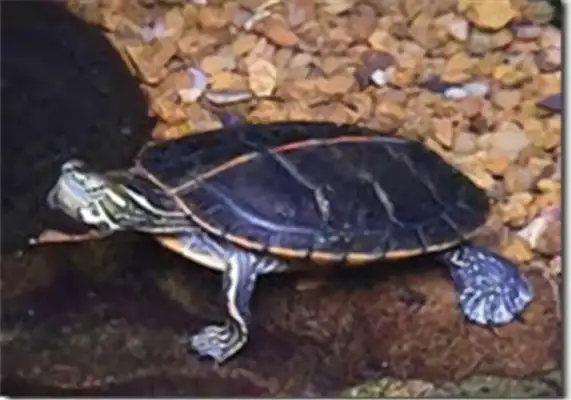
The diet of red-grain turtles changes with age, and usually the younger the turtle prefers meat food, but the older ones prefer vegetarian food, and many owners feed turtles, which is certainly a good option, but with regard to the diversity of food.
The diet of southern turtles varies with age. Plants account for 13 per cent of the diet of juvenile turtles and 88 per cent of adult turtles. This may suggest that juvenile turtles prefer meat, but only by eating larvae or something. A map turtle with a common habitat has similar feeding habits associated with negative age. The most common plants for adult southern turtles are plumes and algae, while the most commonly eaten animals are dragonflies and freshwater lobsters.
Red-grand turtles are impregnable, and in their habitat, animals and plants, whether alive or alive, become their meals. These include snails, snails, insects, lobsters, clams, fish, rotting meat, algae and aquatic plants. Young red turtles are meat-eating, while older red turtles tend to feed with age. Red-grain turtles feed on aquatic vegetation, algae and other small aquatic organisms such as insects, crustaceans and fish animals. While red-grain turtles are often eaten by rodents, dogs, snakes and animals during or shortly after incubation, the hard shells of adult turtles are resistant to most predators, except gator and raccoons.