Designation: PET2393
Character: lively
Nationality: Netherlands
Epidemic: ballworm disease
Life: Overview of rabbit species in Havana, around 8 years old
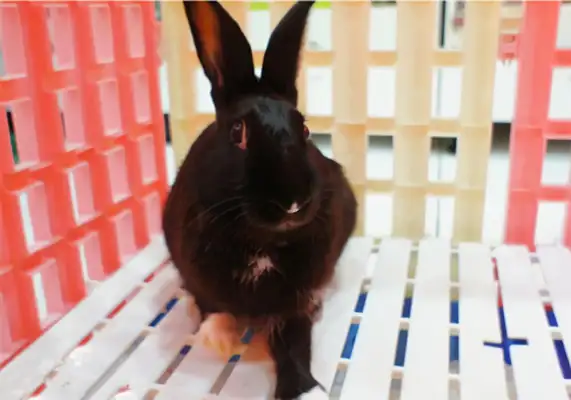
Havana rabbits are a common species of leather rabbits, known as leather rabbits, because the fur of Havana rabbits is so beautiful that many people tend to raise Havana rabbits to produce rabbits. Of course, more and more people are falling in love with this beautiful little creature, and more and more people are using Havana rabbits as pet rabbits.
Chinese literary name: Havana Rabbit
Context: Animals
Gate: Pipeline gate
Programme: Lactation Programme
FIND: RABBITS
Section: Rabbit Section
Yes: Rabbit
Zero: Havana Rabbit
Distribution: Born in the Netherlands
body weight: around 3KG
Forms of reproduction: characteristics of the birth of a Havana rabbit
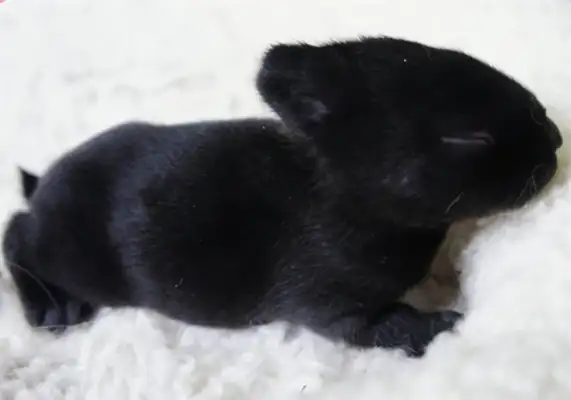
Havana rabbits are typical artificially involved breeds, with two types of hair colours, chocolate and blue variants, which, after constant nurturing and improvement, have now become a better fur rabbit species, and many prefer to be raised as pet rabbits.
I. The appearance of the Havana rabbit
Havana rabbits, originally born in the Netherlands, are known as Havana Rabbits because their hair color is similar to Havana cigars. The species is thick and is always chocolate-colored, with purple light and hair-based grey blue. It has a short body, a large waist, a well-developed body, a short ear, close to one another, a sharp eye, and a color identical to that of fur.
Two products of Havana Rabbit Yes
The varieties have a mix of chocolate colour and blue. The chocolate Havana rabbit, born in 1898 by a Dutch mother, reproduces with some mutations and has improved its body weight and shape with a Himalayan rabbit, which has evolved into new varieties in Havana, which soon spread to France, Germany and Switzerland. The blue variant was born in 1916 when Havana rabbits entered the United States. It's soft, blue, radiant, full and solid, weighing 2.3 ~ 3.2 kg. Havana Rabbit Care Knowledge
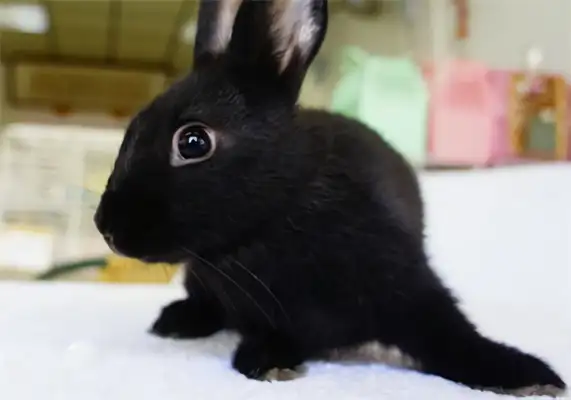
In childbirth, growing up Havana rabbits are usually not ill, but care for Havana rabbits is done as carefully as possible at an early age, when the rabbits are subjected to a series of incidents such as weaning, feeding and cooping, so that health can be ensured.
One, weaning off.
Havana rabbits eat for 16 days and feed a small amount of digestible green grass, vegetable leaves, etc. Twenty-two days of full-price feed delivery, with less feeding. Weaning can be broken when the young rabbit of Havana is 28 to 42 days old. Weaning breaks are introduced once a day, followed by breast feeding once. After weaning, weaning is organized according to the calves ' weight and sex. Watch out for the heat and keep the harehouse dry and clean. At the same time, vaccinations are administered after weaning, and anti-ball bugs are administered.
Feeding good feed off
The newly weaned Havana rabbits have not yet formed a normal microbial population in the digestive tract, which is prone to digestive diseases. Weaning should be supplemented with micro-ecological fungicides to help them form a normal microbial population as soon as possible. In Havana, young rabbits who have just lost their weaning should be fed full-priced feed with small volume, digestible, energy and high protein content. There should be no sudden change in the type of feed and increased feeding, and little effort should be devoted to the taboo of over-feeding at one time, resulting in indigestion and diarrhoea.
iii. Turn off the hare house.
The rabbit house is to be set up in the sun, backwind, dry. Daily cleaning of rabbit houses, timely removal of impurities from material tanks, inspection of drinking water tanks and clean water quality. The remaining grass is replaced in a timely manner. High temperatures, high temperatures and low temperatures are not conducive to rabbits. The average temperature is 15-25°C and the relative humidity is around 60%.
IV. STRENGTHENING DISTRIBUTIONS
Injection of Havana rabbits is carried out regularly. At 20-28 days, hares in Havana were injected with coliform seedlings, followed by approximately five days later (depending on weather and rabbits), respectively, with the injections of bacterium Wei, bacterium, papium and porpox, and the injection of harectus vaccine on about 45 days. Pyramids are also one of the major diseases in Havana ' s young rabbits, and should be widely fed to the pyrotechnics, with onions, garlic, etc. added to the feed, and about 0.3 grams of thicamin and sulfamide drugs added to the feed. Havana Rabbit Living Environment
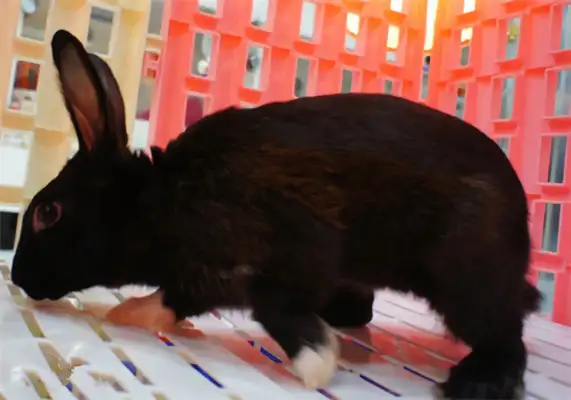
The good and bad breeding environment in Havana is directly related to their health, and there is a high risk that the poor breeding environment will result in the death of the Havana rabbit.
The management of Havana rabbits has many lessons, and the improvement of environmental conditions is directly related to the healthy reproduction and growth of rabbits. A rabbit house is to be built in a ventilated and dry place. It can also be built underground to grow rabbits in winter and summer, ensuring a four-season production balance at the rabbit farm. It is proposed to introduce a “triple conversion” rabbit farming package:
1. The adaptation of the traditional brick-structured hare cages to the concrete sheet assembly of hare cages has the advantage of being operational, low cost and short construction periods;
2. Changing traditional artificial feeding to automatic drinking water: the use of automatic drinking water can reduce labour intensity, guarantee free drinking water for rabbits and reduce the incidence of rabbits;
3. Change tradition to decentralized, small-scale and localized farming to facilitate technical guidance and market flows.
First: systematic immunization and drug prevention of rabbits, pre-plant vaccination of female rabbits against rabbit plague, Bacillus, Vibella multi-saplings, pre- and post-wetting of rabbits with chlorophenoxin, sulfamide-type drugs, coliform disease, and timely vaccination of rabbits against the plague and basil, which ensure healthy reproduction and growth of rabbits. Havana Rabbit Feeding Point
Havana rabbits do not require much food, and if they are raised as pet rabbits, the mix of hay and rabbits is a good option, but if they are raised as economic rabbits in rural areas of the country, the economic benefits must be taken into account on a nutritional basis.
I. Feeding of Havana rabbits
In feeding the Havana rabbits, the owner regularly prepares the rabbits for food and water on a daily basis and replaces them in time to keep them fresh and clean. In summer, we'll do heat and heat, and in winter we'll do cold and warm. In order to improve the growth of Havana ' s rabbits, in everyday life, the masters must also properly guide Havana ' s rabbits to sports, promote the circulation of body blood and enhance their resilience.
II. The Economic Farming Act for the Havana Rabbit
Rural rabbits are still generally fed by the whole of what they used to feed, resulting in a single rabbit feed, poor growth and development, lower productivity and less economically efficient. To overcome these factors, it is necessary to change monograss feeding habits and to make full use of local agricultural by-product resources, such as peanut infarction, red potato vines, maize oranges, etc., and to feed rabbits with blends. In accordance with the needs of different periods of time, we shall collect, in due course, herbs, fish herbs, platinum, leaves and garlic forage supplements from herbs, which are healthy for Havana rabbits, and regularly feed rabbits in order to increase their resilience, reduce the incidence of disease and reduce the cost of rabbit feeding.