Designation: PET1036
English name: Pyrhura picta
Origin: Guyana, Brazil, Venezuela
Vulnerability: respiratory, digestive and parasitic diseases
Life: An overview of the species of parrots that have been painted for about 10 years.
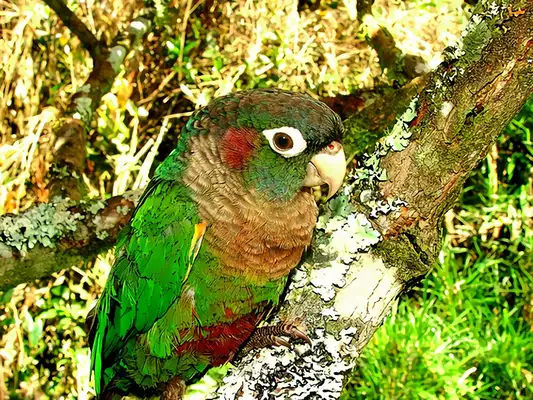
The coloured parrots consist of nine subspecies, mainly located in Venezuela, Brazil, etc. They prefer to live on the edges of forests and forests, and they like air activity around 600 metres. The coloured parrots are 20-22 cm in size and typically weigh around 54-70 g.
Chinese literary name: Painted parrot
Latin name: Pyrhura picta
Don't call it the parrot.
Context: Animals
Gate: Pipeline gate
Programme: Birds
Look: Parakeet.
Section: parrots
Family: Conesian parrots
He is Pyrrhura.
Castes: Painted cone parrots
Asian: 9 Asian
Region: Guyana, Brazil, Venezuela, Peru, Bolivia and Colombia
Named by: Müller, 1776
English name: Pained Conure
English name: Pained Parakeet
Protection status: IUCN low-risk parrot profile
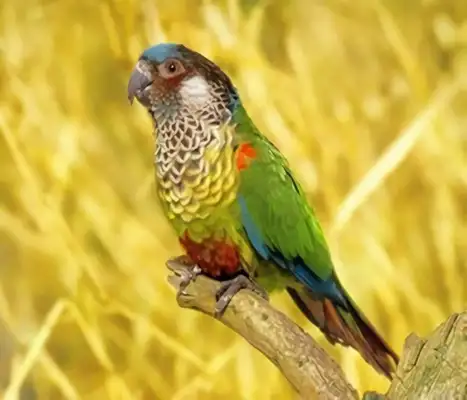
The coloured parrots have nine sub-species, with different sub-species having different sizes and weights, and generally, based on different sub-species, the coloured parrots have a size of 20-22 cm and a weight of about 54-70 g. The birds of the coloured parrots are mostly green.
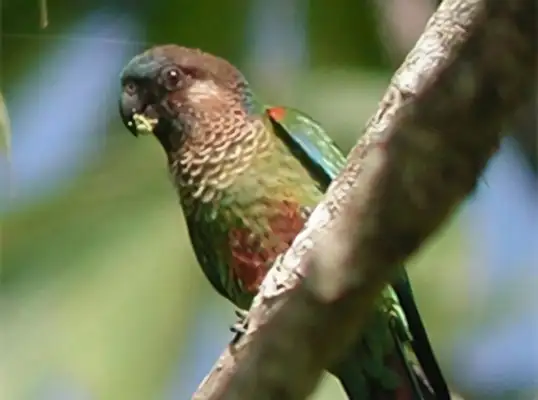
The bending part of a parrot's beak is a narrow dark brown red; red brown around the eyes and cheeks and blue below the cheek; blue on the forehead, head on the head; dark brown on the back of the head and neck; brown white on the ear feather; brown gray on both sides of the neck, throat and top of the chest, gradually turning green, with white to dark yellow sides of each feather of the chest, each of which looks like a leaf; blue distribution where the neck is bent; and red brown on the lower abdomen, under the back and on the tail. Wings bend in red; the main overlay of the wings and the flight feathers on the outer side are blue; the tail is above the green base with red brown; and there is a circle of dark grays, naked whites, beaks are dark grays and iris are brown.
The coloured parrots are mostly found in forests or forest margins at 600-2000m above sea level, usually operating in pairs or small groups of people, sometimes gathering larger communities when feeding on trees or eating earth, sometimes with Golden-winged Parakeet or Pearly Conure, often reaching water sources for drinking and bathing, and eating mineral-rich soil on the edges of water, many other sub-species, apart from the sub-clans in Colombia and Panama, are already small, and some are threatened with extinctions, but the dichotomy of the macaws is not clear. Colored parrot breeding point.
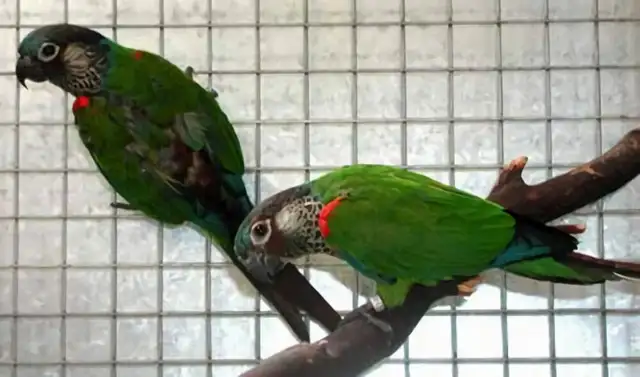
Many will not know the difference between the coloured parrot and the white-eared parrot, both of which look very similar but have different sizes. Colored parrots belong to smaller cone parrots, and when they are raised, care needs to be taken to keep some of their points in order to prevent the disease of your lovebirds.
The newly introduced colored parrots are nervous and not very noisy, and import periods are twice as high as when imported by tropical countries in warmer weather or winter.
As small cone parrots are not as strong and less resistant as large cone parrots, they are well-formed, curious, trusting their masters, good pets, bathing and chewing on fresh branches, but they have a certain habit of growing out of plume if they are not properly addressed in cases where they are prone to illness or death. Colored parrot breeding environment
Small parrots, such as cabbage parrots, need to be sensitive to the cleanness of the breeding environment, which, you know, is prone to disease in the parrots. We also have to build a suitable living environment for parrots based on their habits.
Painted parrots are mainly found in forests, forest margins and areas connected to open villages; usually operate at a height of about 600 metres; and in Peru and Colombia they operate at a height of 1,200 metres, with sub-species of Pentasons operating in mountain areas up to 2,000 metres. Colored parrots, far from Colombia and Panama, are more common and can be found in many areas.
Keep the colored parrot healthy.
1. Day-breeding diseases
The solar bath absorbs thermal energy, increases the temperature of the bird body, accelerates blood circulation and increases appetite. It also stimulates the aorta of the brain, enhances the hormonal and thyroid genres, promotes the growth and development of birds, and has sterile functions. In the summer, it is best to hang the cages in the vagina, with a reflecting light for a sun bath and a full day bath for the winter.
2. Free bathing
When the water is bathed, the cage can be placed in a pot with fresh water and the bird can wash freely. Birds who enter the cage for short periods of time and do not bathe themselves are able to wash themselves with water from the top of the cage and gradually adapt them to bathe in the cage. Summer should take place once a day, and winter can take place about three days.
Three, take a shower.
It feels like it's going to rain on a rainy day or a dark day, so don't bathe the parrot, and don't blow the wind after the bath. It is recommended that after bathing the birds, they should not immediately be ventilated to catch cold. Colored parrots feed the order.
Artificial parrots need to be careful about the preservation of the feed, and also about paint cones. How can a parrot’s diet, which is nutritious, be assured of nutritional balance? Painted parrots in the wild are fed mainly by fruits, berries, nuts, flowers, seeds, vegetation, insects and their larvae; waterweeds on the surface of the pond are also occasionally eaten.
I. Protein for Life
Protein can produce amino acid to sustain life. The nutritional value of many protein sources is low, mainly due to the completely uneven relationship between amino acids. Incomplete sources of protein can be supplied with full sources of protein. The main sources are defamined pure cheese, appropriate defaminable or low-fat cheese, tofu, eggs, white fish, turkey or low-fat meat, boiled fish, etc.
II. Vitamin A Importance
A large quantity of vegetables containing vitamin A is the most important food in the diet of the parrots. Vitamin A helps with skin, feathers, vision and mucous membranes to help the body resist infectious diseases. The more fresh and dark the vegetables or fruit, the higher the amount of carrots. When metabolism occurs, radon is converted to vitamin A using digestive systems. Vegetables can feed themselves.
iii. Flour husk grains
Grain bread or toast, low sugar or sugar-free cereals, whole wheat noodles, rough rice, low-fat Granola oats, wheat embryos, oatmeal, oatmeal and salt-free potato chips, pretzels and pretzels.
IV. NEEDS FOR COBLORATION
Fruits, noodles, cereals, bread, corn, beans, potatoes, peas, dairy products, nuts, seeds. The last three can provide the fat demand for the parrots of the paint. No butter, chocolate, alcohol, caffeine, sugar, fat and salt.