Designation: PET2510
English name: Orange Arowana
National origin: Cosumgau
Vulnerability to disease: end-of-life disease
Life: Overview of the orange red dragonfish species 3-5 years
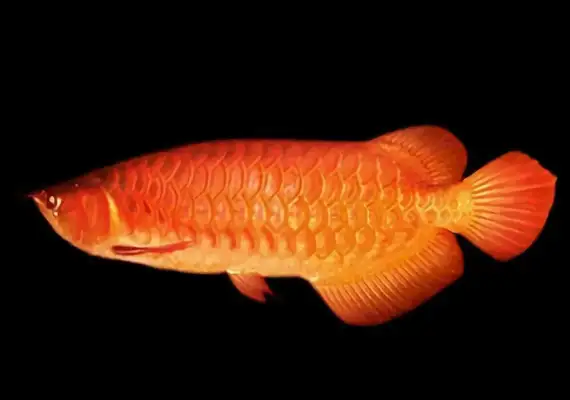
The orange red dragonfish is very special in colour, and friends who like windwater tend to feed them as windfish. As long as an appropriate breeding environment is provided for the orange rodents and they are raised by scientific methods, orange rodents are not difficult to raise.
Chinese name: Orange Red Dragonfish
English name: Orange Arowana
Type: Dragonfish Tropical freshwater fish
Origin: From the River River Congo-Gau [River Ketongau] and its tributaries.
Reproduction: Eggs.
Water quality: between PH 6.5 and 7.5 and between DH 3 and 12.
Difficulties in raising animals: Easy.
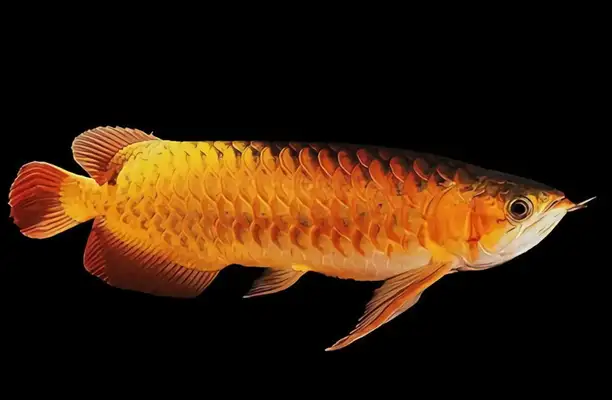
The orange red lobster is one of the dragonfish, so it has the same habits as the dragonfish. The orange red dragonfish, which is a viewing fish living in upper waters, is highly aggressive and territorially conscious, so care must be taken when breeding.
Orange Red Dragon, which can grow up to 90 centimetres after full development, has orange caps, orange scales and orange fins, while some poor orange Red Dragons appear yellow. The body ' s surface is not as colourful as the Red Dragon and the Red Dragon, so it tends to be darker, with smaller eyes than the Red Dragon and the Red Dragon, so it is the lowest price among the three. Orange red dragonfish breeding environment
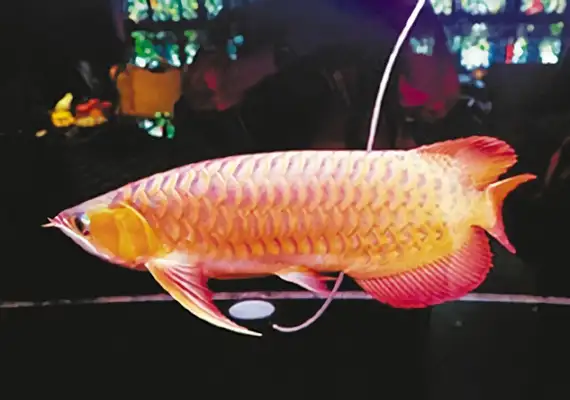
If you want to raise a beautiful orange red dragonfish, you need to pay attention to the environment in which the dragonfish are raised, and the orange red dragonfish are more vulnerable, so you need to pay attention not only to water temperature, to acidity, but also to the quietness of the breeding environment.
It's okay to buy orange red dragonfish if they're more than 25 cm fish, not equipped with a large aquarium. However, fish seedlings around 17-20 cm are fed for two to three months from 60 cm or 90 cm aquariums. If you suddenly put the fish in the big aquarium, even if there's a panel, it's easy to get blue fish and get scared. If small aquariums are used to feed fish, it is sufficient to use the upper filters and heater incubators attached to the tropical fish breeding equipment normally sold in the shop. However, because of the amount of excretion in fish, filtering materials must be filtrated with high performance, the part of the water falling should be covered with filtration, and if there is a small gravel in the tank, then the water pump should be carefully removed. Water exchange does not have to be done on a large scale, such as hoses, rainbow straws, and only a container with one litre of water is needed every two or three days for two or three cups. If this also reveals poor water quality, please increase the number of water exchanges, which need not increase. This water exchange is a dragonfish breeding principle. An orange red dragonfish.
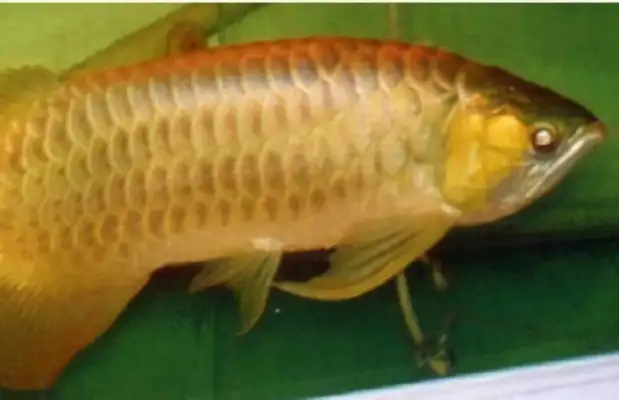
It's not really hard to eat orange red dragonfish, but it's for orange red dragonfish to be able to balance their nutrition, and it's also scientific. The more common diet is hunger, and the young editor came to suggest other ways of feeding orange red dragonfish.
Inducing: Bread worms and goldfish that are fed with feed are usually fed first for a period of time, before they become familiar with the flavour of feed, slowly increasing feed feeding and reducing other food feeding. This approach is human and, unfortunately, not very effective, and therefore is often used interchangeably with hunger. Anorexia: It may have had some extraordinary effects and be worth trying when Internet users' posts of the last few days allow them to feed a single food in large quantities, and to feed others after anorexia.
(a) Co-habitation: Some mixed fish, such as silver dragons, Rohan, nine rooms, etc., or many of them, can be fed by others. The success of the fasting should be sustained over a period of time, taking care not to feed their favorite foods in large quantities and over a long period of time, making it possible for them to recover from their mouth-picking problems and abandoning their previous efforts, and should be based on food after the fasting (e.g., feed) in small quantities. The order of feeding must also be adjusted, and the diet must be fed first, then later, and, if repeated, it is recommended that it be adjusted in accordance with the previous practice. Be careful not to feed very well, and if this is an overdose, the next meal should stop.