Designation: PET6341
English name: White Cloud Mountain Minnow
National origin: China
Vulnerability to diseases: fish plague, white cloud disease, skin disease, rotting tail disease, etc.
Life: 3-4 years of overview of white cloud fish species
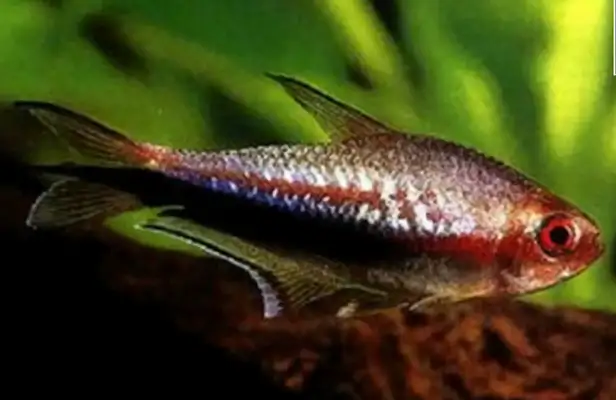
Since white cloud fish were first found on the northern outskirts of Guangzhou, Guangdong Province, we have been named white cloud fish. The white cloud fish are not of long size and are generally in the range of 3-4 cm. White cloud fish are mild and groceries, making it easier to feed.
Chinese name: White Cloud Mountain Fish
School name: Tanichthys albonubes
Also known as Tangfish/Redtailfish/Black Clouds and Winefish/Ginfish
English name: White Cloud Mountain Minnow
Distribution: Streams near White Cloud Hill, Guangzhou, China
Max: 5 cm
Temperature type: tropical fish
Active water layer: properties of the mid-level white cloud fish
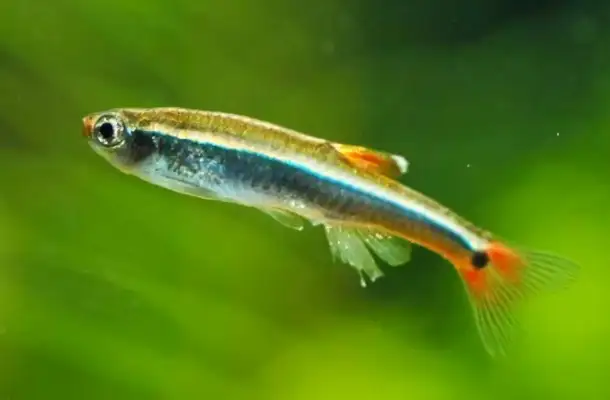
The white cloud fish is a small tropical fish, which is easier to rearing because it is mild and non-food-dependent, but it is preferable for the small authors to have group breeding if they recommend white cloud fish.
Cyclops are highly adaptable, resistant to low temperatures, able to adapt to water temperatures of 10-30°C, with the highest growth temperature of 18-25°C. Eat no food, love live bait, animal feed. In the winter, dry feed is accepted. It's warm and lively. It's usually in the upper middle water. The white cloud fish have a permutation, 3-4 cm length, big eye. It is blue on its back, silver on its abdomen, and it has a golden gold line along its sideline on both sides, with black eyeballs on one side and black spots on the other. The mutated albino is more beautiful. White Cloud Mountain Fish Feeding Environment
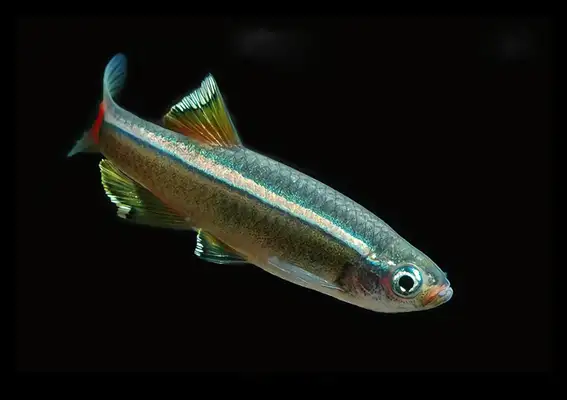
While white cloud fish are less environmentally demanding and less food-intensive and tend to be relatively easy-to-breeded, the requirements of water temperature and water quality should not be overlooked, otherwise they are prone to tragedy. Attention needs to be paid to maintaining nitrite concentrations at normal intervals in the raising of white cloud fish.
1. Active carbon filtering water
The activated carbon is fed into plastics or porcelain drums, allowing running water to flow from the bottom of the vent and from the top. Filtered water is stored in aquariums or other containers, which can be used both for daily breeding and for breeding common tropical fish.
2. Ion exchange resin filtering water
The exchange of ion for resins as filtering material can be adsorbed with calcium ion, magnesium ion, nitrite in water, with the adsorption capacity of the ion exchange for resins.
Three, ion water.
Also known as distillation water. It is generally obtained by electro-dermal and electrolytic methods, with very pure water quality. The water quality of deioned water is very soft and the oxygen content of the water is extremely low and does not fit for rearing. When used, the method of mixing with clean water is often used to obtain different levels of hard and acid alkalinity and to meet the needs of different varieties of breeding water.
Rainwater
The water quality is softer and the metal ion content is low, and it is generally possible to select fresh air in the peri-urban area, with containers filled with rain and water, which can be used after filtering. The white cloud fish.
If white cloud fish were given a relatively stable breeding environment, they would grow healthy and, although very small in size, they would eat much. So what's better for the white cloud fish?
I. Forage selection
The albino fish, which thrives and grows rapidly and is not affected by changes in external temperatures, remains relatively stable. Fish worms, earthworms, fibrous worms, yellow powder worms, small live fish, granular feed, etc. For albino silk, which is 3-12 cm in length, the bait is mainly tortoises, supported by earthworms, red worms and yellow powder worms. For leopard zebra fish of 12 cm or more, with small insects and poor orality, a slightly larger individual bait should be selected, mainly red worms, earthworms, yellow powder worms, small live fish, etc. White Cloud Mountain goldfish are mostly dominated by animal baits, and small varieties can also be domesticated as granular feed, with very few fish dominated by plant baits.
II. Number of food donations
The amount of bait to be delivered by white cloud silkfish should be determined by the size and quantity of the fish. Households raise albino fish, usually with only one or two drops per day, which is appropriate for 5 to 10 minutes. Large quantities of albino silk are raised with two to three baits per day; fish species during breeding are used to deliver three to four baits per day. Owing to the small size and limited diet of leopard zebra fish, each drop is suitable for 7-8% saturation, and an increase in the number of drops contributes to the rapid growth of turtles. Most species of albino fish are baited mainly by insects. When the bait is dominated by worms, its delivery is controlled to be finished within 10-30 minutes. When the bait is dominated by earthworms, it is fed at 5 to 10 minutes' limit, two or three times each, and the earthworms fed are washed up. When the bait is dominated by shrimp, it should, in principle, be fed more and less, and when the leopard zebras replace the new bait, the amount of the bait is gradually increasing.