Designation: PET5633
English name: Florida Red-bellied Cooper
Character: lively
National origin:
Vulnerability to disease: decomposition
Life: Around 30 years old
Price: Cheap, about $100 for a profile of the Florida red belly turtle species
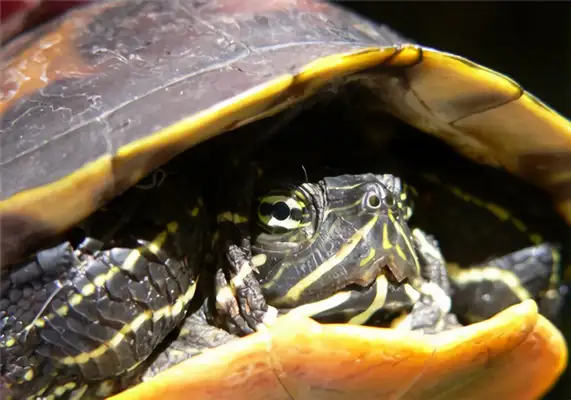
A lot of people like the color of Brazil's red ear turtles, but they don't like to raise Brazilian red ear turtles, and this is when one of the better choices is Florida red belly turtles, which is a colorful turtle.
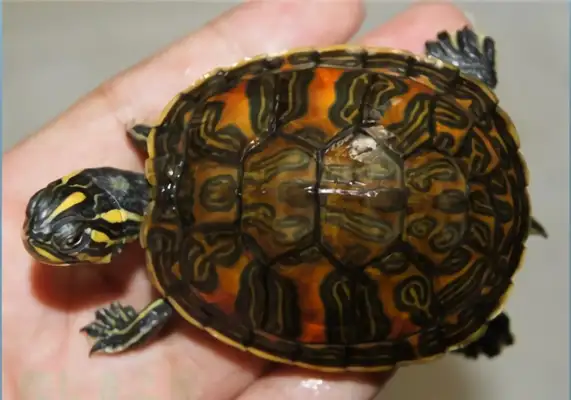
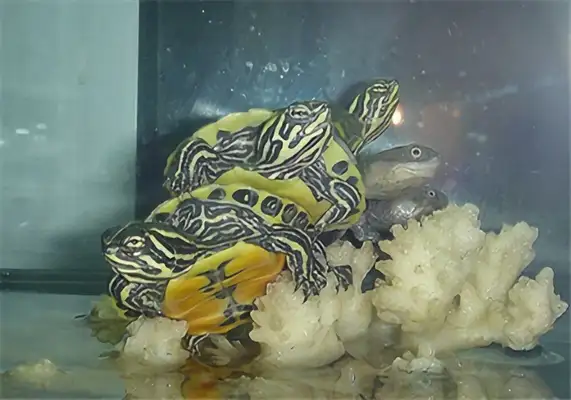
The red belly turtles in Florida have crustlines close to the normal donut turtles, but the colours are more colorful, and some individuals have orange or orange red flame strips, or even fluorescent colours, but they grow deeper, and become brown and black.
Chinese: Florida Redback
Latin name: Pseudemysnelsoni
English name: Florida Red-bellied Cooper
Appearances: Similar to Brazilian turtles, but not always entering Hong Kong's reptile market, and the colours on juvenile turtle shells are particularly colourful, are particularly popular with turtle breeders and do not want to raise Brazilian turtles, but the red turtles would be a good alternative if they were to be raised like Brazilian turtles, but be careful that some traders would look like yellow turtles outside.
Characteristic characteristics: lively, able to adapt to the environment in a short period of time, with plenty of time to go to shore, to enjoy the sun (manual sun), to drag food into water when eating, and to run into water when frightened.
Main distribution areas: Florida and Georgia, USA.
Forms of reproduction: egg-breeding Florida red belly turtle morphology
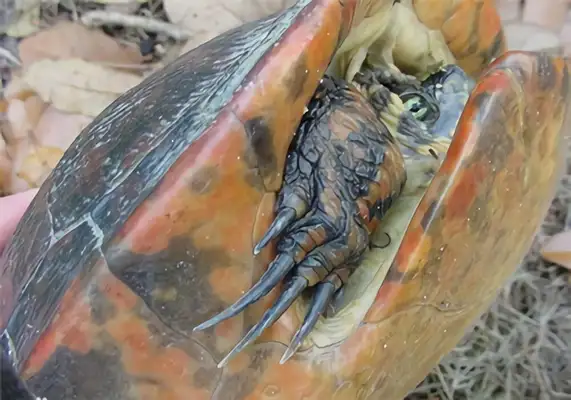
It's hard to tell from the looks of Florida's red belly turtles, because it's a species that is very similar to many turtles, and it's like a donut turtle in the back, and it's like a Brazilian turtle in color, which makes it difficult to distinguish.
The look is quite similar to that of the Brazilian turtles, but because of the fact that Hong Kong’s reptile markets are not often entered, and the colours on the shells of the turtles are particularly colourful, they are particularly popular with the turtle breeders, and they do not want to raise the Brazilian turtles, but the red turtles are a good option if they are to be raised like Brazilian turtles, but be careful that some merchants may look like yellow turtles outside.
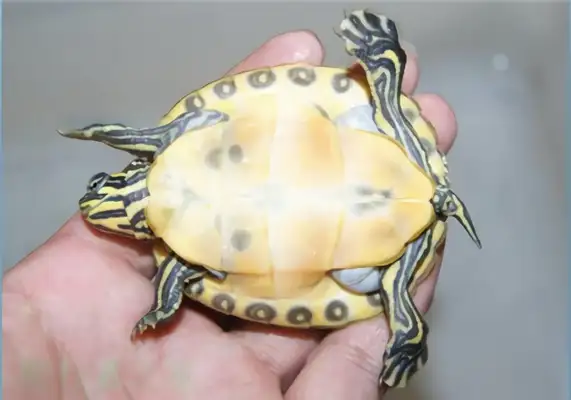
The red belly turtles in Florida have crustlines close to the normal donut turtles, but the colours are more colorful, and some individuals have orange or orange red flame strips, or even fluorescent colours, but they grow deeper, and become brown and black. As for the abdomen, it is orange red or light pink with brown and black stripes on it, which, even when they grow up, will not disappear.
The heads, tails, limbs, mostly brown and black, with a yellow or yellow stripe on them, while the back of the ear is usually a yellow and white stripe, or stretching back, can be said to be the largest difference from the red block of the Brazilian turtle. Florida Red belly turtle conservation knowledge.
Florida's red belly turtles are raised in a simple way, usually the Florida red belly turtles are similar to Brazilian turtles, require the same environment and choice of food, so it's only enough to raise the flore legislative red belly turtles by raising Brazilian turtles, which are also suitable for new hands.
I. Water for the Florida red belly turtle
For running water (for the removal of chlorine) that has been dry for more than two days, it would be preferable to prepare two plastic buckets for drying to meet the need for water exchange. It is recommended that the water be partially replaced every day without the need for a full tank, unless the water and its surroundings are dirty. Partly changing water by using a plastic tube to suck out the bottom dirty water and adding a new volume of water (i.e. running water for two days) to the tank using the iris principle. There's no white eye disease or rotting nails for a Florida red belly. Of course, if you want to save work, you can change the whole tank or change the water once a day, but you can't guarantee that Florida red belly can grow healthy.
II. Florida Redback Environment
The depth of the back of a Florida red belly turtle is sufficient, not too deep, and it would be preferable to provide a rock high above the water to get the Florida red belly turtle to climb up and tan the back; the Florida red belly turtle needs the sun, and if it is fully indoor, it is often allowed to tan for more than 10 minutes a day. It is recommended that they be raised in the south-east in areas where the sun is about 1 to 2 hours (no longer than a long period of sunlight) and that they be provided with shade conditions (which can be covered by a small piece of wood on top of the tank) in order to avoid heat.
III. About hibernation
When temperatures fall below 13°C in October and November each year, Florida red- belly turtles begin to hibernate until the temperature rises to 18°C in February and March. The hibernation Florida Redback doesn't eat, sleeps. The simplest method of hibernation is to move Florida's red belly turtles into the dark and quiet interior, with shallow water (water just passed the back nails) hibernation, which changes water once a month. Try not to disturb the Florida Redback but to change the water. Be careful that the temperature is not below 6 degrees or that it endangers the lives of Florida's red belly. The Florida Red belly.
The Florida red belly turtle is more resilient to the environment, so it's not as complicated for the rookies to put the aquarium in place. Just keep the water quality of the Florida red belly turtle and keep it healthy, but if you have a little experience with turtles, you can build a more rational environment based on experience.
I. EQUIPMENT OF RESOURCES
A tall and large water tank, preferably divided into three land-based ones, to allow them to climb up and rest, and a light to be fired directly on the land to keep them warm when needed. Other equipment includes a UVB light tube, a heating tube and a filter. As for the depth of the water, about two or three times the length of its crust.
II. Control of Temperature
Precious turtles are best kept at 28°C of water all day long, as much as possible avoiding temperatures below 26°C or lower. It can be maintained at 25°C or 6°C temperature, and the area south of Guangdong can be largely free of special temperatures during the summer. Young turtles are quite prone to cold and can hang off at short notice, and must be careful about temperature changes and the maintenance of the environment.
III. NOTES
Red belly turtles, like Brazilian turtles, are good at eating and pulling, and when filters are not installed, the feeders are often required to change water and clean aquariums, so it would be better to have a filter, which, if it works, should completely replace the water in the tank every week to 10 days. Freckles.
Florida's red belly turtles are very edible, but during the calves, Florida red belly turtles rarely eat some vegetable food, so most of the time we choose meat to give it to make it healthier and more food-like.
Food choices
Sea turtles generally feed pork, beef, shrimp, fish, poultry fish livers, which are cut or torn, of course for fish or turtle feed, but are advised to avoid feeding as much as possible. Attention is drawn to shrimp feeding, fish going to shrimp head and fish stings to avoid shrimp stinging and fish piercing the throat of the turtle. Frozen foods need to be unfrozen before they are fed to turtles at the same temperature as water.
II. Frequency of feeding
High summer temperatures and high metabolism of turtles can be fed once a day, but it is generally recommended that they be fed once a day, because turtles do not need to feed too often and they are slow animals with metabolism. The turtles arrived in the fall of October and did not eat much, only once in a few days, until winter the turtles began hibernation and stopped eating.
Food control
Every time they feed their heads and necks, they are good enough to eat, but because they may find food only a few days later in the wild, they are born to eat a lot in order to be free of food, so they have a big appetite, so don't move. They eat too well, which is healthy, and affects life.