Designation: PET1378
English name: Yellow Mud Turtle
Character: Fragile
Nationality: Northern Nebraska heading south to Texas
Vulnerability to diseases: nails, flu
Life: Overview of yellow turtle species around 80 years old
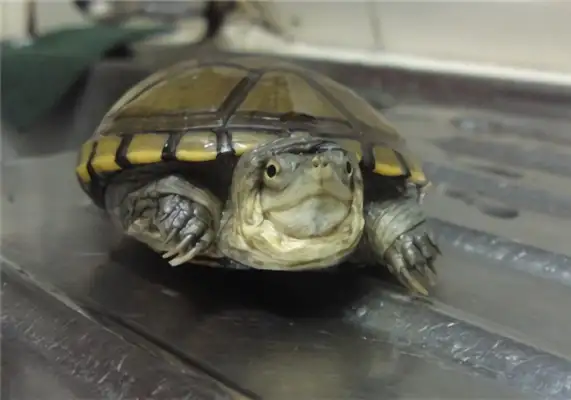
Yellow turtles, also known as yellow turtles, yellow turtles, are one of the most common species in egg turtles. Backs are yellow, large, flat, and there's a black side between the slice and the piece, and it looks so good. Yellow turtles are semi-water turtles, but prefer to stay in the water, eat some meat, eat one.
Chinese literary name: yellow turtle
Alias: yogurt turtle
English name: Yellow Mud Turtle
Biography: Kinisternon fiavescens
Context: Animals
Gate: Pipeline gate
Amen: vertebrate Amen.
Programme: climb
Tortoises.
C: Turtles
Castes: yellow mud turtles
Geographical distribution: Northern Nebraska headed south to Texas, Eastern and Southern New Mexico Asia, South East Arizona, until Mexico. There are isolated communities on the edges of Illinois and Iowa.
Reproduction: Eggs. In New Mexico, they lay in June. There are 1 to 6 eggs (usually 4), which are elliptical in size and have a hard shell. Young turtles reach sexual maturity after 6-7 years.
Practice: A freshwater body that likes to be quiet and slow, with mud or sand on its base. In colder months, these turtles hide under bushes or leaves, or in caves, or in the nests of musk rats, or under water in mud. Generally, they are shy and usually do not attempt to bite.
Body characteristics: 9 ~ 16.2 cm long, olive-to-tan, smooth, usually flat; the shield has black sides.
Eatability: Eating worms, arthropods, snails and snails.
Habitat: Semi-water turtle, but hydrophobic. Characteristics of yellow mud turtles
Yellow turtles are the second smallest water turtles in Iowa, only larger than musk turtles. New hatching turtles are smaller than 2.5 cm. There are yellow spots on the edge of the crust, and there is no vertebra. The adult vest is about 13 cm long. It's dark, black, flat on the top, elliptical. The abdominal armour is much more advanced than the small stench: the light yellow base has several stripes, no spots of any size, the chest shield, the abdominal shield, and the femoral shield are linked by two tenacity bands. Knowledge of yellow turtle care
Yellow turtles are at a standstill for more than half a year, and when the climate changes significantly, they look for natural hideouts, such as stakes, bush bottoms, dried leaves and under logs. Others hide in caves and bury themselves with sand, especially during hibernation and hibernation. One of the factors that has returned to active status has been the effect of warm rain (rain irrigation of dried ponds or streams). Sometimes they move long distances to find water. A yellow turtle living environment
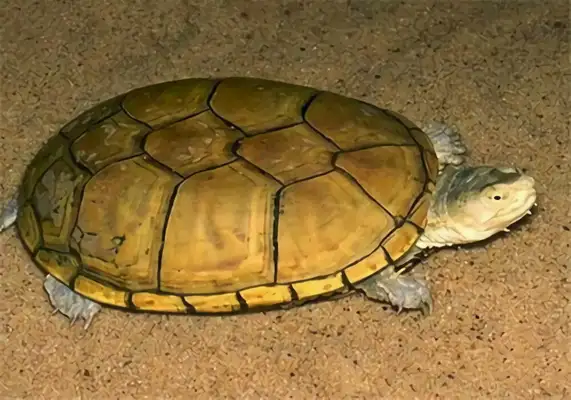
The good and bad environment in which the yellow turtle lives is not only related to their health but, more importantly, to their appearance. Some reasonable circumstances can help the yellow turtle to be more glamorous in his back armor, which requires special care, just as humans want beauty.
I. Wildlife and state of survival of yellow turtles
Yellow turtles live in marshes, streams, ponds, lakes, reservoirs, semi-arid grasslands, open forest lands and surrounding sand dunes. The bottom ponds, with sand, and the rich aquatic plants are all his favorites.
The yellow turtle is widely distributed and still has high density, so that there is no particular threat except for humans. There are still significant groups in other regions, namely, the north-west of Nebraska, the south-east of Iowa and the south-east of Illinois.
II. ANNOUNCEMENTS OF SEATER TORTURE
The size of the turtle-breeding tank is 100* wide and 50* high. Since a yellow turtle is a turtle that prefers to bathe in the sun, it would be better to design a sun-backed platform. The ratio of land and water in rearing tanks is 1 to 2. Yellow turtles are relatively not attracted to high temperatures. They have the habit of hibernation, with normal water temperatures at 25 degrees. So watch out for the gamers who raise yellow turtles in the south! In the process of raising yellow turtles, you will discover that yellow turtles are a species that adapts to the surrounding environment and changes its colour. Based on this characteristic, it is recommended that the white container be used to feed the CB individual, making it more colorful. Slurry turtle breeding points
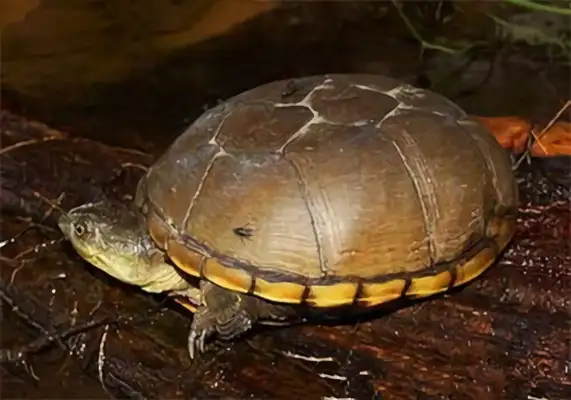
There are many food options for yellow turtles, which tend to eat meat in wild environments, capture insects and molluscs and, in artificially raised environments, change the colour of their backs and make them more colorful.
I. Effort of a yellow turtle
Yellow turtles are predators, and food consists of insects, molluscs, crustaceans, amphibians, chain animals, nematodes, leeches, flat worms, beryllium, spiders, aquatic plants and rotive meat. Yellow turtles with back nails of less than 5 cm are fed mainly by small aquatic insects, algae, rotting meat and dead fish. Those over five centimeters show diversity in food. Yellow turtles usually feed at the bottom of the river bed, but sometimes also onshore and in water. A keen sense of smell can help them find food easily underwater.
ii. What's better for a yellow turtle? Look.
If the yellow turtle is to have a more bright backnail, there is a constant colored intake, and many people will choose shrimp because it contains shrimp erythrocyte, which accumulates slowly in the turtle, and then appears on the tortoises and skins, some of which are slowly reversed as the turtle grows up, so it is a long-term process, not in a hurry to achieve it. If only shrimp feeding is sought for colour, it can only cause health problems for yellow turtles.