Designation: PET4777
English name: Green puffer
Origin: Thailand, Indonesia, Malaysia, South China Coast
Vulnerability to diseases: albino disease, rotting tail disease
Life: Overview of submarine species 5-6 years
Submarine fish, a dolphin living in coastal freshwater or brackish water, are very special in shape. The English acronym is the GSP, which is typically about 10-18 cm in size and belongs to seawater fish. Chinese literary name: Submarine Fish Community: Animal English name: Green Puffer Platform: irradiated fin-fish species: Dark Greenfish alias: Submarine fish, small boats, gold dolls, spot green river plumes, deep water bomb fish. The shape of the submarine fish
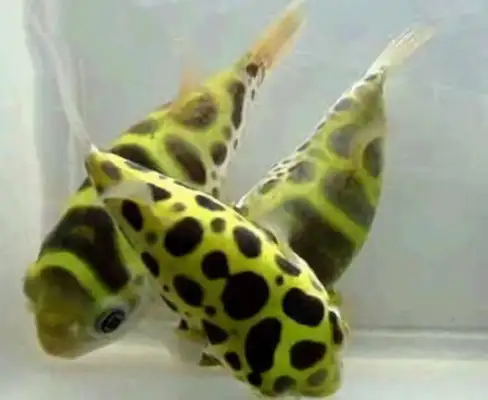
Submarine fish are unique in shape and colour, and the submarine fish ' s color changes in depth with their emotional or health condition. Submarine fish are mild, but they are aggressive, so it is not appropriate to mix with other fish and shrimp snails.
The size of the submarine fish is about 10-18 cm. It's about a cross-blank long circle, with a rough head, a pair of big eyes that rise up very deviantly, and a black pupil that is predominantly blue green. The surface is smooth. The fins are translucent, non-beneficial, with the tails flat open in the form of a sector, swimming only by the chest fin and the short back fin and hip fins, which move quite quickly, but not at the speed of the swim. The skin above (with a back) is golden (green) and has a black round spots that intersect and are similar to leopards. The skin below (with abdominal) is a clean white piece. There is a particularly bright gold on the forehead. The color in the water changes profoundly with emotion or health. Submarine fish breeding environment
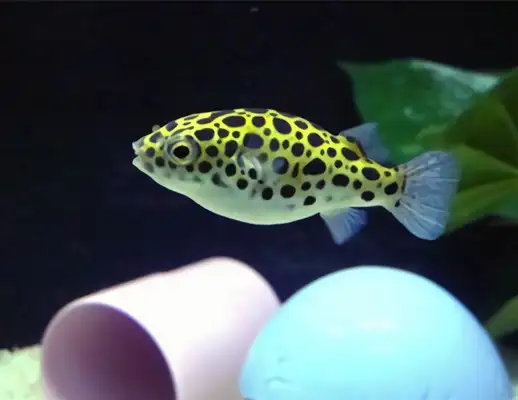
The submersible fish age prefers to dwell in freshwater waters, and as it matures, so does the salt required by the body, so that the habitat will shift to high proportions.
The boat is a mini-dolphin living in tropical waters. The term “gas waters” refers to the boundary between freshwater fish and seawater fish that flows into the sea. The weight of water in the water is constantly changing as a result of the currents of the water. Waters in the range of 1.002 to 1.018 can be called steam waters. The average fish population cannot withstand the dramatic changes in this weight (infiltration pressure), so few fish flow into the sea.
The boats have a natural resistance to osmosis, which is beyond the reach of ordinary fish. This ability allows boats to move freely between fresh water, soda and sea water, completely unrestricted. But in the case of the breeding environment, it is necessary to simulate the soda of the growing environment. If raised with fresh water or long-term seawater, the boat will slowly lose its vitality or even die fast. Submarine feeding points.
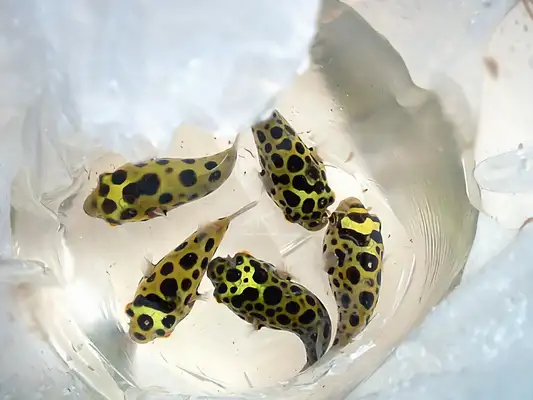
Submarine fish are raised with the advice of feeding forage such as shrimp, snails, snails, red worms and small fish. It is important to note that submarine fish have difficulty in receiving artificial granular feed, so care must be taken when feeding them.
Submarine fish are predatory species with sharp teeth that can easily bite the hard crust of the general crust, shellfish and prey on the meat inside. In addition, they hunt other creatures such as fish, sea earthworms, etc. Although small, submarine fish eat the fins of others and attack other small fish, especially when they bite other fish or even the tails of their companions. The oesophagus structure of submarine fish is also very special.