In 2015, the police arrested an unemployed Traveller, who searched his residence on suspicion of drug trafficking. In addition to drugs, they found a Rowena dog. The dog was three years old, trained, calm, and it's hard to be friendly. The sudden entry by the police did not cause the dog to panic, but merely stood there and watched people quietly.
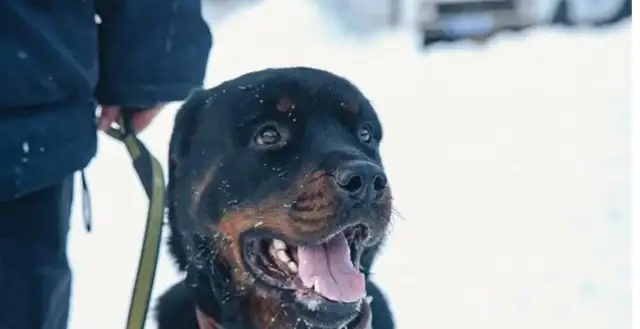
As the dog was very well-sized and qualified, the police regretted that it had fallen into the hands of a drug dealer and had almost become an accomplice to a crime, and felt that it should be able to perform more decent work. It was sent to the Government ' s canine training centre, where experts assessed it as a good dog if properly trained.
So this Rowena dog started its training. As a police dog, in addition to being agile and following instructions, he was brave enough not to be afraid of sudden noise and fire. It did a great job, so that those who recommended it did not regret it. Soon the Rowena dog became a qualified dog and began patrolling the streets with the police.
This Rovina dog is very friendly to his comrades and will play with them. But in the face of the bad, it is very harsh and will not be shaken by any temptation. Fortunately, it ended up being a police dog, otherwise it would be difficult to imagine how much danger such a powerful dog would pose to the police if it was on the wrong side.
This Rovina dog is not the first dog to be deviant but to end up on the dog road. There are times when a dog of bad birth, but well qualified, works as a dog. For example, the Labrador, which was picked up from a dump eight years ago, was being beaten by the owner when the police found it. When it was rescued, the police discovered that it had a sharper nose than any other of its kind, and that it was quite good at following orders, and it was sent to be a sniffer dog to help the police find many dangerous items. Recently, it has retired proudly because of its age.
In some countries, canine services sometimes work with local shelters for stray animals to select some highly qualified stray dogs for service. The training of a highly qualified adult stray dog is less expensive than the training of a pure-blooded police dog, can also solve the problem of the reception of some stray animals, and can provide positive publicity to society to encourage the adoption of stray dogs.
The majority of service dogs that are qualified by stray dogs are sniffers, patrol dogs, guide dogs and therapeutic dogs. The most important of these are therapeutic dogs, which are trained to serve as therapeutic dogs, provided that one of their relatives is polite, cozy and calm. Some of these dogs are sent to prisons for elderly homes, rehabilitation centres, autistic children, etc., so that inmates can change their mindsets by building friendships with dogs, rejecting the idea of crime and actively confront life.
Sniffing dogs are also the more common work that stray dogs can do because their main requirements are nose light and, of course, being able to obey orders. The biggest requirement is probably not to be greedy.
But sniffers are much more dangerous than other types of work dogs. Because sniffing dogs often need to find toxic substances, the chronic smelling of these toxic substances can seriously harm the health of dogs, and they work shorter hours than other dogs, and they can be tired of smelling for longer, and smell cells can be numb to work efficiency.
Some countries encourage good and smart stray dogs to learn to be guide dogs. The guide dogs are the most tiring of service dogs, as they work the longest hours, as long as the master wakes them up as working hours, and as long as the blind masters are not entertained as any other dog, they have to follow them for long periods of time. Developing a guide dog is not only expensive but also time-consuming, and even in developed countries it is difficult for every blind person in need to have his guide dog. Thus, some institutions recommend that blind persons be selective, that stray dogs be used as guide dogs, that they go with blind persons to special schools for training and calibration, that they finally pass the exams, and that they obtain a qualification and become blind. This would allow the blind not only to have cheap guide dogs, but also to find a relatively stable, long-term family home for the strays, which could be described as win-win.