No.: PET4195
English name: Honey Gouramis
Origin: North-East India in Asia
Vulnerability to diseases: albino disease, rotting tail disease
Life: 4-5 years of Lalit mahogany.
The most common technique known as larvae is that of larvae, which is easier to identify by its appearance. The demand for water quality is not stringent, so it is not very difficult to raise, and it is mild and can mix with other tropical fish of the same character.
Latin name: Trichogaster lalius
Context: Animals
Don't call it radiant, nucleus, cherries, cherries, cherubs, honeys, garamis.
English: Honey Gouramis, Duarf Gourami
Origin: North-East India in Asia
The Chinese literary name: Lari's hairy
Co: Osphronemidae Radicules
Laripox can be selected as a gill when it is four centimetres long, and the female and male identification of Laripox can also be judged by appearance. The young editor came to tell you what's more special about Larry's hairy shape, and how Larry's hairy females are identified.
I. FIELD DATA
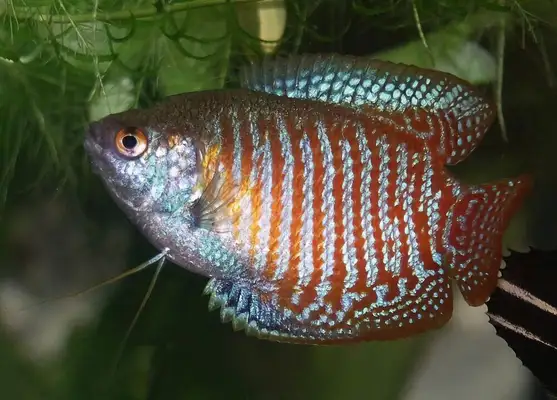
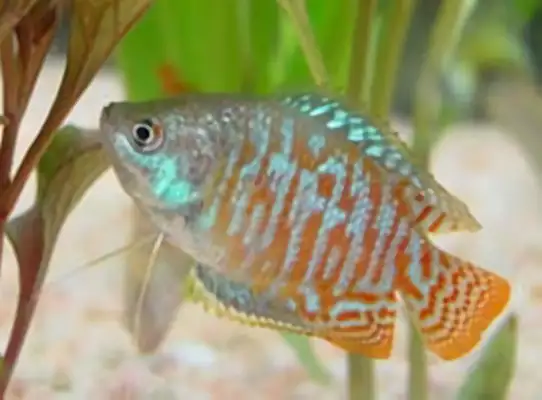
It is 5 cm long, has a long elliptical shape, has a flat side, has a large head, has large eyes and has a sharp mouth. Males are red, orange, blue, blue) orange on the head, black-eyed red eyelids, blue spots on the caps, orange blue stripes on the body. The back fins, ass fins, tail fins have red, blue spots and red edges; the female is darker and gray, but also coloured stripes and coloured colours. The chest of the abdominal fin has evolved into two long silks.
II. METHODOLOGY
The male fish is larger, red, blue and green is the main colour and orange is the line. Its throat and abdomen are also brightly blue and green. The head is orange, covered in black eyes and red eyes, with the outside. The top of the gill has a bright blue on the edges, and horizontal broad stripes between the red and blue sides from the end of the gill to the base of the tail handle. The back fins, the hip fins, the tail fins all have red edges and the fins are also red and blue spots. The tip of the back fin is sharp.
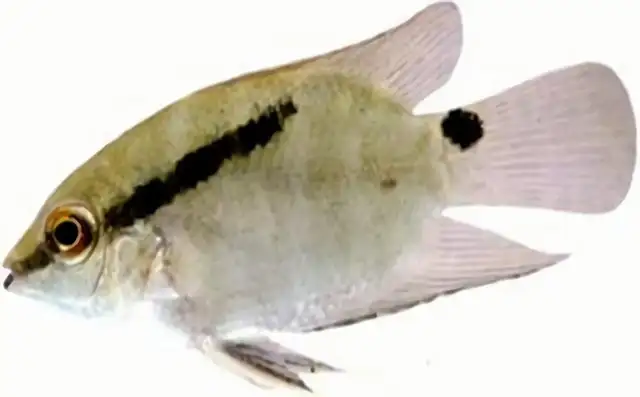
The female size is small, the colour is not male, it is darker, it is silver gray, but it is coloured. The fins are shorter and have light colours, but also red edges. At the end of the back fin, it is blunt. The abdominal swelling when the sex matures. ♪ Lali puffed the environment ♪
It is not very difficult to raise the caliphate, which is recommended at 21-30°C and which prefers clear old water. Because of the small size of Larry's hairy sheets, a variety of water and grasses should be used to create the environment for Larry's fury.
Lalit puffs often swallow air from the surface of the water and then swim quickly into the water to spit in a small bubble. Such tropical fish are healthy and timid, especially in the first days of a new aquarium, often hiding in the corner without food, if not forced by hunger. When people approach, they quickly disperse to the corners of the aquariums to seek refuge. Due to their timidity, Larry has a tendency to live in the gaps and behind the watergrass and rocks, and is afraid of the strong light, often hiding in the dark. Therefore, aquariums must have a variety of water and grass, or grow large grass, and can provide them with a suitable shelter to alleviate the constant shock to the fish. Lalit puffy prefers to live in high-temperature waters, so the aquariums need to be housed in a place where a little sun shines.
The pull is mild enough to mix with other tropical fish. When there is no interference with the outside quiet, the fish will sound “pushed” from the bottom of the water, spraying water in motion, with little oxygen in the water, and it absorbs less oxygen in the water, mostly by replacing the gas with an auxiliary respirator (labyrinthorm oran) to breathe oxygen directly from the air above the water. It can therefore live well in less oxygen-rich waters or survive for a short period of time when the fish is lifted off the surface.