Designation: PET6388
English name: Goldfinch Treasure Profile
Goldfinch has 24 species worldwide, but there are five in China, and canaries like plains or mountains. Usually in March-July of each year. The Golden Fist is one of the most common cage birds in northern China. It is located in the eastern part of Asia, downstream of the Heilong River Basin in the Russian Far East, in Japan, North Korea and the northern Indo-Chinese peninsula; it is located in the eastern part of China, in large parts of the north-east, in large parts of the north-east, and in all parts of south-central China, and it is located in the Qinghai Province, north-west, and in the south-west, along the Yunkugawa line. Greenbird foods are mainly seeds of trees and weeds, and can also feed with grains and insects. Golden Freckles.
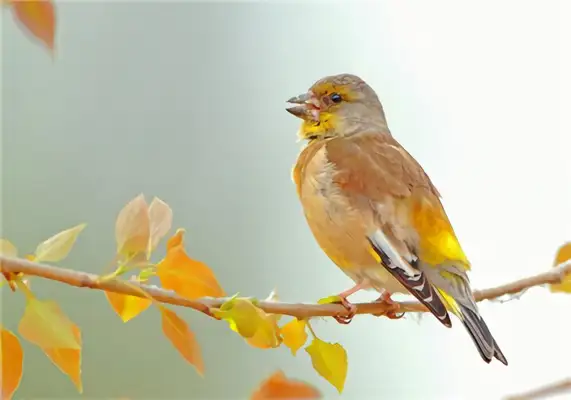
The female is very similar to the male, and the young are similar to the female. The ideal weight of an adult female is between 15 and 22 g and of an adult male canary between 15 and 21 g. The female length should be between 116 and 145 mm and the male length between 119 and 140 mm.
The eyes of the male freckles are black before the eyes, the eyes, the front forehead, the cheeks, the earful feathers, the eyebrow area, the brunette on the side of the head, the brown on the head, the pillow to the back of the neck, and the feathers are yellow and green. The sides of the back, shoulders and wings are dark and brown, the feathers are slightly yellow and the waist is yellow and green. The short end-over plume is also green, the long end-over plume is gray and yellow, the central tail is black and brown, the plume is yellow, the plume and the tip of the plume is white, and the rest of the plume is yellow, the last is black and brown and the outer plume is gray. Small feathers on the wings, medium feathers and backs are the same colours, large feathers are the same as backs, but a little light, primary feathers are black, small wing feathers are black, but the feathers and the outer feathers are green and the wings are yellow. The primary flying feathers are black and brown, the tip of grey and the base is yellow, forming a large yellow wing on the wings, the rest of the feathers are black and brown, the feathers and the tip of gray. The cheeks, gills, larynx yellows, the chests and twilights are covered in green or brown, the lower chests and the centre of the abdomen are yellow, the lower abdominals are white, the tails are yellow and the wings are yellow.
The females are similar to the males, but the feathers are dim, and the head up to the back of the neck is brown and dark-coloured. The upper body is yellow and brown, and the back is brown and yellow and green. There are also fewer yellows in the lower body, only slightly yellow and not as bright as males.
The young bird is similar to the female, but the feathers are lighter, with visible shades of light brown and brown stripes of yellow below.
Ion membrane tan, tan or yellow, light brown or gray. Goldflakes.
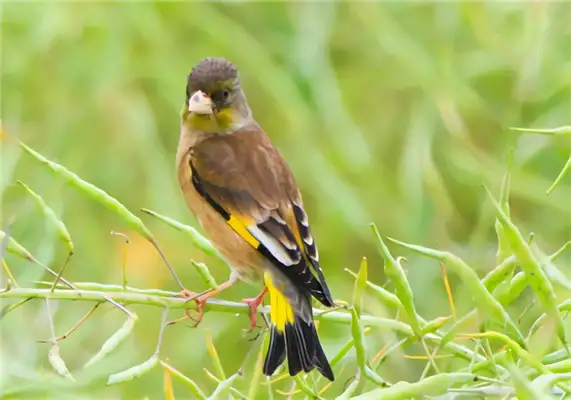
It is common for a bird to be raised in the north, and a canary that is usually kept in a canary can choose any bird that is appropriate in size. The freckles are resistant to heat and can be raised indoors in the winter, while major summer breaks are required in the summer. So what's the point of feeding?
1. Food
Mee, vegetables, sucos, whatever. If you don't have sucos, feed Mi, usually + some green fruit. Birds feed the grub and rice paste.
Feeding and timing
Birds can't be mean, food can't be limited.
How do chicks feed water?
It's next to a glass, and it'll drink itself. There's plenty of water. Goldfowl breeds knowledge.
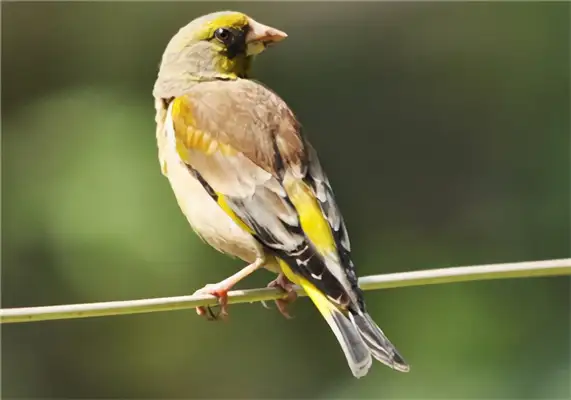
The falcon is highly stable and can be stopped on the wire for long periods of time, often acting alone or in pairs, sometimes with as many as a dozen or even hundreds. The period of breeding is usually March-August of each year.
Goldflake breeds 2-3 nests a year. Most of these are 1-2 in the north and 2-3 in the south. In the north, matching began in the first half of March, flying around the canopy, or the males showing off around the females, flying and chasing each other. They are nested in pebbles on low hill hills and footlands and in broad leaves and bamboo bushes, such as Yang trees, fruit trees and pebbles. Neighbourhood height 1.2-5m. The nest is in the form of a cup or bowl consisting mainly of material such as twigs, straw, grass, plant fibres, stubbles and, in some cases, material such as cotton, flax and feathers, with a condensed structure with hair, animal hair and small feathers. The nest is 7-11 cm in size, 5-7 cm in diameter, 5-8 cm in height and 3.5-5 cm in depth. The nests are mainly borne by females, who assist them in carrying the nests. Each nest takes 7-8 days to complete. Once nests have been constructed, spawning begins with 4-5 eggs per nest. The eggs are elliptical. The colours of the eggs vary significantly: some are grey or light green, are coloured by rusty or brown spots, especially with thicker blunt ends, and often form rings; others are green, green white, duck eggs, blue or light red, and are brown, brown or purple spots. The size of the eggs is 17.0-19mm x 12.4-14.5mm and weighs 1.6-1g. Usually, one egg is laid daily, more than before 7:00. When the eggs are fully laid, they begin to hatch, borne by the female, for a period of 13 ± 1 day. The chicks are of late age, and the newly hatched chicks weigh 1.2-1.3g, with their whole body, except for grey feathers with thin head, pillows, shoulders, wings and the centre of their backs, with large stripless feathers, skin red, female-to-male feeding for 15 § 1 day.