Designation: PET4240
English name: Cuora amboinensis
Character: Fear of cowardice
Origin: Widely distributed in the tropical region of South-East Asia
Vulnerability: leukemia, skin diseases
Life: Around 50 years of age
Price: A brief description of the turtle species of 300-500 Anbu closed-hull turtles
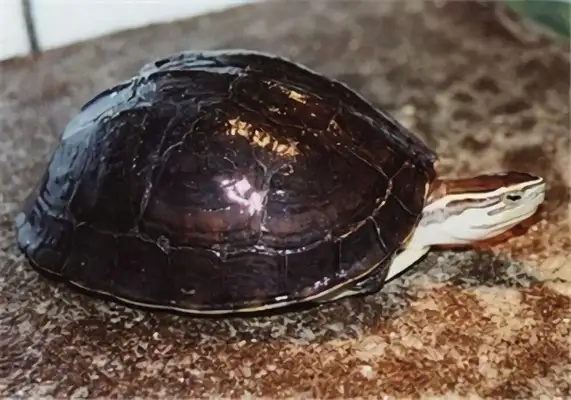
The seven closed-hull turtles that exist in our country, the most common and cheapest of them, are also more farmed. Anbu closed-hull turtles, Vietnamese turtles, Malay closed-hull turtles. Wild Ambus live in streams, swamps and low-lying areas not far from water, eating worms, snails, etc., as well as skinny meat and bananas under artificial rearing conditions.
Anbu closed-hull turtles are found in Bangladesh, Myanmar, Thailand, Cambodia, Viet Nam, Malaysia, etc. It's a semi-water turtle. The breeding environment can be made to the surface, but the water level should not exceed the height of the turtle's backnail, and deep autumn and early spring turtles need not be placed in the water and can be raised directly on sand.
Chinese name: Anbu closed-hull turtle
Alias: Male Clock Turtle
Latin name: Cuora amboinensis
Biology classification: vertebrate doors, reptiles, turtles, turtles, tortoises, turtles, closed-hull turtles.
Distribution: This variety is widely distributed in the tropical region of South-East Asia, from north-eastern India through Bangladesh, Myanmar, Thailand, Indo-China, the Peninsula of Malaysia and Singapore to Borneo, Sumatra, Java and small islands in the east, including the Philippines. We have met in Guangdong and Guangxi provinces.
Habitat: semi-water turtles
Lifestyle: Semi-water turtles but can live in deep water for a short period of time. Wild turtles often live in marshes, low-lying areas not far from water, ponds and mountain streams. Under the conditions of artificial rearing, they enjoy living in water and, at high temperatures, climb to shore to rest. Eat normally at ambient temperatures of 22-25°C, stop eating at about 18°C, do not or do not move at 15°C, and enter hibernate conditions as the temperature decreases.
Eatability: Ambosen closed-hull turtles are absolute vegetarians in the wild, they eat mainly aquatic plants, but in the case of artificially raised animals they are easy to accept fish and thin meat.
The size of the body: 15 cm in total, up to a maximum of 22 cm to 25 cm in the abdomen, and up to 2 cm in weight.
Reproduction characteristics: From April, humans have been able to produce one or two eggs per nest. Between May and June, they dug their nests between two and three weeks in a row. The general spawning is not more than four nests. The eggs of 1~1/2 inch are white, fragile and elliptical.
difficulty of raising: simple
Hibernation: hibernation, but shorter
Price: Anemite closed-hull turtles are the cheapest species of seven closed-hull turtles, 300-500 yen. Anbu closed-hull turtle morphological characteristics
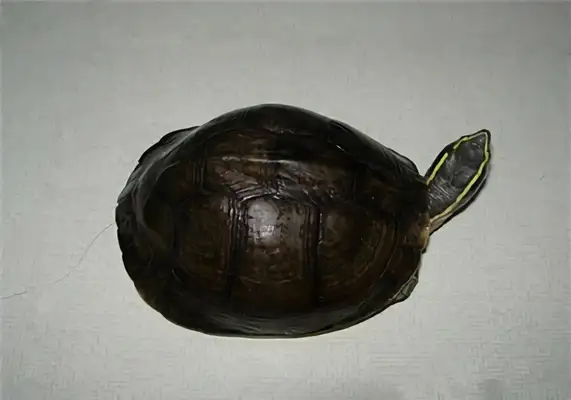
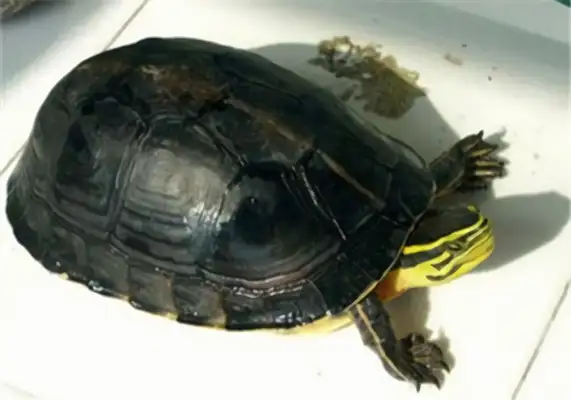
The original impression of the Anbu closed-hull turtle was his black backnail and yellow piece of face strips, which contrasted very sharply, making the Anbu closed-hull turtle very good. It is a good way to protect yourself.
Anbu closed-hull turtles are the only of all Borneo turtles with a fully evolved abdominal chain structure, which, after contraction of the head and limbs, can completely close the crust, and it cannot be confused with other species. It has smooth backs and is hemispheric in heights, with an elasticity in the centre of the adult backs, but two additional elasticities may appear on both sides of the larvae.
The vests are olive, brown or almost black, yellow or beige, with a large black spot. The face has yellow vertical stripes. It lives in static or slow-moving water bodies, including rivers, lakes, marshes, mangrove wetlands and agricultural land. The larvae are more aquatic in preference to the almost unaquatic formations.
Anbu closed-hull tortoises are flat and short-tailed; male tortoises are dimmed in the centre, older turtles are dimmed to a greater extent. The aperture of a juvenile or rigidly mature turtle is not dim or dim. Market-based ambu closed-hull turtles come from the wild and have been resold many times, compounded by differences in environment and climate, most of them are injured or ill, with low survival rates, especially in the north. Because of their long life in water, the Anbu closed-hull turtles are prone to ulceration in their backs and abdomen, they should often be moved to the land in day-to-day management to radiate the sun, but not for long, otherwise the shields on their backs are easily released. Enbu closed-hull turtle care knowledge
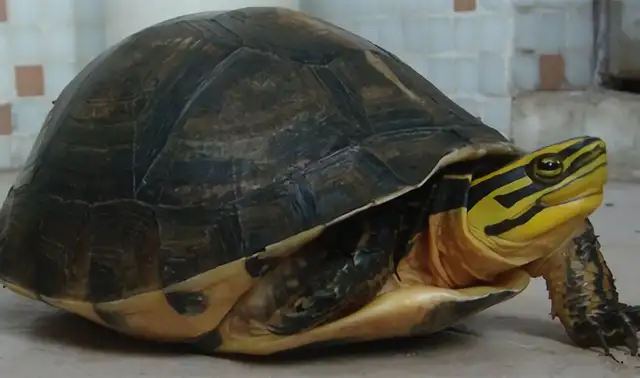
The Anbu closed-hull turtle, the Malai closed-hull turtle, is a very timid tortoise that can constrict the whole body to the shell in case of danger. When raising an impregnated shell turtle, it is important to provide the turtle with a relatively quiet living environment, with attention to the following.
Anbu closed-hull turtles are timid, and once the surroundings are moving or close to them, their heads and limbs are fully in the shell, and it is usually 30 minutes or more before they reach their heads. Anbu closed-hull turtle crawling for less than two to three days remains a position. Newly acquired ambu closed-hull turtles have to be given a quieter and darker environment, with some skinny meat, bananas, water for their consumption after 3-4 days, and normally normal turtles are not allowed to eat for about two weeks because of the low adaptive capacity of the ambu closed-hull turtles. Appropriate ambient temperatures are above 25 degrees, about 18 degrees stop eating, and about 15 degrees gradually enter the hibernation phase with a maximum temperature of over 10 degrees.
Anbu closed-hull turtles should be the most water-friendly turtles in the closed-hull turtles, most of the time operating in the water, but they are not very watery, so when setting up the environment, the water is not too deep, but without the turtle's back, so that they can rise up and not be too small, and half the turtle can explode easily if they are exposed outside.
The land area could be around 30 per cent, and it would be preferable to separate the rearing boxes with glass plates, which could be used as sandstone or flat sedimentary rock to facilitate their sunshells. It would be preferable to ensure one or two hours of natural light per day, and without conditions, the UVB lamps would be indispensable. As the climate of origin dictates that they do not hibernate, it is necessary to use heat sticks to keep Ambe warm for a winter. Anbu closed-hull turtle living environment
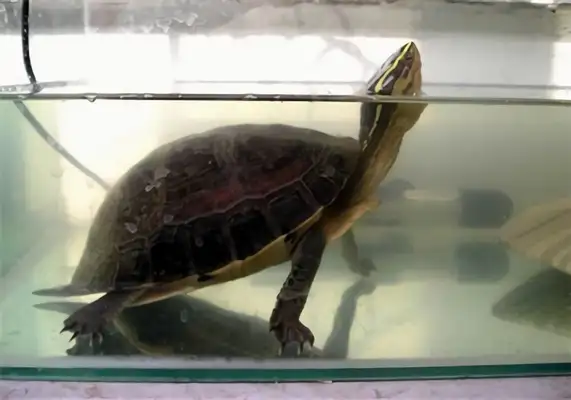
Of the seven closed-hull turtles, Anbu closed-hull turtles are the most aquatic, which is very similar to turtles. And they only live in the equator ' s tropical rainforest environment, so they are sensitive to dry environments (of course, in dry local sunshells).
Anbu closed-hull turtles are semi-aqueous but live in deep water for a short period of time. The breeding environment can be made to the surface, but the water level should not exceed the height of the turtle's backnail, and deep autumn and early spring turtles need not be placed in the water and can be raised directly on sand. Wild turtles often live in marshes, low-lying areas not far from water, ponds and mountain streams. Under the conditions of artificial rearing, they enjoy living in water and, at high temperatures, climb to shore to rest.
Anbu closed-hull turtles are warm and cold and sensitive to environmental temperatures. Long-term living in a water temperature of about 5°C puts turtles at risk of death from disease. Water temperatures of 15°C do not move or do not move, and are in a state of hibernation as the temperature gradually decreases; water temperatures of about 18°C stop eating and small activity; water temperatures of above 20°C eat, water temperatures of 22-25°C eat normally and water temperatures of 25°C are the best suitable temperature. Small animals, such as groceries, small fish, snails, worms, insects, etc., are grotesque and wild. Artificially, eating apples, bananas, tomatoes, small fish, thin pork and the internal organs of poultry. There is no competition between them or between them. Anbu closed-hull turtle breeding point.
Although Ambu closed-hull turtles are amphibians, the difference is that Ambu prefers water turtles because it prefers to feed and feed in water. So water quality is the same as water turtles. Water quality and filtering systems are important for their health.
With regard to the choice of Ambu food, some of the research has been devoted to time, and there are academic data indicating that the Ambu closed-hull turtles are absolute vegetarians in the wild, that they are dominated by aquatic plants, but that they are easy to accept fish and thin meat in the case of artificial breeding, but it is known that the acceptance of too many animal proteins can cause kidney failure and death. Following consultations with many of the reptiles, it was felt that the best recipes for Ambu were still plant-based, fruit-based and meat-based. Plants that can be fed include: plumes, algae; vegetables such as green leaves, kale, etc.; and some common fruits that occasionally feed thin meat, insects, snails, etc.
Ambo is the most lopsided species of all semi-water turtles and is particularly sensitive to dry environments. Not only is it groceries and, in general, is a widespread drug and food turtle, but fortunately it has been included in care abroad, including in port stations, which has significantly reduced the number of people eaten. Anbu larvae tends to be carnival, mainly based on small fish shrimp or earthworms and feed, and occasionally eat vegetables. Precious turtles can be raised in a manner that, as they grow, they gradually increase plant intake and become vegan. It will also increase landing time. Amber is a small, semi-water turtle with only about 15 CM in shape.