Designation: PET3536
Origin: Amazon Basin, South America
Vulnerability to diseases: albino disease, rotting tail disease
Life: 5-6 years ' profile of fish species
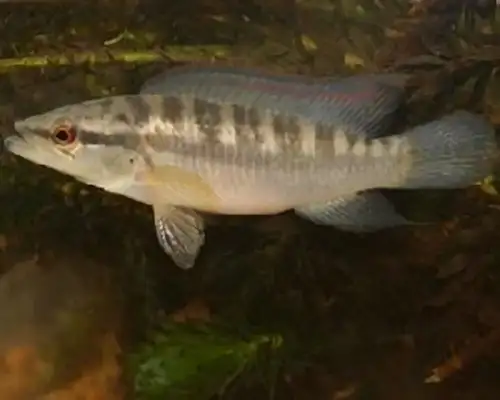
The mackerel fish, which originated in the Amazon basin in South America, is green and green, its head is characterized by mackerel fish, and its back fins are small but long. It is important to note that the mackerel fish are so hot that they cannot be mixed with small fish viewers.
Sections: other sections
Origin: Amazon Basin, South America
Water temperature: 26-27°C
Hardness: soft water
Ph: Weak acidity
Sexuality: violentness and inability to mix the shape of a fish with other species
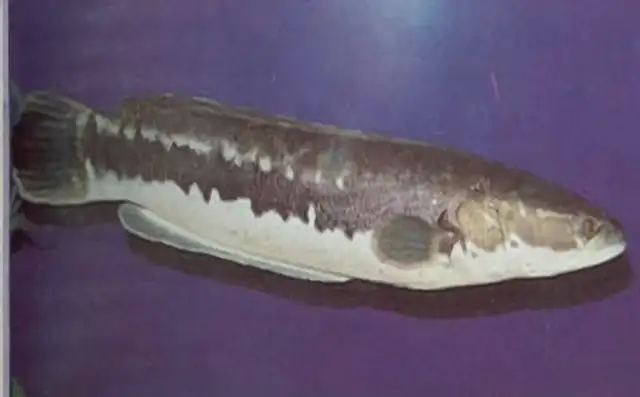
Snacks are not easy to plough and are more demanding for water quality. Moreover, the sexual nature of the fish is so intense that it is recommended not to mix fish with small fish viewers in order not to cause, for example, fighting.
The puddle fish, which originates from the Amazon River in South America, is cylindrical and cylindrical. In addition, the mackerel is green, with a black strip on each side from the eye to the centre of the tail, and dozens of circular black spots on the black belt. Head tip, back fin short but long. The male is more colourful; the female is slightly less coloured and has abdomen. Snack fish breeding environment
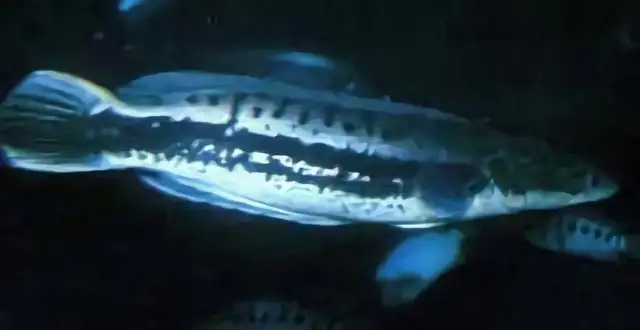
The mackerel is of such a sexual nature that it is not easy to plough, and the water quality requirements are very stringent, with a recommended PH value of 7. Around 0, water quality suggests the choice of soft acid water.
It is recommended that the water be kept at 22-25°C and that the fish be raised at the point of view. Reproduction of water temperature of 27-28°C, eight months of maturation of the pro-fish. The female is more colourful and chooses smooth rock or marble sheet as nests. The female lays 500-600 eggs each. In nature, the main habitat is the clear stream of water. Snacks are raised in aquariums, so long as care is taken to keep water quality high and pH high alkalinity. To create a high alkalin and hard water quality environment, coral sands can be selected as the base sand mass, a gravel consisting of corals or shell fragments, the main component of which is calcium carbonate, thus allowing the sustainable release in water of ion that increases water alkalinity and hardness and has an excellent ability to acidize buffer water quality. The pointy fish.
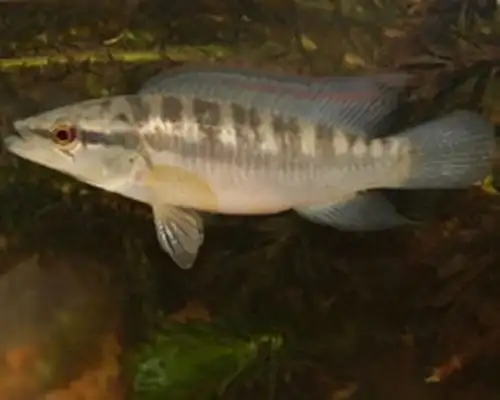
There are still more bait options for the mackerel to feed either live bait or artificial bait mixed feed. However, it is still more difficult to feed the fish, so it also requires attention to scientific feeding methods.
A half of the fish farming has been achieved if the water quality is treated, and the main remaining problem is feed. At present, the most common live baits are earthworms, daphnias and, at a higher price and with a catalytic effect, blood insects (e.g. larvae) and larvae and adult insects. It is easier to feed artificially, in the form of slices and particles.