Designation: PET4926
Origin: Fujian
Vulnerability: ballworms
Life: Around 8 years old
Price: 10-15 Yen/Jake Fukuyanh
Fujian hares are the best meat rabbit species in the country and although they are not very big in form, they are short-lived rabbits, with faster columns and high rates of meat, especially in China, which is highly resilient to the environment. The growth rate in the pre-period was rapid and was increasing by more than 30 grams, which was 1 to 2 times greater than in other species of coloured rabbits. The “four-thirty-thirty-thirty” characteristics of finely lubricated and nutritious meat, high proteins, lysine acids, high phosphorus resins, high digestive rates and low fats, low cholesterol, low heat, low urea acids, have been hailed as “brained meat”, “pretty meat”. Fukuyan hare morphological characteristics
It's beautiful, it's yellow, it's hairy and short, it's white in the abdomen, it's open and it's full of flesh. Fast-sized rabbits with red, black, sky blue, etc. Mother rabbit nipples four to five, more than four. Adult rabbits weigh about 2 ~ 3 kg, with coastal weights greater than in mountainous areas. Mother rabbits generally have an inclement age of 4 months, starting in August, giving birth to 6-8 per year, with an average of 6-8 live births, up to a maximum of 9. The slaughter rate was around 54 per cent at the time the yellow rabbit weighed 1.5 to 2 kg in Fujian, usually at the age of 1.6 to 4 kg in March. Fujian hare nursing knowledge
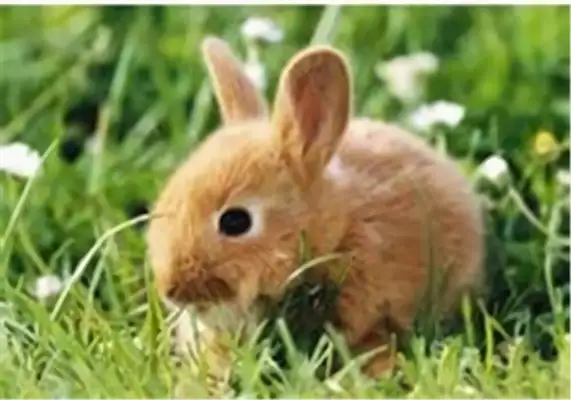
As an economic animal, Fujian hare, which is widely distributed in rural areas of the country, focuses not only on not being ill, but also, and importantly, on fertilizer and maximizing its economic value.
I. Creating suitable conditions for breeding
At the age of 1-7 days, the temperature of the incubator remained as high as 28-30 degrees and then gradually decreased to 25 degrees, while the temperature of the adult rabbits indoors remained as high as 15-23 degrees. The relative temperature remains at 60 ~65%, the environment is quiet, indoor air flows, the light is weak, and rabbits are only able to move in sufficient quantities and the appropriate animal density. In the case of young rabbits aged between 60 and 60 days, a total of 60*70CM rabbit cages can feed between 5 and 7 children; after the age of March, they are raised alone to avoid early matching.
II. REQUIREMENTS AND Weaning
It usually begins at the age of 15 days to supplement the material and at the age of 30 to wean. Replenishment should be fed to nutritious and digestive feed, with a small amount of food and grass interchangeable and incremental. Weaning should be done in a way that is not isolated from the breast so as to reduce stress.
III. Improper fertility
In order to increase the growth rate of the yellow rabbits in Fujian, the market rate is increased, and the rabbit farms, where conditions exist, should be prepared with the raw materials of barley, beaks, peas, potatoes, peanuts, fish powder, rice sugar, etc., at nutritional levels; the digestive capacity of 11 ~12 MJ/KG, 16 ~17 per cent for coarse proteins, 10 ~13 per cent for crude fibres, 0.5 per cent for calcium-1 per cent for phosphorus 0.3 ~0.5 per cent. Fertilizer methods can be used: daily inputs per rabbit to mixed concentrates of 50 ~ 90 g, green feed of 500 ~ 1,000 g, free drinking water; or, when we are weaned, to concentrate on precision, to be supported by cyanide, to be phased out in 20 days, to be supported by cyanide, to be fed with precision, to be fed within 10 ~ 20 days before the market. It can be marketed at the age of 3.5 to 4 months.
The Right Rabbit Disease
Rabbit control should adhere to a “preventive and curative” approach. They insist on self-rearing or regulating seeding. In addition to effective routine sanitation, the entire population of rabbits should be immunized against the plague and other major diseases in a timely manner. The rabbit disease procedure can be based on 28-30 days for rabbit coli, 1 ml/only; 35 days for pest-free live seedlings (plus 1 in 15 days), subcutaneous injection, ibid. Every spring and autumn festival, rabbits are immunized once each against the plague of the platinum platinus platinum, and injected under the skin, 2ml/only. Vaccinations are carried out to ensure dose and quality of vaccines. Fujian hare living environment
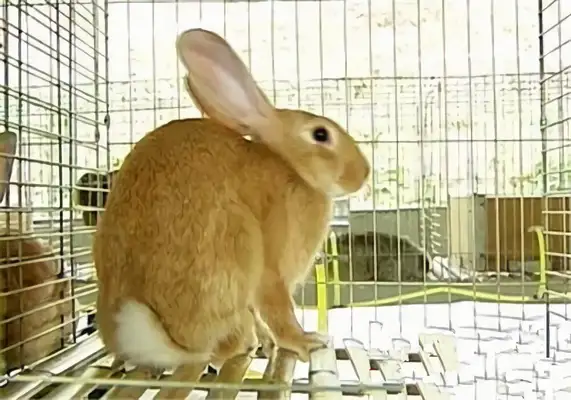
As Fujian is located along the south-eastern coast of the country, with high summer temperatures and cold winter temperatures, an environment that is not suitable for animal life, the way in which the yellow rabbits are conserved for four seasons a year varies, as briefly described below.
I. Temperature control of yellow rabbits in Fujian
The most appropriate temperature for the Fujian hare is 15-25°C and between 65% and 75% humidity. When the temperature is too high, it is possible to draw down the curtains for ventilation, and the roof cools; when the temperature is too low, it is necessary to pull up the curtains and close the doors and windows. When it is wet, it is ventilated and humid, and when the temperature is too low, water is spilled to increase humidity.
II. Quadrennial management of yellow rabbits
Fukuyan hares grow in a climate of fear of humidity and high temperatures, so they are carefully cared for in the spring and summer.
1. In the spring, which is characterized by heavy rainfall and humidity and by the proliferation of bacteria, care must be taken during the season to prevent disease. In the day-to-day feed of yellow rabbits, it would be useful to include some pyropathic drugs to prevent the occurrence of pyropathosis and to increase the resistance of yellow rabbits. Electrolytic multi-dimensional drinking water for yellow rabbits to prevent cold and pneumonia when weather changes suddenly and the cold comes.
2. High summer temperatures require cool ventilation in the rabbit ' s house, either by pulling down curtains or by the roofs.
3. The autumn temperatures are dry and cool and are the best season for rabbits, and the management of the stockbreeding should be strengthened, nutrition should be increased, health should be restored as soon as possible, and yellow rabbits should do their job.
4. As winter temperatures are low, the weather cold and the sun is short, care should be taken to keep the rabbit house warm. What's the point?
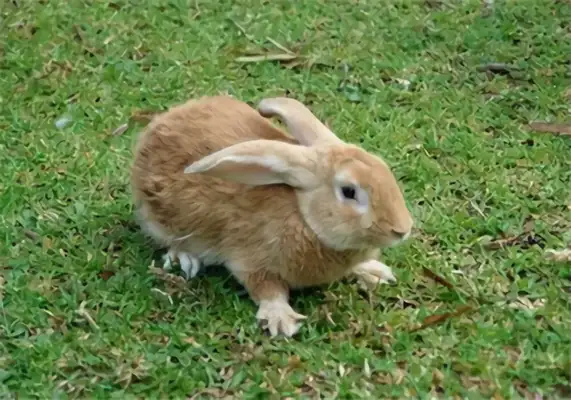
The choice of food for the Fujian hare is the same as for most rabbits, but at the fertilizer stage, in order to make it more meat-producing, energy-intensive food can be provided over time, either as a feed for their own matching or as a feed for their purchase.
I. Nutritional standards and composition of daily food for the Huangs of Fujian
1. Nutritional standard for yellow rabbits in Fujian: 15 per cent of coarse protein, 14 per cent of coarse fibres, 0.5 per cent of calcium and 0.3 per cent of phosphorus per kilogram of daily food (meaning growth and development period).
2. Daily food composition: 23 per cent maize, 20 per cent cereal, 38 per cent wheat, 17 per cent cake, 1.5 per cent shellfish and 0.5 per cent salt.
II. Key points for the management of the yellow rabbit in Fujian
Precise is based on daily grains, 75-85 grams per rabbit per day, twice a day, and once a night.
2. Grass is free to eat. Spring and summer are dominated by green and green feed, and in autumn and winter by peanuts, sweet potatoes, grass, carrots, cabbage, etc.
3. Free drinking water, clean water quality, change daily.
4. Disease control. The prevention and control of rabbit plagues, Bacillus, spherical worms and the four major diseases of the disease must be strengthened. The rabbit is weaned for 15-20 days to prevent the injection of a plague or a plague, and then another six months later.
Pyramid disease is prevented mainly by chlorophenol during the rainy season. Regular use of pyrenics, 20 per cent of lime water, potassium permanganate to sterilize rabbits and nests and to prevent epidemiology.