Designation: PET3356
English name: Platemys platycephala
Origin: South-East Asia
Vulnerability to disease: decomposition
Life: Overview of the species of red-headed snakes and turtles for about 50 years
Redhead neck turtles are more timid, especially new wild individuals, and are as intolerant as South American water turtles, usually with their tails as their focus in the identification of females and males, with their rough tails being male and small female turtles. In general, curvature turtles are more adapted to capture. However, its behaviour and body may be so weak that it is considered to be in the near future. Redhead neck turtle morphology
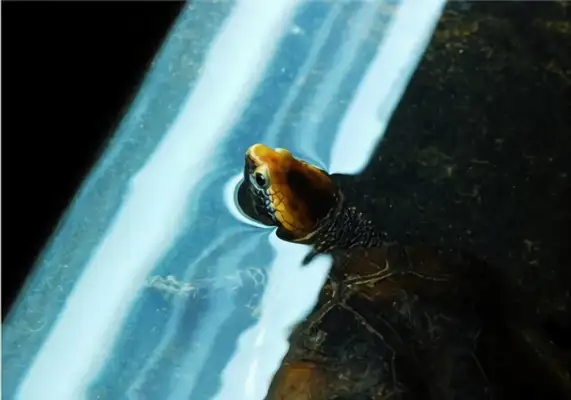
Red-headed snake neck turtles are a more beautiful type of family of snake-neck turtles, which are not necessarily red heads, but are mainly related to the way they are raised, and some colours can only be called yellow.
Red-head neck turtle has a pretty flat head and crust. The two tracks, which run through the entire elliptical backnails, have a dent in the middle. They're a little colory. Red-headed snakes have black stripes in the back of their necks, or between dark or shallow browns. The abdomen are always dark brown or black, and the light yellow on the edge is always stretched to the edge. The head is dark orange red, with tiny tumours on the neck, which gradually decrease from top to bottom. Headless, smooth top. The rest of the skin is dark, and the limbs are covered with large black scales. Its limbs and toes make people connect it to semi-water turtles. Red-headed snakes can reach about 6 feet (15 cm). Red-headed snake neck turtle conservation focus
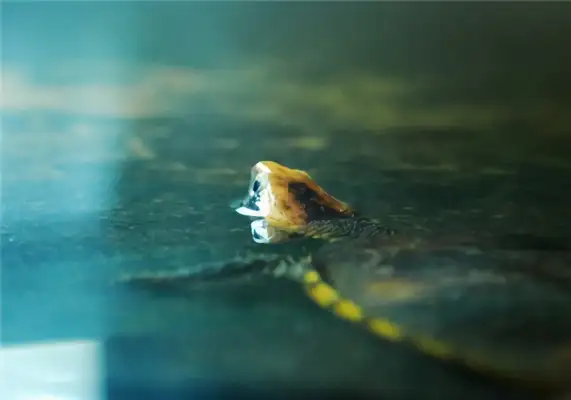
Redback neck turtles are more complex, a wider species of turtles, and this wide distribution leads to a large number of them, so that there are many people raising them, and the most difficult one is nursing.
Red-headed turtles are found throughout the Amazon and tributary basins of the Orinoco rivers of South America and are therefore widely distributed, including Venezuela, Colombia, Ecuador, Peru, Bolivia, Brazil, French Guyana, Suriname and Guyana, and can be considered one of the most widely distributed sea turtles in South America.
In the identification of females and males, the focus is generally on the tail, which is rough for males and small for females. Female turtles usually lay one egg at a time, usually on the ground or in shallow soil, producing 2-3 times a year. Newly born turtles are very vulnerable and can feed them first with live baits such as fish shrimp, red bugs, and once they pass the adaptation period, they can feed the turtles once they reach normality. Although they are groceries, they respond positively to live baits, which feed animal foods such as cricket, shrimp, bread worms and turtle feed. The living environment of a red-headed snake.
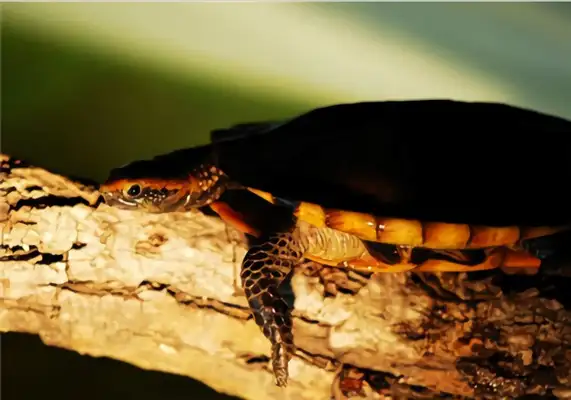
Redhead neck turtles are semi-water-dwelling turtles, so try to keep a part of the tan line in the environment, some of which can be ploughed in boxes, so that the tan line is put in place, the water body is healthy and the environment is as quiet as possible.
Red-headbacked turtles are more timid, especially new and wild individuals, and as insatiable as South American water turtles in general, need more careful heat protection and care. Although they do not hibernate, they enter a hibernation-like state of hibernation at temperatures below 20 degrees, so it is best to increase the temperature to above 26 degrees. To avoid physical failure due to hibernation.
Since redhead neck turtles are used to operate in shallow water zones, they also have a longer time onshore than normal water turtles, and can be raised more appropriately by box turtles, or as South American wooden turtles. It's enough to put a tortoise in a water basin that can be immersed. Red-head neck turtle food selection
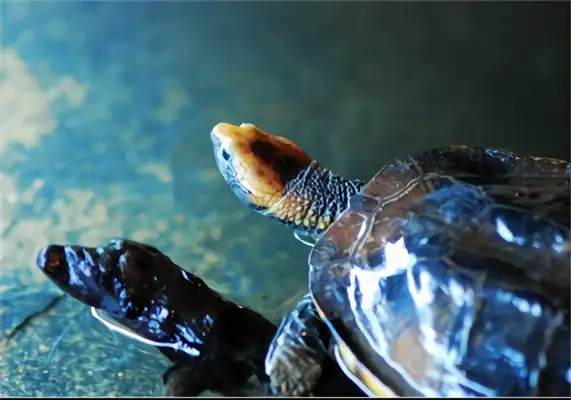
Redhead neck turtles have a rich choice of food, a species that does not know how to pick, but in order to ensure that turtles are more colorful, some turtle friends choose to feed some frozen dry red shrimp, which is possible, but to ensure that food diversity does not blindly pursue colour deposition.
Redhead neck turtles are greasy turtles. He's good at eating. You try to give them regular food. It is recommended to be formed three times a week, but tortoises can do so once a day. A more balanced diet of commercial turtles and dogs in the market is available. This turtle has a keen eye and a sense of smell, so he's good at stealing food.
Under artificial rearing conditions, red-headed snake neck turtles enjoy animal baits, such as fish, pork, animal internal organs, snails, snails and blood worms. The larvae, the red filaria (the earthworm), the yellow powder (breadworm), the maggots, etc., cannot carry thorns and bones in order to protect the turtle from injury, preferably by feeding fresh raw meat, hard meat when cooked, and the turtle does not like hard food, and the red-headed snake-backback eats shrimp.
In extreme hunger, individual turtles eat vegetables, rice and molluscs, but rare. Tortoises eat essentially meat. Red-headed snakes have no selective feeding time and are fed day and night. There are predators in hunger.