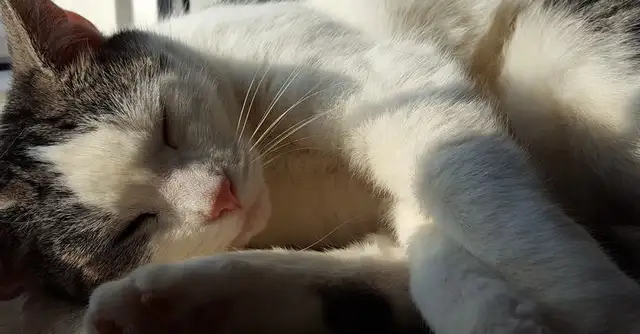
The Norwegian Forest Cat, also known as the Norwegian Forest Cat or the Norwegian Forest Cat, is a Norwegian-born cat variety. By virtue of its beautiful appearance, elegant gestures and friendly character, she became a pet partner among many others. It's not just because it's attractive, but because it's strong, smart and independent. This paper will provide a detailed overview of the variety of Norwegian forest cats, character characteristics, rearing techniques and hair care to help you better understand and care for this charming cat. I. Overview of varieties
The history of Norwegian forest cats dates back hundreds of years, and their ancestors may have been taken from Vikings to Norwegian cats and mixed with local wild cats to form today ' s Norwegian forest cats. Norwegian forest cats are long hairy, medium to large, have very strong skeletons and muscles and adapt to the harsh Nordic climate. Its hair is thick and waterproof, providing excellent heating during cold winters.
The Norwegian forest cat's head is triangleed, its eyes are round, its ears stand up and its appearance is very elegant, giving people a sense of natural wildness combined with tenderness. Their hair is a distinctive feature, long and thicker, especially in the winter, where it becomes thicker and forms a beautiful coat. The tails are also very floating and often rise up like a beautiful broom. II. Characteristic characteristics
The Norwegian Forest Cat is a gentle, independent and smart cat. They like to be close to their families, but they don't rely too much on their owners like some cats. Such cats are usually gentle and quiet, but lively and curious. They prefer to explore the surrounding environment, so it is vital for them to provide a safe space for their activities.
Norwegian forest cats tend to prefer independent activities to those of cats who enjoy themselves at home and do not need the company of their owners. Their independence makes such cats more suitable for those who are busy and long away from home. Although they are independent, Norwegian forest cats are also very fond of having deep emotional ties with their owners. When they are quiet, they may rush their masters, enjoy touch and be close.
Norwegian forest cats are also relatively quiet cats, and although they are larger in size, they do not appear too noisy or impatient because of their size. They usually have a more elegant and calm attitude, fit for the family environment and able to get along with other cats and pets. III. Livestock techniques
The Norwegian Forest Cats, an active and exploratory cat, need enough space to meet their activities. If you have larger indoor space in your home, you can set up some climbers, cat trees or other facilities where you can climb, so that they have enough room to move. Such an approach would help them maintain their physical and mental health.
Toys and interactions that provide incentives, while the Norwegian forest cats are more independent, are very much in love with play. They can be regularly supplied with challenging toys, such as interactive toys, velvet balls, etc. Regular interaction with cats not only enhances their health, but also enhances emotional ties between you and cats.
Dietary management of Norwegian forest cats is a larger cat that requires an adequate and nutritionally balanced diet. You can choose high-quality cat food to ensure that it contains sufficient protein and fat to support their growth and daily activities. Pay attention to adequate feeding to avoid over-feeding leading to obesity while ensuring that cats have sufficient clean water.
To avoid being alone, while Norwegian forest cats are more independent, they need some social interaction. If you go out for a long time, it's best to provide a partner for cats, especially another one, so that they don't get anxious because they're alone. IV. Hair care
The hair of Norwegian forest cats is very thick and requires regular care. In particular, their hairy parts are easy to tie and hair care is particularly important.
In order to keep the hair of Norwegian forest cats smooth and unconstructed, the owner should fix their hair regularly. At least once a week, especially during the fur exchange season, the frequency can be increased appropriately. Combing hair not only removes fallen hair, but also avoids hair knots, helping to maintain the health and beauty of hair.
The hair of Norwegian forest cats in bathing is somewhat waterproof and generally they do not require frequent bathing. Bathing is necessary if cats are dirty or smelly. When bathing, special cat wash kits to avoid skin irritation.
Attention to the cleaning of ears and claws is easy to accumulate because of the large and straight ears of Norwegian forest cats. Periodically check whether the ears are clean and clean in time to avoid infection. Cats are regularly trimmed to avoid excessive claws affecting their daily activities. Concluding remarks
Norwegian forest cats are a very attractive variety of cats that are not only beautiful, independent and moderate, but also suited to multiple family environments. As masters, understand their basic characteristics and provide the right care and care to enable your Norwegian forest cats to grow up healthy and happy. With proper rearing skills and hair care, you will be able to build deep emotional ties with this lovely cat and enjoy a happy time with each other.