And sometimes I can feel that the animal shoveling officers always treat little pets as human beings. And I think it's normal that little pets and people have nothing to say, and they're emotional and they're sad, and people will use it as partners and children.
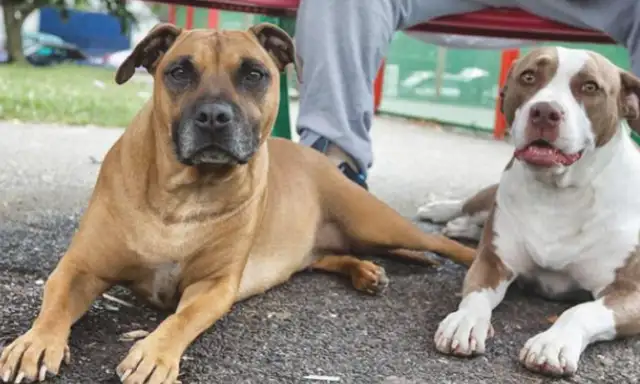
That kind of personal behavior might make small pets more alive, but at that point it was very easy to create some kind of misunderstanding. Small pets, for example, perform certain personal acts, and people give them logical expression. This expression is usually very easy and factually misleading.
For example, I've often heard some pet shoveling officials complain, and my dog is so envious. Every time you go out to meet another dog, but it's just a little bit of it, your dog gets more and more excited, and even makes a personal expulsion of the other.
And it's all my fault, and I usually say a few words of torture: "Does it really feel like this is the dog's envy?"
In response to this life torture, basically all of the scavengers were the same, and they looked at me with all their doubts, and then they said, "What if it wasn't the dog's envy?"
Well, that's a good question. I think I've always wanted to talk about the problem of the dog being jealous. A lot of people would think that dogs don't want to be touched by other people who receive shit shovels, because it's jealous of other dogs and it's a remarkable envy for more than personal behavior. But in fact, such ideas are not true, and they are part of this vagaries.
The prerequisite for deciphering this rumor is to find out what enviousness or jealousy is. I think that the essence of jealousy is that fear, that is, that the other side will replace itself and another will create contact with itself.
One example of this is that girls are envious, i.e. worried that another girl is involved in her relationship with her boyfriend and is occupying her own part of the chain today.
Thus, enviing more than the creation of an individual ' s behaviour presupposes the following many prerequisites: at the outset, one needs to be able to appreciate the mentalities that have to be transmitted when the other party communicates with a lover. On the other hand, one should be able to compare the current state of mind with that of one ' s lovers. In the end, it is also necessary to judge on the basis of a more positive outcome that there will be a replacement for itself in the future.
In summary, all the envious stages include an analysis of the state of affairs, reminiscent of the past and three parts of its predictions, and a willingness to deal with such a complex information content can only be guaranteed by the human brain. In addition to humans, some primates can address some of the comparable messages, while small animals other than primates are totally bad.
There is also an envious pre-condition for people to be able to appreciate the mentality of the other side and their own hearts and feel that it is much higher than that of themselves and their hearts. And the mentality of “she loves her more than she loves you” is extremely complex and can only be carried out by a complex linguistic structure.
And while the dog has language, the language structure is relatively simple and cannot convey a very complex mentality throughout the communication process. Without a complex mentality, the dog nature is incapable of understanding and thus less likely to cause jealousy.
What does it mean if the dog doesn't touch the back of an individual like this because he's jealous or jealous?
Mention should also be made here of the experiment carried out by the Office of Microbiology Personal Behaviour Studies of Princeton University, in which scientific researchers divided 50 dogs into two groups, then waved with each group, and rewarded them with food items to allow them to observe their personal behaviour.
There's a discussion down there about the whole test and how the dog's main performance is.
First round: Scientific researchers waved with each group of dogs, and then awarded a small meat-dried reward. In the case of subsequent personal behaviour, scientific research staff found that both groups of dogs were able to wave.
Phase 2: Scientific research workers, after shaking hands with a group of dogs, will reward the meat dryer. Instead, the second group of dogs was given a wave of gestures without a reward. In subsequent personal behaviour, scientific researchers found that the second group of dogs had just begun to lose the initiative to pose and eventually no longer wanted to wave.
Round three: Scientific researchers don't reward a group of dogs and a second group of dogs, but only give a loud compliment and caress. In subsequent personal acts, scientific researchers found that two groups of dogs were still passionate and were wavering personal acts.
Round four: a team of scientific researchers fed a sausage, while a group of two fed a puppy. In the case of subsequent individual behaviour, the scientific staff found that both dogs were able to wave their own personal behaviour, and their main performance was not different from the first round of tests.
According to the right and left trials, there's one reason why dogs don't really care if people give delicious sausages or simple dog food. They do not care about the specific differences in rewards, but rather about whether their individual behaviour is subject to proactive feedback, and the psychological barriers that surround the whole operation of dogs.
If a dog goes out with a dog, the dog goes out with another dog, he makes a personal move on it. From the point of view of the dog, it seems to me that he has taken pleasure in shoveling shit without being touched, while another dog has taken the liberty of being touched.
It's the main manifestation of this injustice, and the dog would think it's punishing himself. The shit shoveler is the leader, and the dog doesn't want to fight, but he's got the other dog's breath, which creates a state of resistance.
In addition to the situation above, I think there is a similar situation. That's where the Squawk raised a lot of dogs in the house, and one of them caused a run-down personal behavior to the other while the other two were being touched.
That kind of personal behaviour is often expressed by many as envious by dogs, but in fact, it is related to the social media hierarchy of the dogs. As such, dogs, if there are many dogs in their homes, are treated as leaders, with different kinds of influence. And the difference in influence between dogs is the level of social media among them.
It is well known that resource imbalances exist in a population that is caused by a difference in influence. And as a leader, the Squawk is a resource that I think is in the eyes of dogs, who are using social media as a hierarchy to establish the authority to access it.
When low-level social media dogs are given preference to masters to touch their resources, high-level social media dogs feel that their influence is being violated, and nature is suffering, leading to crowding.
Now that people have it, dogs hate the two things about partners being touched by their owners. As if at first sight they were different and connected.
The difference between the two.
I can put it, for example, because the first one is the dog's call for unfair wage treatment by a pooper, and it's going to blow the mood out of a dog's hand. This is as if the ancient ministers had been denigrated by the Emperor to a remote area, while one of their colleagues had been promoted to a deviant position and had moved his mind into his hands.
For the second category, dogs feel offended by bottom dogs, as senior officials in ancient times realized that their resources were supposed to belong to them, and so they just started getting angry.
Communication between the two.
Whatever the differences between these two causes, they make dogs feel that they are challenging their influence, leading to crowding out individuals. As a result, dogs often do not want to be touched by someone who receives shit, which is essentially a feeling of influence.
And the fact that a scavenger does not correctly understand the logic of personal behaviour behind him and simply envies him or her is likely to lead to more serious contradictions between the two dogs, thereby causing damage to the dog and even to people.
Although one simple one envies more than rumours, what is behind it is a more acute dog mentality, and being a shit-pussing officer should be in good hands, so that it can create a happy future for the dog.