No.: PET4584
English name: Introduction to the Calyptorhynchus banksi
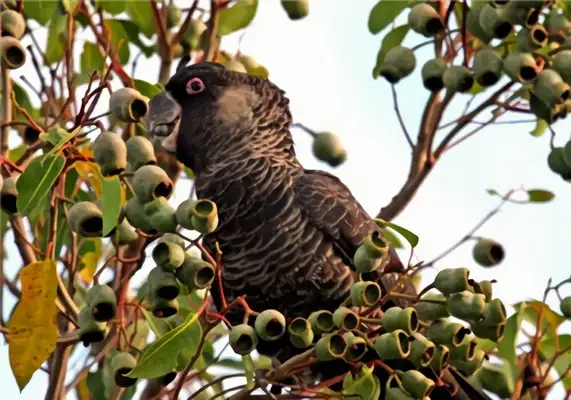
The Carlyptorhynchus banksi currently has five subgeneric species, with a good life of up to 50 years, and, like other parrots, prefers to live in trees and occasionally to operate on the ground. The main distribution is currently in the northern and western parts of Australia.
Chinese literary name: Black-tailed parrot
Chinese aliases:
Latin name: Calyptorhynchus banksi
Area: Animal
Gate: Phylum Chordata
Amen: Vertebrata
Aves
♪ The world's most beautiful world ♪
Objective: Psittaciformes
Psittacidae is the only parrot, but it is very diverse.
Aco: Aco, the parrot.
Carlyptorhynchini
The Red-tailed black parrot.
Distribution: Characteristics of parrots in the red tails and phoenixes spread across Australia.
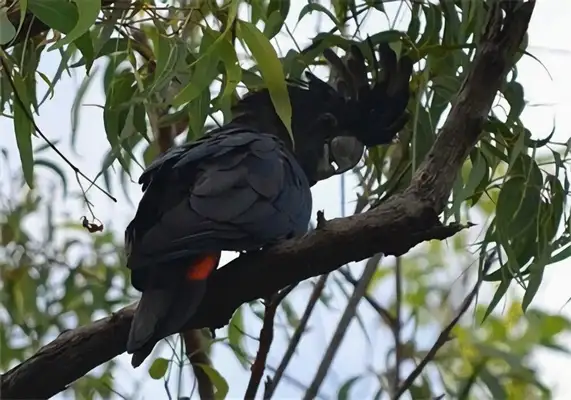
Red-tailed, black-headed parrots should grow between 60 and 65 cm, depending on the sub-species, and ideally weigh between 615 and 900 g. The distinction between male and female parrots is easily discerned and can be judged from the outside.
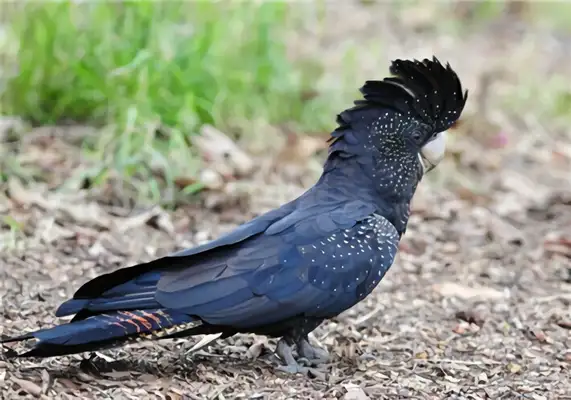
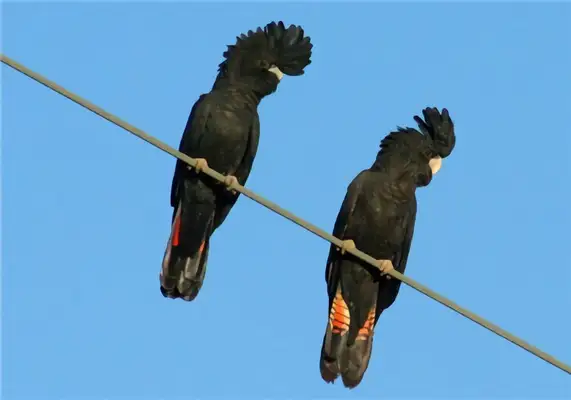
The sex of this parrot can easily be judged by appearance, with the male bird being black and the tail red. The female has many beautiful yellow or orange spots and crosses on the head, chest, tail and wings. The tail feathers are striped with oranges, which are different from the male tails. The beak of the female is meat, while the male is black. Young birds reach sexual maturity in about four years, with yellow feathers under the wings of the adult birds, with different degrees of yellow spots behind their backs and yellow feather distribution in their chests. Red-tailed, black-headed parrot.
The black-tailed parrots are sexually noisy, but they are afraid of human beings, and if they meet their enemies, they will fly to nearby trees. In the wild, especially at night in the evenings or in the light of the moon, there is often a lot of yelling, sometimes with the macaws of the sunflowers looking for food in crop grounds, causing serious agricultural losses, particularly in peanut and maize fields.
Black-tailed parrots prefer to choose the surroundings of the pheasant tree as the range of activities for reproduction and feeding. There are regional migrations, with communities in the north moving seasonally, usually inland during the wetter season (approximately November-April), while communities in the south migrate according to the availability of food, often in pairs or small groups of people outside the reproductive period, but sometimes in large numbers, often encountering several hundred parrots with black parrots, often with white tails, but not together, only on trees, when drinking water, and often on the ground in open areas or crop areas, with a special preference for the seeds of pheasant trees, and sometimes also for the seeds of euphemisms, or some insects and larvae caught from rotting trees. Black-tailed parrots raise knowledge.
The macaws with their tails and hairs are not the same at different times. In south-west Australia, for example, the reproductive period is usually May-September, while in other areas it is usually in December-February.
The macaws have hatched for about 28 days, only female eggs. If both eggs are hatched, the younger ones that are hatched later tend to die of neglect by their own birds, and when the chicks hatch, the female will stay in the nest for three weeks, the male will feed the female twice a day, and the chick will grow up after about three months.
There are very few artificial breeding birds, few international breeders and parrot breeders, and the newly introduced black-tailed parrots. After adapting to the environment, they can be very robust, starting with dietary changes that can lead to a period of maladaptation, a need for large bird houses, a small cage or cage that can cause frustration and loss of vitality, is sensitive to an environment that is too damp and cold, and provides fresh branches for bite.
Since the number of cages is very small and the information is incomplete, it is necessary to provide them with large enough cages, place nesting boxes in the highest shades, and provide some material such as nesting branches, straws, leaves, etc., with approximately one or two eggs, often unfertilized eggs, hatching for about 28-30 days, and about three months with feathers growing.