Designation: PET3103
English name: Chinese Bulbul
Vulnerability: vitamin deficiency, chlamydia
Life: 5-7 years
Price: Overview of white head varieties 10-100
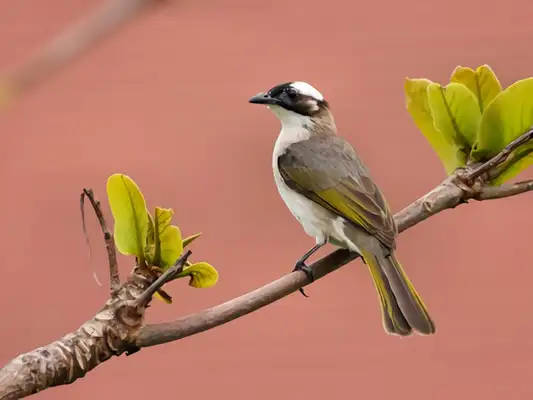
Whitehead (sycnonotus sinensis) is a small bird of freckles, with black head to head, white eyes to back pillows, a white pillow ring and yellow green cortex. They're sexually active and they're moving on fruit trees. Sometimes they fly from their habitat. Whiteheads are a common bird in a wide area south of the Yangtze River, often in the bushes of hills or plains, and in the cuisine forests. Sex is lively and not very intimidating. Quick food, both animal and vegetable. A large number of agroforestry pests are eaten by white heads and are among the benefits of agroforestry and are worthy of protection.
Chinese literary name: White Head
Latin name: Pycnonotus sinensis
Don't call it White Head, White Head.
Context: Animals
Gate: Pipeline gate
Programme: Birds
FREEDOM: FREEDOMS
Section: Section
Yes: Yes
Asian: 4
Named by Gmelin, 1789
English name: Chinese Bulbul
English name 2: Light-vented Bulbul White-head profile
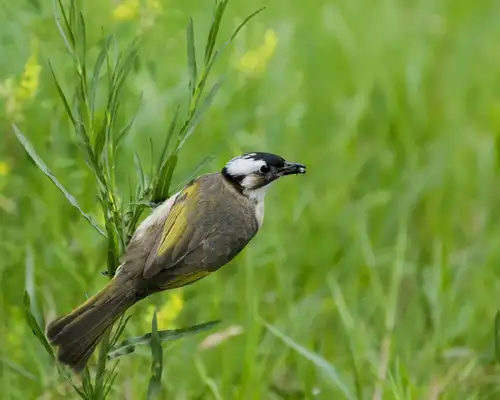
The white head is black and glamorous, each side of the head begins with a white thread from the rear of the eye, extending back to the pillow, forming a wide pillow ring, some of which has a cross-bone plume, some of which have a black end, and some of which have a white head and all-white pillows (the two broad subs are free of white pillow rings, all black). The cheeks, ear feathers, tattooed black browns and the back of the ear feathers turned white or white. Magnificent brown ash or olive gray, yellow and green plume, which makes the upper body less visible in dark stripes. The tails and the dark browns have a yellow plume. Zirconium, white larynx, light tan, and a light tan band that is not visible. The rest of the lower body is white or grey, and the plume is yellow and green, forming thin and unobserved yellow and green stripes. Iris brown, black mouth, black feet for white head. A wide white thread stretches behind the back of the neck, with a little crown on the head of the black, a little black on the cheek and a little white on the buttocks. Baby head olives, gray stripes. Iris - brown; mouth - near black; feet - black. The sound is usually “qiang-dingding-qiang”, accompanied by tremors.
Whiteheads are small birds, 17 - 22 cm in size to the top of the head, white with two eyes to the back pillow, forming a white pillow ring (the two broad sub-species are free of this ring, with their heads covered in black). There is a white spot on the back of the ear feather, which is extremely visible in the black head. The upper brown or olive gray has a yellow and green plume. Zirconium, larynx and tan, which form unobvious broad bras. The abdominal is yellow and green. Male body weight 26-43g, female 26-41g; male length 166-220mm, female 160-201mm; male beak peak 13-16mm, female 13-15mm; male wings 82-94mm, female 79-92mm; male tail length 77-90mm, female 74-88mm; male glyph 20-24mm and female 19-22mm. Elements of conservation of whiteheads
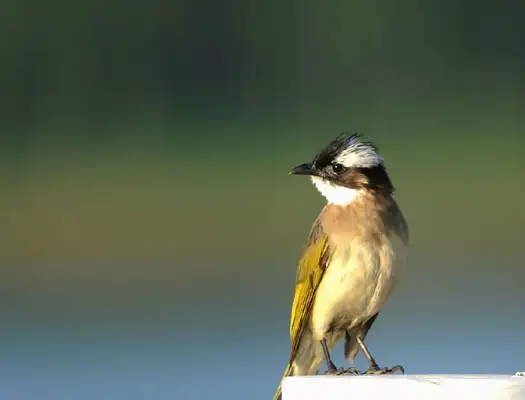
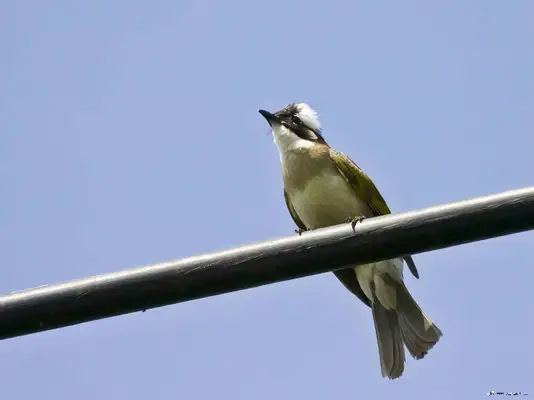
The white head is so lively, that the packs are active on fruit trees. Sometimes they fly from their habitat. Whiteheads are a common bird in a wide area south of the Yangtze River, often in the bushes of hills or plains, and in the cuisine forests. Sex is lively and not very intimidating. In autumn and winter, most of them formed large groups of people who pecked fruit on trees such as sorghum and sorghum. In the spring and summer, there were only three or five companions. Living at the height of a short tree fence or bush, when insects are caught in the air as they become obsolete, they return to the tree where they dwell and shout loudly. It's full of birds, not usually moving. Whiteheads are larvae birds, which eat both vegetable and animal substances, with seasonal variations. The spring and summer seasons are dominated by animal food and the autumn and winter by vegetable food. Animal foods have the largest number of fins, such as nasal nails, walking nails and nails. Vegetable foods consist mostly of double-leaf plants, and some berries and weed seeds, such as cherries, oars, grapes, etc. Reproduction took place between March and August. The eggs are laid at least twice, and the nests are in the thick green bushes of the sanctuaries, or on the oily tea trees and in the various bushes, mostly 2-3 metres from the ground. However, they are also built on high-sized wood, at altitudes ranging from 6 to 6.5 metres. The nest is in the form of a deep cup, made up of straw, leaves, reeds, saps and a small amount of fine roots, pines, etc., with a fine weed. Each of the eggs is 3 to 4 and is elliptical, light red, with more dark red, blue purple spots.
Whiteheads began breeding in March, until August. During this period, they are expected to lay eggs at least twice, and general nests will be built in a thick forest of sauna leaves or bushes two or three metres from the ground. There are also whiteheads who would build their nests on tall wood trees, about 6 metres above ground level. The nests are made of weeds, fallen leaves, reeds, grass ears, pines and some grass roots, in the shape of cups. There's still green grass in the nest. Whiteheads can produce three to four eggs at a time, with eggs in elliptical shapes, light red colours, and eggs with some dark red, light purple spots on their surface. White Head Environmental Requirements
Whiteheads are located in the Eurasian continent and in northern Africa, covering the whole of Europe, the African region north of the line of return to the north, the Arabian Peninsula and the Asian region north of the Himalayas-Turkish-Qinching-Yu River. The south-eastern coasts of the south-central peninsula and China include Myanmar, Viet Nam, Laos, Cambodia, Thailand and the south-eastern coast of China, Hong Kong and Hainan Island. The Pacific islands, including Taiwan Province of China, the Tonsha Islands, the Xisha Islands, the Nakasha Islands and the Philippines, Brunei, Malaysia, Singapore, Sumatra, Indonesia, Java and Papua New Guinea. China is located in the north-west to Sichuan, north-east Yunnan; south-west and south-west of North Daqun; east to coastal areas, including South China and Taiwan; and south-west and south-west Guangzhou. Whitehead is a common bird in our country and a common bird in the Yangtze basin of China and in large areas south of it. The breeding season, which is almost entirely insect-fed, is of great significance in plant protection. The current stock is also relatively rich.
Whiteheads tend to operate in small groups ranging from 3-5 to 10, and sometimes in winter they form more than 20-30. Most of them operate on bushes and small trees, are sexually active, are not afraid of human beings, are often jumping between branches or flying among neighbouring trees and do not normally fly at long distances. # Shouting, whispering softly, with tremors. # White head for feed.
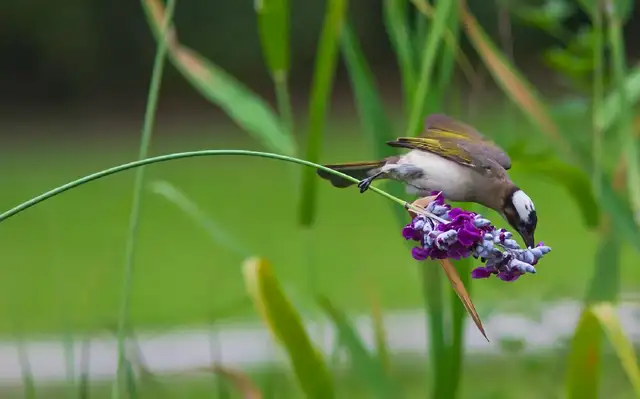
A large number of agroforestry pests are eaten by white heads, and they are one of the benefit birds of agroforestry for the protection of birds. Whiteheads are larvae birds, which eat both vegetable and animal substances, with seasonal variations. The spring and summer seasons are dominated by animal food and the autumn and winter by vegetable food. Animal foods have the largest number of fins, such as nasal nails, walking nails and nails. Vegetable foods consist mostly of double-leaf plants, and some berries and weed seeds, such as cherries, oars, grapes, etc. Whiteheads tend to operate in small groups ranging from 3-5 to 10, and sometimes in winter they form more than 20-30. Most of them operate on bushes and small trees, are sexually active, are not afraid of human beings, are often jumping between branches or flying among neighbouring trees and do not normally fly at long distances. # Shouting, whispering softly, with tremors. #
i. Feeding method: Whitehead larvae can be fed as a meal, such as corn paste, peanut rice powder, ripe egg yellow at a ratio of 5:2.3 or larvae powder (green bean flour, corn paste, dried egg yolk, fresh water fish powder or silk powder at a rate of 5:2:2:1); frequent supplements of fruit and insect larvae and beryllium.
II. Management corrections: Whiteheads are soft-eating birds under artificial breeding, water in water tanks is susceptible to contamination and needs to be cleaned and fresh water replaced daily. The fruit that is fed shall be taken from the fruit that is not finished on that day. A bath is provided every day (summer) or the following day (spring, early autumn) for their own bath. A bird cage is washed once a week. It is important that the winter season be moved to the north and that the birds be stopped. Birds such as red ears, diphtheria red hips and yellow hips may be raised in accordance with the above.
III. The requirements for breeding: The white head is suitable for some soft and fine food, the water canisters it uses are easily contaminated, the water canisters are cleaned every day, and it always drinks clean water. Water that was not finished that day must be replaced. In the summer, water is provided for white-headed baths, as well as spring and autumn, and it cleans itself. The cage must be kept clean at all times and thoroughly cleaned every week. Whiteheads are afraid of cold, and when raising birds in the north, care must be taken of the temperature of their living environment, moving to indoors in winter and being too cold to go out to walk birds. Overview of whitehead species
Whitehead (sycnonotus sinensis) is a small bird of freckles, with black head to head, white eyes to back pillows, a white pillow ring and yellow green cortex. They're sexually active and they're moving on fruit trees. Sometimes they fly from their habitat. Whiteheads are a common bird in a wide area south of the Yangtze River, often in the bushes of hills or plains, and in the cuisine forests. Sex is lively and not very intimidating. Quick food, both animal and vegetable. A large number of agroforestry pests are eaten by white heads and are among the benefits of agroforestry and are worthy of protection.
Chinese literary name: White Head
Latin name: Pycnonotus sinensis
Don't call it White Head, White Head.
Context: Animals
Gate: Pipeline gate
Programme: Birds
FREEDOM: FREEDOMS
Section: Section
Yes: Yes
Asian: 4
Named by Gmelin, 1789
English name: Chinese Bulbul
English name 2: Light-vented Bulbul White-head profile
The white head is black and glamorous, each side of the head begins with a white thread from the rear of the eye, extending back to the pillow, forming a wide pillow ring, some of which has a cross-bone plume, some of which have a black end, and some of which have a white head and all-white pillows (the two broad subs are free of white pillow rings, all black). The cheeks, ear feathers, tattooed black browns and the back of the ear feathers turned white or white. Magnificent brown ash or olive gray, yellow and green plume, which makes the upper body less visible in dark stripes. The tails and the dark browns have a yellow plume. Zirconium, white larynx, light tan, and a light tan band that is not visible. The rest of the lower body is white or grey, and the plume is yellow and green, forming thin and unobserved yellow and green stripes. Iris brown, black mouth, black feet for white head. A wide white thread stretches behind the back of the neck, with a little crown on the head of the black, a little black on the cheek and a little white on the buttocks. Baby head olives, gray stripes. Iris - brown; mouth - near black; feet - black. The sound is usually “qiang-dingding-qiang”, accompanied by tremors.
Whiteheads are small birds, 17 - 22 cm in size to the top of the head, white with two eyes to the back pillow, forming a white pillow ring (the two broad sub-species are free of this ring, with their heads covered in black). There is a white spot on the back of the ear feather, which is extremely visible in the black head. The upper brown or olive gray has a yellow and green plume. Zirconium, larynx and tan, which form unobvious broad bras. The abdominal is yellow and green. Male body weight 26-43g, female 26-41g; male length 166-220mm, female 160-201mm; male beak peak 13-16mm, female 13-15mm; male wings 82-94mm, female 79-92mm; male tail length 77-90mm, female 74-88mm; male glyph 20-24mm and female 19-22mm. Elements of conservation of whiteheads
The white head is so lively, that the packs are active on fruit trees. Sometimes they fly from their habitat. Whiteheads are a common bird in a wide area south of the Yangtze River, often in the bushes of hills or plains, and in the cuisine forests. Sex is lively and not very intimidating. In autumn and winter, most of them formed large groups of people who pecked fruit on trees such as sorghum and sorghum. In the spring and summer, there were only three or five companions. Living at the height of a short tree fence or bush, when insects are caught in the air as they become obsolete, they return to the tree where they dwell and shout loudly. It's full of birds, not usually moving. Whiteheads are larvae birds, which eat both vegetable and animal substances, with seasonal variations. The spring and summer seasons are dominated by animal food and the autumn and winter by vegetable food. Animal foods have the largest number of fins, such as nasal nails, walking nails and nails. Vegetable foods consist mostly of double-leaf plants, and some berries and weed seeds, such as cherries, oars, grapes, etc. Reproduction took place between March and August. The eggs are laid at least twice, and the nests are in the thick green bushes of the sanctuaries, or on the oily tea trees and in the various bushes, mostly 2-3 metres from the ground. However, they are also built on high-sized wood, at altitudes ranging from 6 to 6.5 metres. The nest is in the form of a deep cup, made up of straw, leaves, reeds, saps and a small amount of fine roots, pines, etc., with a fine weed. Each of the eggs is 3 to 4 and is elliptical, light red, with more dark red, blue purple spots.
Whiteheads began breeding in March, until August. During this period, they are expected to lay eggs at least twice, and general nests will be built in a thick forest of sauna leaves or bushes two or three metres from the ground. There are also whiteheads who would build their nests on tall wood trees, about 6 metres above ground level. The nests are made of weeds, fallen leaves, reeds, grass ears, pines and some grass roots, in the shape of cups. There's still green grass in the nest. Whiteheads can produce three to four eggs at a time, with eggs in elliptical shapes, light red colours, and eggs with some dark red, light purple spots on their surface. White Head Environmental Requirements
Whiteheads are located in the Eurasian continent and in northern Africa, covering the whole of Europe, the African region north of the line of return to the north, the Arabian Peninsula and the Asian region north of the Himalayas-Turkish-Qinching-Yu River. The south-eastern coasts of the south-central peninsula and China include Myanmar, Viet Nam, Laos, Cambodia, Thailand and the south-eastern coast of China, Hong Kong and Hainan Island. The Pacific islands, including Taiwan Province of China, the Tonsha Islands, the Xisha Islands, the Nakasha Islands and the Philippines, Brunei, Malaysia, Singapore, Sumatra, Indonesia, Java and Papua New Guinea. China is located in the north-west to Sichuan, north-east Yunnan; south-west and south-west of North Daqun; east to coastal areas, including South China and Taiwan; and south-west and south-west Guangzhou. Whitehead is a common bird in our country and a common bird in the Yangtze basin of China and in large areas south of it. The breeding season, which is almost entirely insect-fed, is of great significance in plant protection. The current stock is also relatively rich.
Whiteheads tend to operate in small groups ranging from 3-5 to 10, and sometimes in winter they form more than 20-30. Most of them operate on bushes and small trees, are sexually active, are not afraid of human beings, are often jumping between branches or flying among neighbouring trees and do not normally fly at long distances. # Shouting, whispering softly, with tremors. # White head for feed.
A large number of agroforestry pests are eaten by white heads, and they are one of the benefit birds of agroforestry for the protection of birds. Whiteheads are larvae birds, which eat both vegetable and animal substances, with seasonal variations. The spring and summer seasons are dominated by animal food and the autumn and winter by vegetable food. Animal foods have the largest number of fins, such as nasal nails, walking nails and nails. Vegetable foods consist mostly of double-leaf plants, and some berries and weed seeds, such as cherries, oars, grapes, etc. Whiteheads tend to operate in small groups ranging from 3-5 to 10, and sometimes in winter they form more than 20-30. Most of them operate on bushes and small trees, are sexually active, are not afraid of human beings, are often jumping between branches or flying among neighbouring trees and do not normally fly at long distances. # Shouting, whispering softly, with tremors. #
i. Feeding method: Whitehead larvae can be fed as a meal, such as corn paste, peanut rice powder, ripe egg yellow at a ratio of 5:2.3 or larvae powder (green bean flour, corn paste, dried egg yolk, fresh water fish powder or silk powder at a rate of 5:2:2:1); frequent supplements of fruit and insect larvae and beryllium.
II. Management corrections: Whiteheads are soft-eating birds under artificial breeding, water in water tanks is susceptible to contamination and needs to be cleaned and fresh water replaced daily. The fruit that is fed shall be taken from the fruit that is not finished on that day. A bath is provided every day (summer) or the following day (spring, early autumn) for their own bath. A bird cage is washed once a week. It is important that the winter season be moved to the north and that the birds be stopped. Birds such as red ears, diphtheria red hips and yellow hips may be raised in accordance with the above.
III. The requirements for breeding: The white head is suitable for some soft and fine food, the water canisters it uses are easily contaminated, the water canisters are cleaned every day, and it always drinks clean water. Water that was not finished that day must be replaced. In the summer, water is provided for white-headed baths, as well as spring and autumn, and it cleans itself. The cage must be kept clean at all times and thoroughly cleaned every week. Whiteheads are afraid of cold, and when raising birds in the north, care must be taken of the temperature of their living environment, moving to indoors in winter and being too cold to go out to walk birds.