Designation: PET6219
Origin: Asian
Vulnerability to disease: aqueous disease
Life: Overview of Frog Varieties 3-5 years
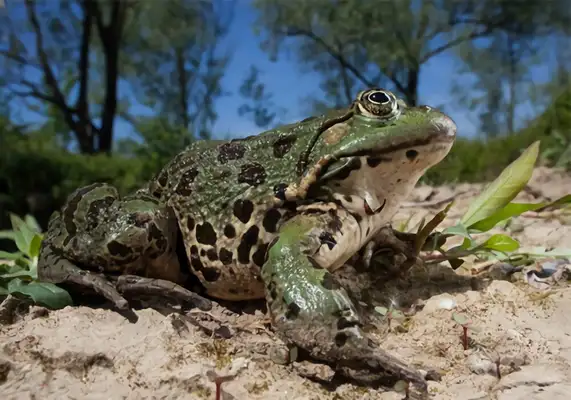
Frogs are non-hazardous species, which are not currently under much threat and do not require special measures to protect them. Frogs are distributed in many countries and regions in Asia, so they are a very common kind of frog. In the country, Zhe frogs are often present in Jiangsu, Zhejiang, Shandong, Guangdong and Guangxi. And abroad, people can find them in countries such as Japan, Thailand and Indonesia.
If you want to find out where the frog is, you can stay close to the paddy field. In addition to being able to live well in plains, frogs can survive in hilly areas, even in mountain areas at 2000 altitude. Before people started using pesticides to deworm them, frogs bore the burden of eliminating pests in rice fields, which were also appreciated by farmers. However, as people are now more inclined to use pesticides for deworming, the living conditions of the frogs are becoming worse and their numbers are decreasing.
Chinese literary name: Zawa Frog
Context: Animals
Gate: Pipeline gate
Amen: vertebrate Amen.
Programme: amphibious programmes
ANALYSIS: SLUE ASPECTS
Objective: No tails.
AA: New Toad
Section: Toad Section
Yes: Frog
Castes: Frogs morphological characteristics
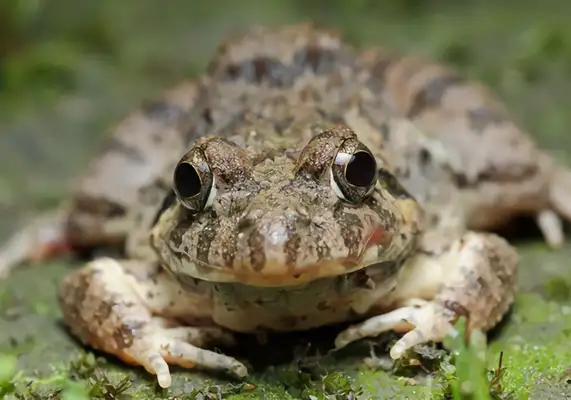
Frogs belong to small frogs, who usually grow up at about 53 mm, although for individual reasons they are found to be over 40 mm. Usually, the male is smaller than the female. Toads are distributed in many parts of China, and probably because they are too common, many people do not know that they are frogs.
Like many frogs, the frogs have many aliases, such as the acoustic frogs, the shrimps, the urchins, etc., and in other places they are called roosters. Moreover, the sound of male frogs can be described as loud, so finding them is not a difficult task.
The morphological description of the frog.
Body: Smaller. There are stripes on her. The back can be of many colours, usually grey, brown or brown, and some individuals may have dark green equivalents. The abdomen are smooth, and although the abdominal skin of the frogs is smooth, there are many skins on their backs.
Head: Large and equal.
Eyes: Large and condensed, narrow eyes.
Front limbs: Short. Crossed.
Back limbs: The back limbs of the frogs are shorter than those of other frogs. There's a cross.
Length: about 53 mm. Toad Care Knowledge
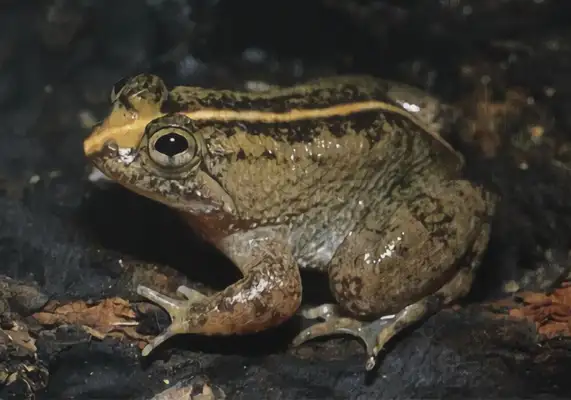
Because the frogs are common in many places, some take the argon and even the frog eggs directly home to raise them. However, many people have come home with their eggs and acupuncture problems, such as how to hatch them, how to feed them, etc. In fact, frog eggs and acupuncture are very resilient, and once the feeder has done the following, after about 40 days of maintenance, you will find that the frog has completed the process of perverted development.
I. Water selection
If you're a frog egg or a frog from a pond, then you don't put tungsten in any other water and use the water from the pond as much as you can. If there is no way to obtain water from the original environment, it is essential to use water that is dechlorinated.
Food choices
Newly hatched acupunctures can be fed without the need to feed, as they have yogurt capsules to feed. When the acupuncture is available, the feeder can provide them with some cooked vegetables and yolk, and it needs to be noted that vegetables are not fed until they have lost fibre. In addition, bread and crackers can be fed as food. At the beginning of the feeding, do not feed too much, and when it grows up, it increases its diet appropriately. And when you find the calf growing, the feeder can feed them some animal bait, like shrimp or shellfish meat, small fish dried, etc. (Reference article: Frog requirements)
Environment
The growing environment is also different for frogs, from aquatic to surfaced amphibians. Before the acupuncture begins to grow, the feeder will open up a land ready to land to facilitate the landing of frogs. (Ref articles: how to set up the living environment of the frog)
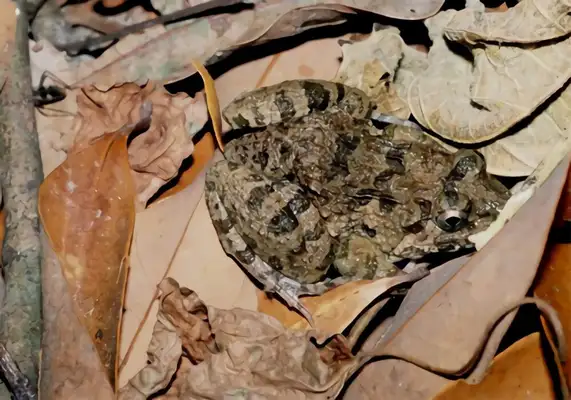
Frogs are not large frogs, so the feeder does not have to apply the criteria of large frogs when choosing them, which are moderate in size. The frogs do not need to climb as much as the tree frogs, so the master can do everything to prevent the frogs from jumping, without choosing a frogtray that is too high. If you can't find the frogtray you need on the market, you can make a frogt if you want. Once the frogtray is chosen, the feeder can start setting up a living environment for the frog.
In the wild, frogs usually choose to live in fields such as rice fields and ponds, so that a feeder can open a water for frogs. It should be noted that feed is mainly used to observe water quality conditions and that if the water quality is poor, you need to replace it in a timely manner. The water must not be untreated piped water, choosing as much as possible non-polluted water from nature, otherwise the frogs will soon have problems. If running water has to be used, the removal of chlorine must be done.
In addition to the installation of water sources, bottom selection has been a concern for frog friends. For a long time, in order to bring the environment closer to the natural environment in the frogts, many of the frog friends used the soil as a base, but the use of the soil was extremely difficult for the frogs, so they threw it away and the base, such as coconut shells, was increasingly favoured by many of them.
Because the frogs do not need to climb as much as the tree frogs do, many feeders ask whether it is necessary to plant plants in the frogtrays. In fact, the plants in the frogtray are not merely a climber, but they can also provide a place for the frog to hide, improve the environment in the frogtray, make the frogttray look better, etc. The proper planting of some plants can be more beneficial. Frog breeding requirements
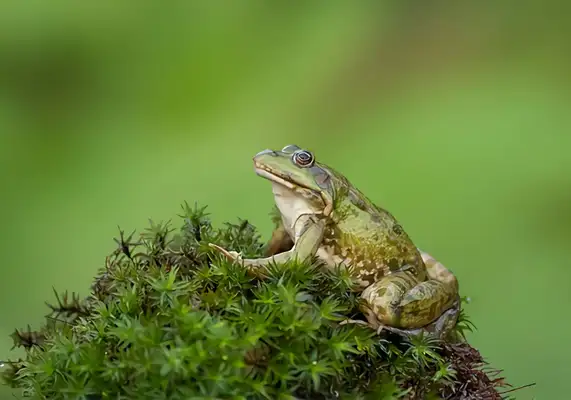
In order to understand which food is the favorite of the frogs, let's see what they usually eat in the wild. The main foods of the frogs in the wild are usually harmful insects, and it is theoretically preferable for the feeders to feed them, but for a variety of reasons the feeders may not be able to obtain sufficient food and therefore feed the frogs by other means. In order for the frogs to eat well, the feeders must do the following:
I. Frog food choice requires caution
Because of the growing number of frog breeders, some manufacturers have also developed frog food to meet their growing needs. But not all of the frog food on the market has quality assurance, so it is important for the feeder to confirm the quality of the frog food before buying it. If you don't know which frogs are good and which are bad, you can ask your friends who are raising frogs through various channels, so you don't buy bad frog food.
ii. Meeting the needs of frogs as far as possible
For feeders, it may not be realistic to raise the insects you like, because many of the insects you like are insects that are harmful, and since raising them at home can lead to all kinds of bad consequences, it is possible for feeders to go to their fields, in the wild, or where there are often insects, to “hunting” and the “hunting” you get must be wiped out by the frogs.
iii. Can the bread bug feed the frog? Eat.
Bread worms are the food that many feeders choose for two reasons: 1. They can be raised at home; 2. They are high proteins. So, bread bugs are really good food. However, breadfruit skins are not easily digested and therefore long-term breadfruit consumption is not particularly good and feeders should be fed with other food.