Designation: PET3245
English name: Head and tail light term
Origin: Guyana and Amazon Basin in South America
Vulnerability to diseases: fish plague, white cloud disease, skin disease, rotting tail disease, etc.
Life: Overview of the species of light fish at the end of 5-6 years
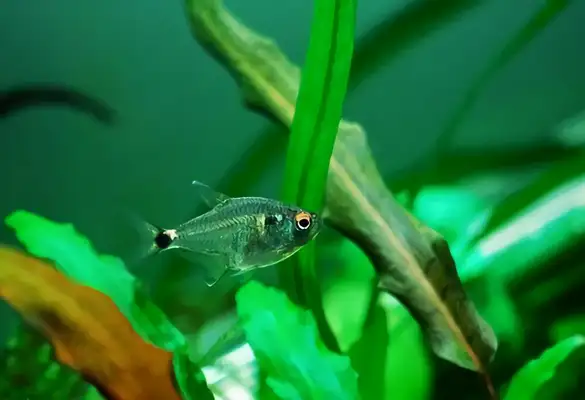
The headlight fish is also known as lantern fish, lantern fish, car light fish, etc., are small, but they have very special appearances, and in the light they reflect gold and red colours in their eyes and tails.
Anonyms: lightfish, half-wired brows, lantern fish, lightfish, lightlights Fish
English name: Head and tail light term
School name: Hemigrammus ocellifer (Steindachner, 1882)
Origin/distribution: Guyana and Amazon basin in South America
Fish length: 4.0 - 5.0 cm headtail lightfish
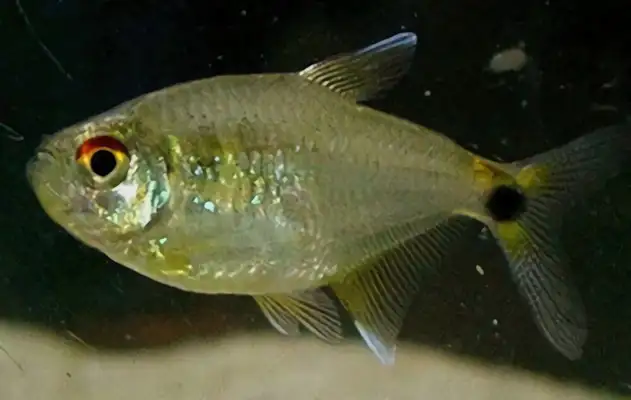
The gold in the eyes and tails of the head-lighted fish reflects the colours of gold and red in light, and as the head-tailed fish move, the colours are invisible and very beautiful.
The headlights are mild, small and grooved and can be shared with other species of fish. The head endlights have a golden spot on both the upper and the tails, reflecting the colours of gold and red in the light. In the course of swimming, the head-tailed lanterns appear as bright spots in the head and tail, as fluorescent in the depths of the dense forest, flashing light. The taillight is short, the abdominal. Each of the eyes and tails has a gold patch, with a deep blue stripe on both sides of the body, most of which have fat fins, and only a small number of species without fat fins. Headlight fish breeding environment
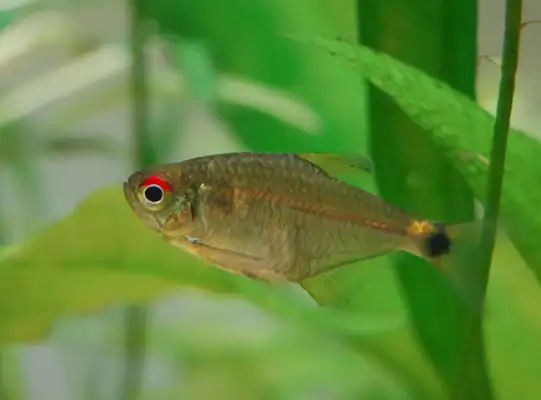
Head-tailed lightfish are very gentle, tend to swim in groups, and can be combined with others. The water quality requirements are not stringent for headtail lantern fish, and water temperature is recommended at 23-28°C and PH 6.0-7.5.
The age of maturation is nine months for fish in the headlights. The male is more chromosomal, with transparent cross-sections in the middle of the hip, but not in the female; the female is wider and fatter than the male and has a full abdomen. Reproduction of water temperature 24-25°C and neutral soft water quality. The size of the headtail lightfish is 4-5 cm, so it is recommended that a suitable aquarium be provided for artificial feeding, with the headtail lightfish being the bottom fish in the aquarium. The headlight fish feed the points.
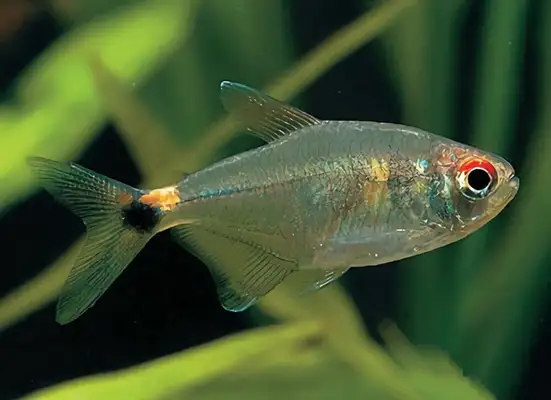
It is not difficult to raise headtail lightfish, provided that they are provided with a stable water quality environment and a nutritionally balanced bait. It is preferable to light the headlight when raising, because it prefers to live in a darker environment.
The head endlights are active in the middle of the aquariums and feeding. Eating animal bait and eating mosquitoes. When the headlighted fish lay their eggs, they were recovered, and the following evening they were seen hatching, and three or four days later the fish moved for food, and 25 days later the fish developed into a juvenile fish.