Designation: PET1590
English name: Butterfly fish scales Ying
Country of origin: Overview of Chinese fluorescent tail varieties
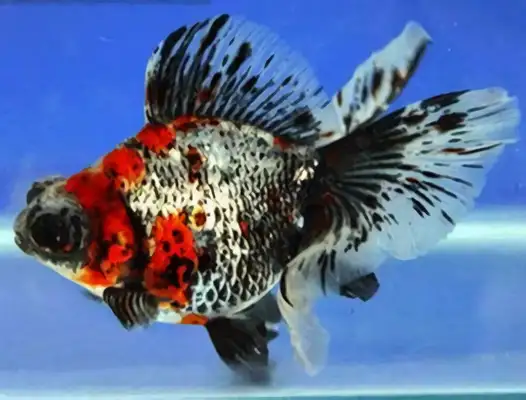
The fluorescent tail is a species of goldfish which, because of its unique colour, is interwoven with black, white and red, is so colourful as to be painted by the country and is therefore known as the “Squisty Shaft”.
English name: Butterfly fish scales Ying
Type: Goldfish, temperate freshwater fish
Origin: China
Reproduction: Eggs
Water quality: PH = 7.2 ~ 7.5
difficulty of raising: easy
Fits to water temperature: 10-30°C fluorescent tail shape
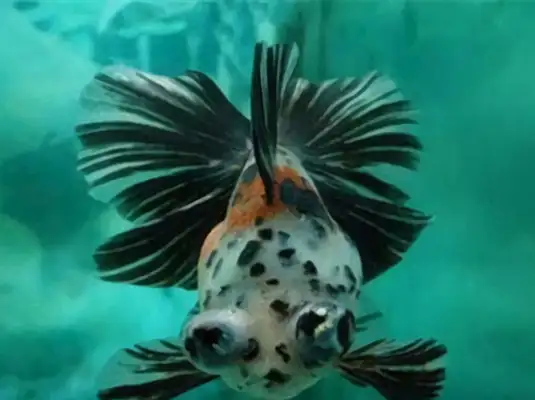
The colours of the fluorescent tails are very special and are interwoven by black, white and red, which are like national drawings, so they are also known as “coasted tails”. The tail of the fluorescent butterfly is flat in the head, with very delicate grafts and no back fins and four large leaves.
The color of the fluorescent tails is quite different from that of the three colors in the Japanese walls. Unlike the five goldfish, the fluorescent tails are hard scales, the main color is black, with developed reflectors, and in a weak light they are still glowing and they are named fluorescent. This color mix of fluorescent tails has also appeared in Deutsche Gin, has received attention and has won many prizes in many competitions. Fluorescent tail breeding environment
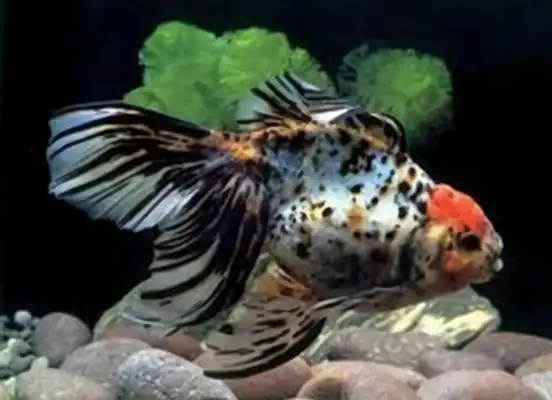
Fluorine tails are a species of goldfish, which, like goldfish, are less difficult to raise than they need to provide them with a stable water quality environment and nutritionally balanced bait. So how do we provide a suitable water quality environment for fluorescent tails?
Oxygen is a requirement for life in the fluorescent tails, so how can the fluorescent tails be absorbed into the water? In fact, oxygen and water in the air are soluble in water, and there is another way that plants in the water produce oxygen in light co-operation and soluble in water.
The high amount of soluble oxygen in natural water refers to rivers and lakes up to 8 - 12 mg/L, but under artificially rearing conditions, the fluorescent tail ponds and fluorescent tailboxes have smaller openings, the light is limited and the density of the rearing is relatively high, hence the need to install gas pumps to inflate the oxygen. If the fluorescent tail is less dense, the aerobics can be operated for about eight hours a day. If the density is high, it should be open 24 hours a day. The fluorescent butterflies.
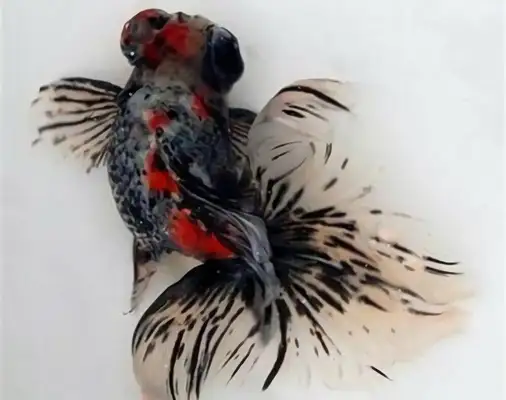
The fluorescent tail is a species of goldfish that is less difficult to raise, and can grow healthy if given a stable water quality environment and nutritionally balanced feed. So, what kind of bait would be better to feed the fluorescent tails?
Feeds for fluorescent tails are nutritious animal feed and white sesame. Animal feed such as daphnia, earthworms, yellow powder worms, lings, leather worms, etc. The main feed is earthworms and white sesame. Red and black earthworms can be fed. Don't feed bad goldfish feed. Because of this high level of feed starch, poor nutrition, indigestion, pollution of water quality, malnutrition of goldfish, slower growth of goldfish and disease. Goldfish will not survive as long as they eat easily digested food. When feeding is usually done once a day in the morning and every afternoon, it is not appropriate to feed enough, otherwise it can contaminate water quality.