Title: PET3017
English name: Graptemysulchra
National origin: Merbil Bay water system found in Alabama, Georgia and Mississippi (possibly).
Vulnerability: aqueous disease, white eye disease
Life: 15-25 years
Price: Description of turtle species not known for Alabama
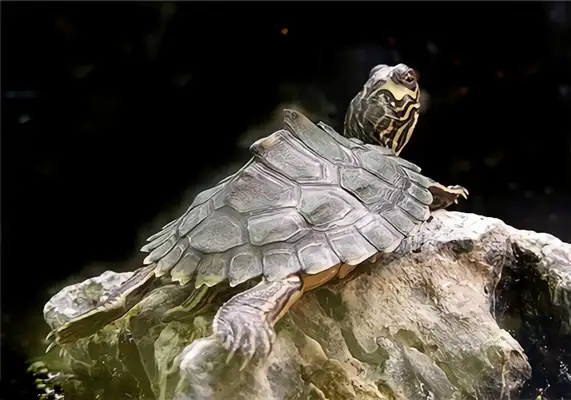
The map of Alabama is very similar to the Brazilian turtle. The head stripes and the concussed back ridges are common features of this species. Because the whole body was covered with yellow stripes. It's like a map. The Alabama map turtles are food staples of aquatic snails and snails, so their teeth are so hard that they can bite the crust.
In combination, care must also be taken that they bite the tail or neck of other mild turtles. It's more appropriate to mix with North American turtles. All foods are eaten in an artificial environment and in large quantities are growing rapidly. The female and male identify as Brazilian turtles. The same is true for spawning and breeding. It's just that it's less adaptive to the environment, and it's less imported. So not so much as Brazilian turtles do.
School name: Graptemysulchra
Size of form: male: 31/2 " 5 " ; female: 7 " 111/2 "
Eating: The level of meat is very high and is based on snails, fish, insects and rotting meat.
Living environment: Medium-sized streams reach large rivers, with deep pits, sand banks and a crowded round log, with large numbers of molluscs.
Distribution: Mercer Bay water systems found in Alabama, Georgia and Mississippi (possibly). Some have also been found on the Alabama, Kahhaba, Tombigbi, Kosa and Black Samurai.
Reproduction: spawning began at the end of April and peaked in June until August. There are as many as seven nests, with an average of 6-8 eggs per nest, 11/2 eggs (38mm) in an elliptical form, deep in a nest of 6' (15cm), with a bottle of neck, while the nest is dug on the banks of sandy or sandy rivers. The incubation period is 10-11 weeks. Four years for males and 14 years for females.
The species likes to tan and is extremely alert and difficult to access. It has been observed that, at night, they sleep several inches below the back point and are attached to underwater plants. Atlas turtle morphological characteristics of Alabama
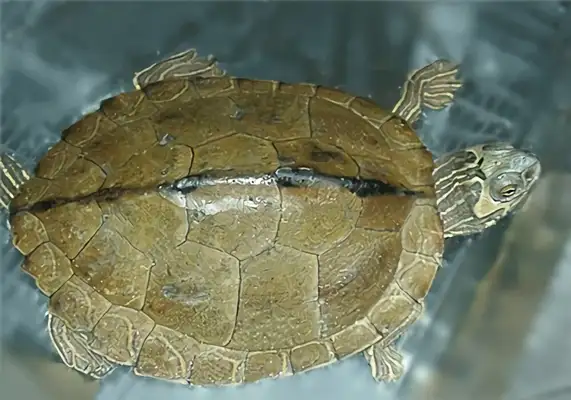
Map turtles are similar in size to the more common turtles and turtles. Unlike these turtles, however, the map turtles have a clear twitch in their backs. In many types, this gust is more like a large puncture or tumour stretching up back. This feature has given the map turtle another common name: sawn turtle.
Most map turtles also highlighted the back of their backs, making the backs of their backs visible sawn teeth. Some species have large head and jaws, which allow them to bite snails and other molluscs. At the end of the day, the most striking difference lies in the distinctive fine lines on their skins and shields, which are the origins of the name “map turtles”, because they appear to be like the high lines and road maps on the map, which other turtles cannot reach.
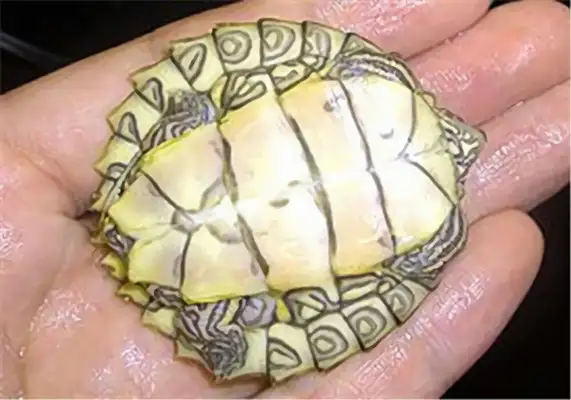
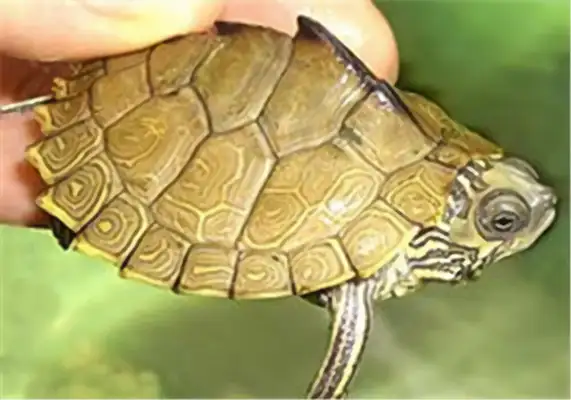
Alabama map male size 31/2-5 (8.9-12.7 cm); female length 7-101/2 (17.8-29.2 cm). An olive-backed to dark green, with a black stripe along the centre of the vertebrae, with a puncture surge (except for large female turtles). The rib shield contains a net pattern of yellow-to-Orange lines with black sides around it, while the ligature shield has a light-colored short print or a "C" pattern. The abdominal yellow, which follows the stitches of the shield, has a black border.
The chest shield and the abdominal shield were not surged. There are large yellow or yellow green spots behind the eyes, and sporadic distributions up to the top of the head, which may be connected. From the tip of the jaw to the rear of the eye, with long or long or short stripes. Adult females are much larger than males and develop very large heads. Alabama Map Turtle Care Knowledge
Since Alabama map turtles are more neurotic than other turtles, heart selection is also applied to breeding sites. In busy areas, turtles may be under stress due to persistent mental stress. This can also lead to crustal damage: out of panic, turtles often leap into water from sunbacks, causing stressful damage to crustal edges, leading to infection and possibly death. Thus, when building turtle farms, both indoor and outdoor, attention should be paid to this neural sexual orientation of the Alabama map turtle.
Outside the house, a cell or reservoir of glass fibre can be buried under the ground around fences or walls to prevent turtles from escaping and to protect them from predators. Outdoor breeding sites are closest to natural conditions, which will facilitate artificial reproduction. Indoor sites may also be used, but because of the size of the animal, the site must be large to ensure sufficient space.
Because of its limited distribution, the Alabama map turtles are in danger at times. Many different factors, natural and man-made, may affect their long-term survival. Natural disasters make it easier to destroy concentrated communities than scattered communities.
The degradation of habitats may also have a significant impact on these small populations. Agricultural competition, waste from upstream industrial zones and cities, as well as large-scale development along the river coast, have impacted local Alabama map turtles. The collection of wildlife, especially rare species, has also contributed to the decline in population numbers. Unfortunately, it is not enough simply to protect the places where the Alabama map is found. Because they live in rivers, not in ponds or lakes, upstream, events outside protected areas can also have a significant impact on them. This is not a problem unique to Alabama ' s map turtles, but it has to be successfully addressed if the next generation is to enjoy the pleasure of observing these shy, rare and beautiful turtles in the natural environment. Alabama Map Turtle Living Environment
The habitat of map turtles varies according to type. Many map turtles seem to prefer to live in rivers than ponds and lakes. In fact, some types of distribution are confined to the water system of a particular river.
Apart from living in slow-moving rivers, they still live in ponds and swamps. Among these turtles, areas with abundant aquatic vegetation appear to be more popular. Others live in streams of sand and clay at moderate or even faster current speeds, although they are also found in limestone and sludge. Irrespective of that type of habitat, adequate sunscreen is an essential element.
I. A map turtle from Alabama, planted
This kind likes to tan, so need a tan spot. A UVB lamp tube and heating light bulb are required above the suntub point. If the water's below the recommended temperature, you're advised to use a water-sink heater. They're good swimmers, so the water should be as deep as possible. The base material may be sand or finely selected gravel up to the thick particles, which can be used in any form. It was also suggested that we should plant plants, man-made or real.
Recommended breeding grounds
For individual adult males, it is recommended to use at least 30 gallons (40 gallons or greater, better) for aquariums, and at least 75 gallons (90 gallons or greater, better) for adult females. This would allow for adequate swimming grounds and would also help the filtration system to maintain better water quality. If you want to raise a few more, you should be advised to add 20 gallons of water tank space for each additional male, and 50 gallons for each female. A map of Alabama.
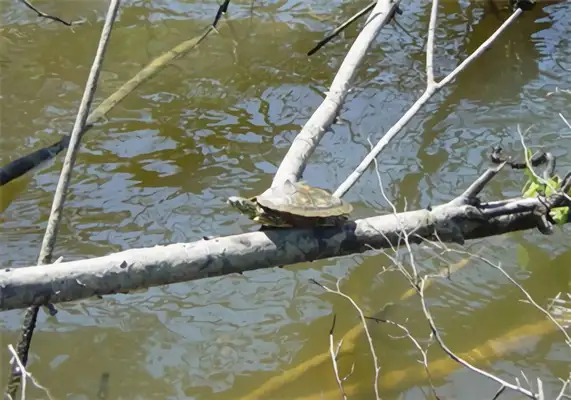
The Alabama map turtles are food staples of aquatic snails and snails, so their teeth are so hard that they can bite the crust. In combination, care must also be taken that they bite the tail or neck of other mild turtles. It's more appropriate to mix with North American turtles. All foods are eaten in an artificial environment and in large quantities are growing rapidly.
Under natural conditions, most of the species within the Alabama map tortoise are impregnated. However, the percentages of the diets vary according to the species of turtles, even in some cases between females and males.
Molluscs and snails account for a significant proportion of the food in those broad species of jaws, and this is more evident in the recipes of female turtles, which have larger head and jaws. Other foods include insects, lobsters, worms, aquatic plants and sometimes fish and rotting meat. They are known to eat fish, crustaceans and shellfish, chickens, as well as screws, crickets and a variety of worms and insects, livers, certain beaks, insects and other things.