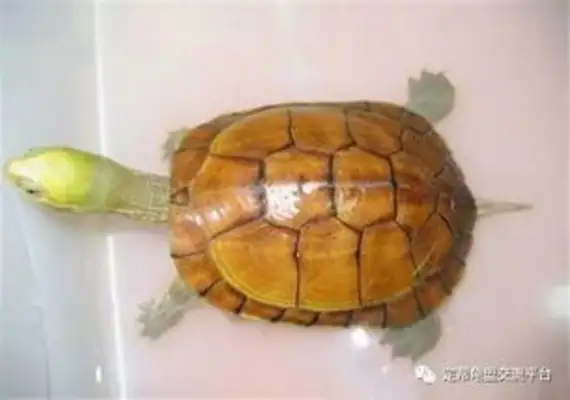
Trachemys scripta elegans are a popular and adaptable species of turtles. Because of its beautiful appearance, unique colour and lively personality, it has become the preferred choice for many pet lovers. As a necessary reference for turtle lovers, this paper will provide a comprehensive analysis of the basic features, personality characteristics, breeding skills and hair care of yellow throats to enable you to better understand and maintain them. I. Overview of varieties
Yellow-throat turtles, also known as yellow-throat turtles, are a widely distributed aquatic turtles in the south and centre of the United States. They are moderate in size and have slightly bent shapes in the back armour, usually green or brown. There are unique yellow and green stripes or spots on the back. The yellow spots between the back and the abdomen make them more unique. Adult throat turtles usually have a size of about 25 to 30 cm, and a few can grow up to 40 cm.
Yellow-throat turtles are aquatic animals that prefer to live near waters such as ponds, lakes and streams. They are predatory animals that not only absorb aquatic plants but also feed small aquatic animals such as fish and insects. II. Characteristic characteristics
Yellow-throat turtles are active and curious, prefer to move freely in the water and often tan by the water. They are usually active animals during the day, especially in warm weather. Yellow throats are adaptable and better adapted to different environments, but they still prefer warm and wet environments.
In character, yellow throat tortoises are milder than some species. They also have a defensive consciousness. If they feel threatened or disturbed, they avoid or move quickly. For their masters, they show greater curiosity, especially when eating. III. Water quality management in rearing techniques
Water quality management is essential for the health of yellow throats. Sea turtles are aquatic animals and long-term living in contaminated water can easily lead to skin disease, eye disease and other health problems. It is recommended that water quality be kept clean, that water be replaced on a regular basis and that water filtration equipment be used to ensure water quality stability. Water temperature control is also very important. The suitable water temperature of a yellow throat turtle ranges from 24°C to 28°C, and its appetite and activities are affected by low or excessive water temperatures. Livestock environment
Yellow-throat turtles need a vast water environment and adequate swimming space is essential. In rearing boxes, the water depth should be maintained at a sufficient depth to allow them to swim freely and to set up a dry sun platform or an island area to tan. Sea turtles synthesize vitamin D through sunlight to maintain a good immune system and bone health. Food matching
Yellow-throat turtles should contain a wide variety of foods as groceries. In addition to the usual turtle food, proper fresh food is their favorite food, such as aquatic plants, earthworms, small fish and shrimp. The provision of a rich and balanced diet can effectively increase sea turtle immunity and growth. Light and temperature
Yellow throats need plenty of sunlight. It is recommended that ultraviolet radiation be given 10-12 hours per day to maintain its health. (UVB) Natural light can be simulated by special ultraviolet lamps. Temperature management is also critical. Stay around 28°C during the day, and the temperature can be reduced slightly at night. Too low or too high temperatures can reduce the immunity of turtles and even disease. Periodic health checks
Periodically check the health of the yellow throat water turtles, including observations of their appetite, defecation, if there are cracks in the crust. When turtle shells are split or softened, timely medical treatment is required. Symptoms such as eye inflammation and nostrils should also be treated as soon as possible. Fourth, hair care.
Unlike cats, dogs and other pets, yellow throat turtles have hair to comb. Their primary care tasks are focused on the maintenance and cleaning of shells. However, their skin and shells also require regular attention. Shell maintenance
The shell of a yellow throat turtle consists mainly of a hard-corned layer that needs to be kept clean every day to prevent bacterial infections. The surface of turtle shells is regularly cleaned with soft brushes to remove algae and dirt from the surface. Filters in water also help to slow the breeding of bacteria in water and reduce damage to turtle shells. Skin care
While yellow throat turtles do not require special hair care, wetting and cleaning of their skin are important. If turtle skins are dry, turtle shells are yellow or skinned, the suitability of water temperature and water quality needs to be checked to avoid chronic exposure to inappropriate environments. For some turtles, occasional non-irritating skin creams are used to improve the skin condition of turtles. Prevention of parasites
Yellow-throat turtles sometimes become infected with parasites, especially when water quality is not clean or food is not healthy. Regular cleaning of turtle habitats and avoidance of exposure to unidentified animals from other sources can effectively reduce the risk of parasite infection. If skin, eye or appetite abnormality is observed, the turtle is taken to a veterinary doctor in time for an internal and external parasite examination. Concluding remarks
Yellow-throat turtles are highly suitable pets for family breeding, moderate, unique in shape and curious. They can live a healthy and happy life at home for many years, provided they provide an appropriate breeding environment, good food and regular care. With scientific breeding skills and careful care, you can enjoy countless happy times with this charming friend of the water turtle.