In recent days, there has been a case of a car crash in Wanning, Hainan Province, killing a pet dog. Following the excessive cremation of the dog, the dog's owner sued the driver of the unlicensed car and the owner of the car to the Manning City People's Court for the sum of $5,000 for the cost of the car, “excess” and moral damage. The Vanning Court, after hearing only one petition from Wang for compensation for the costs of cremation, awarded Wang a certain loss of $1,000 in a residential place.
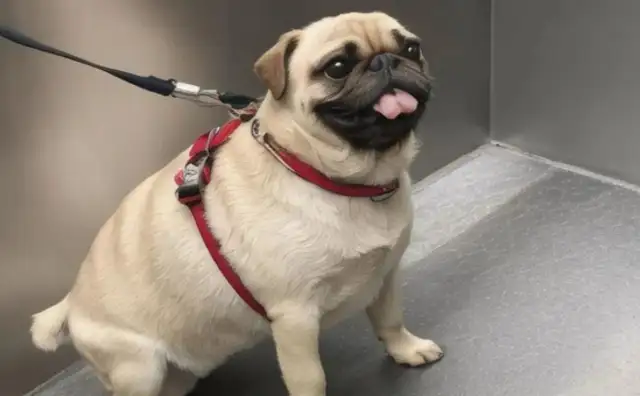
Details of the case: Min Yabu crashed a pet dog.
A few days ago, while walking with a pet dog at the entrance to a new village in Waning City, the pet dog was hit by a tourist car driven by Chen Yai, an employee of a local residence. After Chen killed the pet dog, he did not stop to check, but went on to grow.
After the accident, Wang called the police. The road traffic accident was subsequently certified by the Transport Management Brigade of the Manning City Public Security Bureau, which found that Chen ' s conduct violated article 70, paragraph 1, of the Law of the People ' s Republic of China on Road Traffic Safety and therefore assumed full responsibility for the traffic accident. After the death of Wang's pet dog, some of the king's grief was sore that he cremated the dog after “legal excesses”.
After the cremation of the pet dog, Wang Tsang and a civilian residence were sued before the Manning Court for damages to Chen and a civilian residence.
Court ruling: Min-hok pays $1,000 for pet dog cremation.
The Vanning Court, after hearing the incident, found that, following the incident, the local public security authorities issued a road traffic accident certificate, holding Chen to be fully responsible for the accident. The Court confirmed the fact and division of responsibility established in the Road Traffic Award, finding that Chen was responsible for 100 per cent of civil liability for this traffic accident. Chen Yai, an employee of a private residential shop, caused damage to the property of others in the course of his duties. According to article 1191, paragraph 1, of the Civil Code of the People's Republic of China: “If an employee of an employer causes damage to another person as a result of the performance of his or her duties, the employer shall bear responsibility for the violation. If the employer assumes responsibility for the violation, he or she may recover from a staff member who has committed intentional or gross negligence” and a residential office shall be liable for the death of Wang's pet dog as a result of the performance of his or her duties, i.e. 100 per cent of the civil liability in the case. Chen has no civil liability in this case.
Article 1165 of the Civil Code of the People's Republic of China provides that: “The perpetrator shall be liable for damage caused by his fault to the civil rights and interests of others. ... provides that the plaintiff shall be compensated for its reasonable loss. On the basis of a claim made by Wang in this case, the Court found that Wang ' s dog, who had died as a result of a traffic accident, had been cremated at a cost of $1,000, supported by appropriate instruments, and deserved compensation. However, one of Wang's claims that the “legal excess” fee of $3,000 is not a statutory compensation item or a necessary expense is that the claim that the “legal excess” fee of $3,000 is without legal basis and is not upheld by the Wanning Court.
At the same time, according to article 113 of the Civil Code of the People ' s Republic of China, Wang has not provided evidence that he caused serious mental damage as a result of the death of his dog. Accordingly, the Court of Vanning did not support a claim of $1,000 for moral damages.
At the end of the trial, the Wanning Court decided to compensate Wang for some loss.
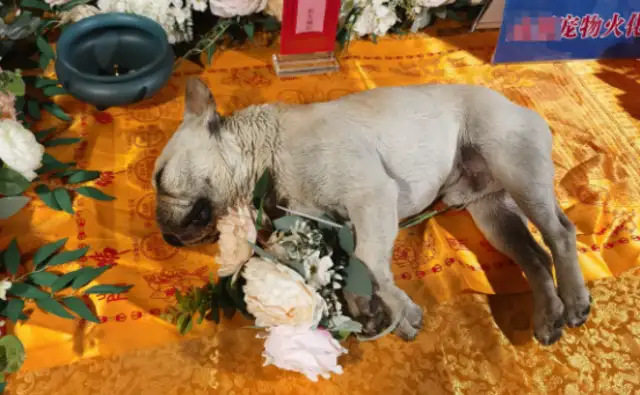
Counsel's statement that the “excess” fee was a popular expense and an unlawful award of compensation
In that case, although Wang had received compensation for pet dog cremation costs, the applications for “excessive” fees, moral damages, etc. were not upheld by the Court. In response, the lawyer at Heinan Rille Law Office, Princess Yu, described the nature of the “excess” fee as a form of expenditure in the category of folklore, the unlawful fixing of compensation projects, the fact that in judicial practice emotional values do not represent legal values and that courts do not generally support such applications. Compensation for moral damage is generally in the event of an infringement of personal rights (e.g. the death of a relative), a particular object of personal significance (e.g. the relics), etc. The reason for the non-compensation of moral damages in this case is that the pet is legally property and not a particular object of personal significance.
In life, then, what are the costs to be claimed by the feeder in the event of an unfortunate accident for the pet? The Princess indicated that the owner could generally claim for the purchase/adoption of pets (with the presentation of the purchase contract, the payment of a certificate) as well as medical expenses and, within reasonable limits, cremation funeral expenses.
Source: Political and Legal Commission of Shandong Province.