Designation: PET3817
English name: Three-keeled turtle
National origin: Only Fujian (South Ping and Jianyang) and Guizhou (Central, near Guiyang) are currently found.
Vulnerability to disease: decomposition
Life: A brief description of the species of triangulate turtles for about 50 years
The trimur turtles, which are small and not widely distributed, are part of the tide turtles and are located only in Fujian and Guizhou, abroad in Nepal, India and Bangladesh, with three distinct dragon bones on their backs and a light color. Eggs. In essence, female turtles can produce two to three eggs per year, two to four eggs per unit, for about 60 to 70 days. It is not difficult for females to distinguish, with male tortoises having thick tails, anals exceeding the end of the back of the man's nail, and head marks with brighter marks. Triple turtle morphological characteristics
There are three light-coloured spines on the back of the tri-precious turtle, and it's obvious that it's not going to disappear. The V-type stripes on the head, like the red-brained neck turtle, extend from the nostrils to the neck, usually yellow to orange red, and will not disappear until the turtle becomes a turtle. Owing to the scarcity of quantities, the species has not so far had a record of successful reproduction, but their reproductive habits should be similar to those of the Montenegrin turtle. Triple turtle care knowledge
It is essentially similar to the Montenegrin turtles that are water turtles, but they are closer to terrestrial habitats, so they can be raised in an environment that is ploughed in the form of turtles, and bottoms can be kept moistier than in the form of sterile soil mixed reptile sands, and water can account for one third of the casks. Land area accounts for two thirds. Water areas can also be replaced by basins. This, together with sunken wood or plants, will complete the basic environmental set-up. Triple Turtle Living Environment
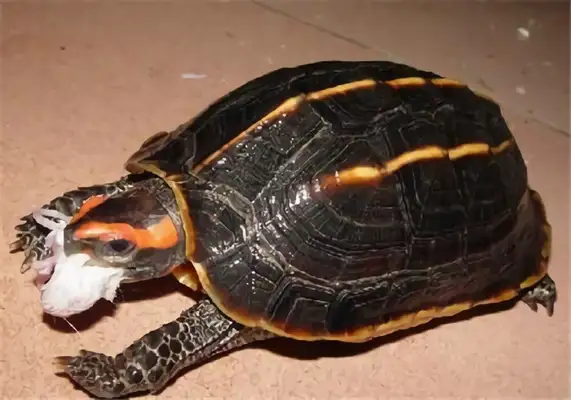
The trimester environment can be based on semi-water turtles, which are semi-water-habilitating, land-based turtles, so that most of the land turtles and small parts of the water pools can be set up in the environment to provide tortoises and rest and to be sensitive to temperature control.
It is a semi-aqueous tortoise and should be raised on sand, which is 3-5 cm thick and replaced once a month. Tortoise utensils can also be laid in half shallow water and half sand patterns, except in winter when all sand must be laid (with the exception of heating). The sand can be damp in the summer and dry in the early spring and late autumn. The manure and urine of the trimesters are stinky, so it is suggested that, if the environment permits, they can be kept outdoors so that they can adjust their own state and hibernate, but it is not appropriate to think that in the north of the country, the temperature of the winter is below zero.
The trisol turtles are warm and afraid of cold, and the breeding grounds are higher during the breeding process. The establishment of journals to document daily conditions, particularly temperature and diet, are key to raising good leatherbacks. It is only by mastering the temperature of their living environment and eating conditions that they can correctly take some precautions against them, such as warming in a timely manner when the temperature is low, and taking into account, for example, whether they are ill, their relocation and food replacement. Precincts for trisol turtle breeding
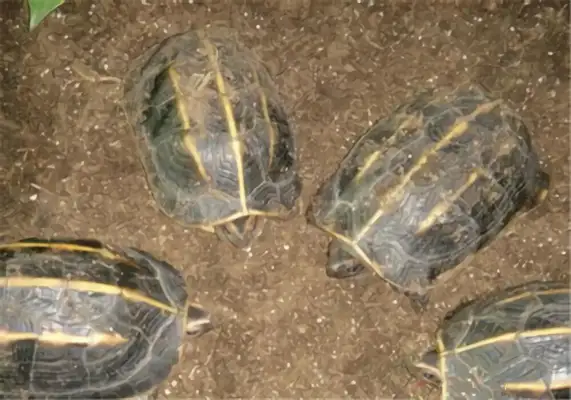
The trikle turtle is a groceries turtle, but it prefers meat food, which, when raised, not only provides a sufficient amount of food, but also ensures its diversity and, if necessary, calcium and normal growth.
I. ELEMENTS FOR RESPONSIBILITIES
Triple turtles like to eat fresh little insects. Like earthworms, crickets, bread worms, etc. All small insects or animals that can move can be fed almost entirely, but sodium or fertilized shrimp and turtle food can be exempted, while nettors usually supply crickets for staple foods, occasionally feeding worms, barley worms or off-legged weeds, and small fish, cat foods, fresh-born mice, etc., and occasionally supplying papayas, bananas, oranges, grapefruits or mangoes, or other sweet and fragrance fruit, saves vegetables.
II. Frequency of feed feeding of trifle turtles
Calcium powder and vitamin supplements are provided every two weeks, and calcium powder and vitamin supplements are distributed over food. The feeding time is mostly at dusk or evening, because it is more active and has better appetite. In terms of diet, each triangulated turtle usually eats about 2-4 crickets and two barley worms at once and feeds five times a week. There are also turtles who like to drag food into the water for food and to drink or soak in the pool in the morning and at noon, so the feeder should change water every day.