Designation: PET2688
English name: Red and White Pearl-Scale With Phoenix Tail
National origin: China
Vulnerability to diseases: albino disease, rotting tail disease
Life: 3 to 4 years ' profile of pearl species

The phoenix pearl is one of the species of goldfish, and some are used to it. The most important feature of this is that the platinum on the surface is a particle-shaped condensation, which is similar to the general goldfish, so the reference to goldfish is sufficient.
English name: Red and White Pearl-Scale With Phoenix Tail
Type: Goldfish, temperate freshwater fish
Origin: China
Reproduction: Eggs
Water quality: Micro-alkalinity, PH values 7.2 ~ 7.5.
difficulty of raising: easy
Fits to water temperature: 10-30°C for pearls
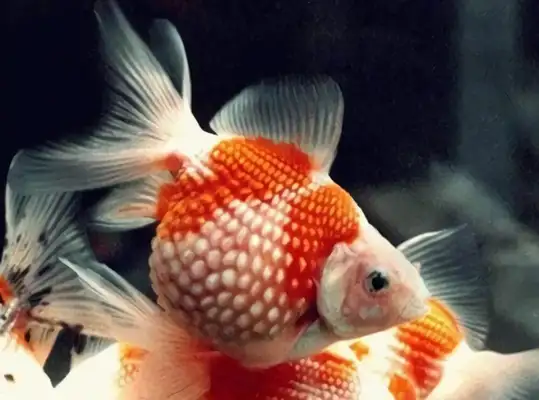
The phoenix pearl is a goldfish species of Chinese origin. The phoenix pearls are a species of pearl goldfish, which are characterized by the evolution of scales into granules.
Pearl goldfish, also known as pearl goldfish or bead goldfish, are most characteristic of the evolution of the balconies into particles. And a grain of pearl was set on its sides, so it became known. The pearls on their sides are large and visible, and the pearls near their tails are smaller, sharp, large, short and round, sharp-sniffed, very olive-shaped, the most unique of the goldfish family. Flower-tailed pearls, which must be symmetrically embedded, while red spots must not be too small for inclusion in the good. Beautiful red, golden flashing, white beads. Plumbing environment
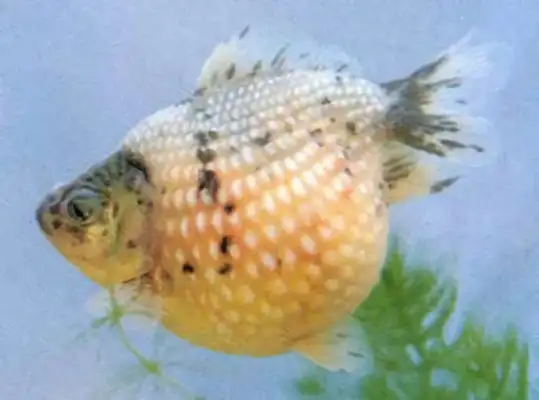
The phoenix pearls belong to pearl-like goldfish, and the need to prepare them for the environment when they are raised, which has evolved into granulated goldfish, is even greater in order to prevent environmental causes from causing damage to their appearance and reducing their value.
Pearl-like goldfish are suitable for stable green water or Chen Qing water farming. They are not suitable for old green water and fresh water farming. They are prone to bad phenomena such as pox, pine shoulders and pineapple farming in old green water.
When young fish grow to a certain degree, and beads begin to grow, it is desirable that the density be kept in such a way as to control the rate of growth of fish, achieve a balanced growth of fish and beads and head crowns, and once the beads and heads have grown, they must once again be diluted to achieve a rapid and balanced growth effect, with a further increase in density and exercise in order to increase the resistance of pearls and the resilience of the beads to fall, and ensure that pearls are robust and beautiful as they reach their customers. The pearls of the phoenix.
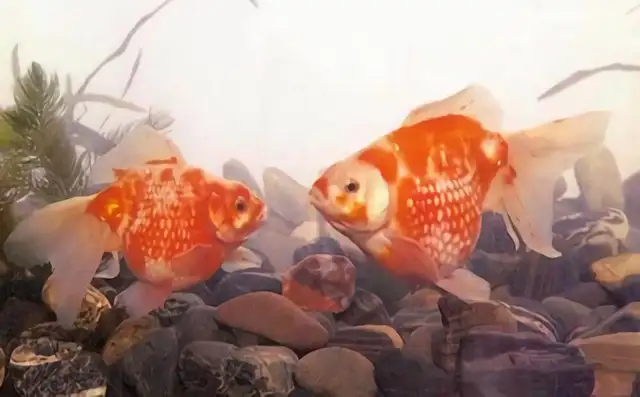
Phoenix.
Many people tend to be unable to catch the amount they feed, and what are the problems they should pay attention to in terms of feeding, choice of feed, etc. How can science feed to make phoenix pearls more beautiful?
The three main points of view of the goldfish are head, body and beads, in which the growth of the beads is somewhat at odds with the growth of the beads, and the main feeding adjustments in the farming process. Young fish are primarily concerned with body size and growth, and must be fed primarily with the full-priced feed of high-energy, high-protein. When the bead is grown to a certain extent, care must be taken to adjust the feeding, taking into account the nutrients required for the growth of the beads, primarily calcium supplementation, and to reasonably control the growth of the fish, otherwise the growth of the beads will be inconsistent with the growth of the fish, resulting in a loose shoulder, corones, etc., and may result in an incomplete bead. After this period, when the period of fish farming has entered, it will be half as successful as a balanced feeding.
But there are three things that need to be noted: first, fresh live baits and complementary particles must be properly matched over time. A slight lack of attention leads either to a lack of drums or to incomplete or loose beads or a lack of crowns. Second: Feeding at 8-9% is the best, too much leads to overweight fish, lax, loose shoulder and beads, too little leads to too thin fish and not enough round drums. Third: The fish should be fed several times in small quantities, so that the body and beads can grow in balance.