Hair recovery dogs are characterized by a very smart dog, one of the ideal dogs in the minds of many hunters, who have a unique advantage in hunting for their prey, while their superior body curves, combined with greater proportionality coordination, are more obvious than other dogs.
An introduction to the Hair Recovery Dog.
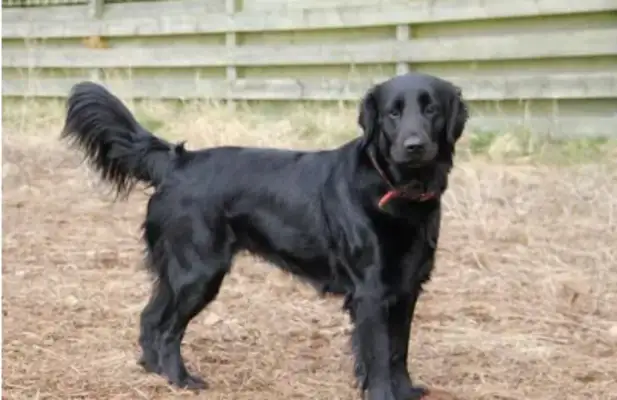
Hair-seeking dogs, which are multipurpose hounds, can be good domestic partners, hounds, retrieving dogs, full of joy, very lively and smart dogs, with clean lines. Hair recovery dogs are of a traditional type, and the phrase “powerful, not stupid, lively but not thin”. The dog is very different from other species. On the side, when moving or standing, the movement is easy and smooth, the head is “film”, hairy and characteristic, thus making the dog's profile long and solid and very neat, all of which are unique to the dog. The end and cheek are not exaggerated, the head is in the right position, it is in the middle length of the neck, and the neck is well integrated with the back tilted shoulder. The back line is horizontal, deep by the chest minister and extended backwards, gradually fined and slightly upwards, forming a blunt angle triangle. The chest is very clear, the forearm is clearly prominent, the retrieving dog is harmonious, the body is strong and strong, it is elegant, not like a pony, with short legs and long limbs. They are thick and thick, lying flat, covered in feathers on their legs and tails. It's very proud, fast, its tail is wave-like, its overall strength, and its image is made up of quality and style, as well as its symmetrical shape. The dog was judged to be relaxed and self-righteous, with natural standing more important than deliberate gestures, and scars that symbolized glory and were not flawed.
The history of flat hair finding dogs.
It started in the nineteenth century. British dogs, however, were raised by two American species: Labrador and Newfoundland. Hairhounds have a centuries-old history as good helpers for European and American fishermen. As they developed and perfected, even the gunmen felt they were very capable. Hair recovery dogs develop from a particular type of recovery dog, made up of a combination of Newfoundland, Sets, sheepdogs, hounds and other water dogs. The ultimate goal of the hybridism is to breed a dog that can easily detect, locate, swim and retrieve waterbirds. In the middle of the nineteenth century, this hybrid culminated in the emergence of a pioneer, the Hair Recovery Dog. By 1900, the dog breeders thought that curls were bad for water protection, and then began to grow flat dogs, which we now know are hunting dogs back. In 1915, the United States canine club (AKC) admitted that flat hairs were recovered. They were not well developed during the world war, and by the 1940s they were almost extinct. At that time, a dog-skinner named Stanley O'Neil, who began to work for the revival of the dog species, finally had a bright future at the end of the twentieth century. Despite their many excellent hunting skills, flat hair hunting dogs have not become widely popular pets.
The flat hair to find the dog.
He's always eager to go out and play. It's very friendly to other dogs, pets and children, even strangers, and it's an ideal partner dog. Although they are very active, after proper training exercises, they act very quiet and peaceful even in the house. Families with blue hairs and hounds are always blessed when they enter the house by their loved ones, who always greet them with happy smiles and shaking tails. As a domestic partner dog, it is sensitive, smart and emotional. It keeps these features and a happy young look as old as ever. Deficiencies in hairhounds often show excessive panic and barking, but a good, optimistic dog tends to be friendly to all. The Hairhound is a happy, loyal partner who needs and envys to live with people as a family member. In an effort to achieve that aspiration, it does have a strong personal aspiration and a desirable self-care capacity.