No.: PET4251
English name: Forest HingebackTortoise
Character: timid, sensitive
National origin: Guinea, Liberia, Senegal, Chad, Cameroon
Vulnerability: pneumonia
Life: 50-80 years
Price: Cheap, but difficult to buy an overview of African turtle species
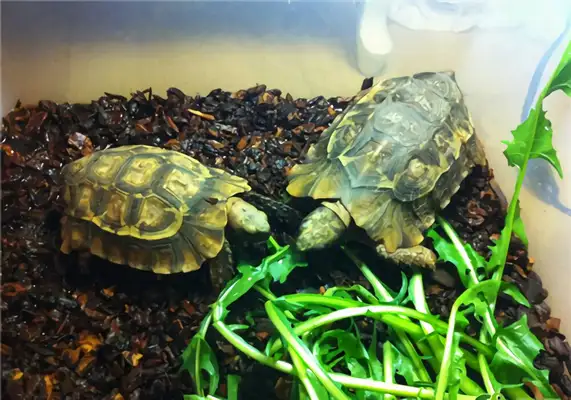
African turtles, one of the rare species in the land turtles, live on the African continent, where the rainy season and the dry season are distinct, so that the turtles living here endure high temperatures and humidity, as well as six months of drought.
The folding turtles are divided into a total of six categories, all of which inhabit the African continent, with a common feature that can be reconciled in the second half of the vest. It's unique for all turtles. The widest distribution and the largest number of bell-marked turtles are those representing turtle species.
Chinese literary name: Africanback turtle
Don't call it: African turtles, sawn back turtles, rain forest turtles.
Two words: Kinixys Erosa
English name: Forest HingebackTortoise
Context: Animals
Gate: Pipeline gate
Programme: climb
Tortoises.
Section: Marine turtles
Crops: Africanback turtles
Region: Guinea, Liberia, Senegal, Chad, Cameroon, Congo and Central African Republic
Routine: Africa ' s land turtle habitat is an equatorial rainforest climate with year-round humid heat, with an average annual temperature of about 25-30 degrees Celsius due to the height of the desired habitat, with a relatively distinct range of seasons divided between the rainy season and the dry season, ranging up to seven months and around May-November.
Body size: A x 16 to 32 cm long.
Reproduction: Eggs. For wild Africa, the turn-off is likely to occur throughout the year, with yields of about 5-8 of a body size, conditions of incubation, temperatures of about 30.5 degrees Celsius, humidity of about 90 per cent and hatching days of between 130 and 160.
Food: communion. Frequently eaten plants include insects, bananas, cabbage, carcasses, mushrooms, snails, tomatoes and various fruit melons. African backland turtle morphological characteristics
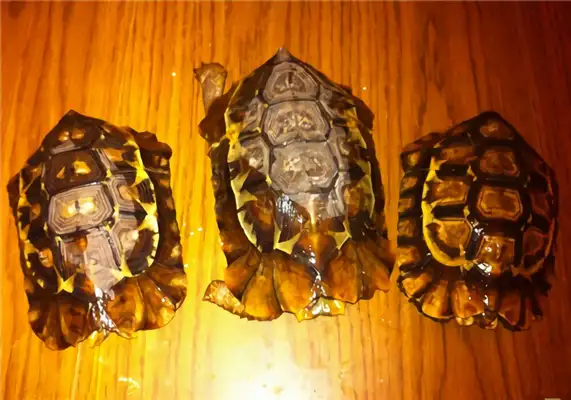
The greatest feature of Africa ' s backback turtles is that they are operational on their backs, which can help them escape from predators, as well as assist in breathing and ovulation, and is an evolutionary alternative.
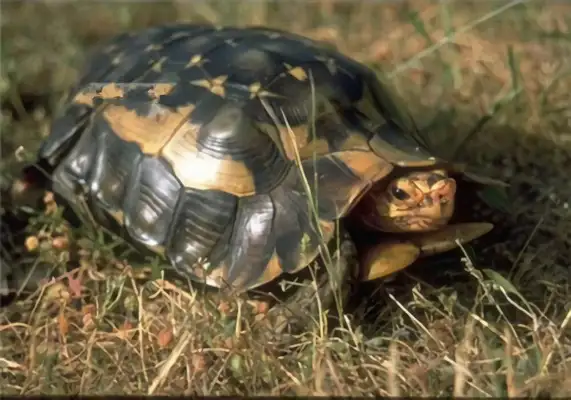
Africa's folding turtle is the largest of all folding turtles, with more than 30 cm mature sizes, African folding turtles with brown bottoms and a few yellow stripes spread across their entire backs, with gender-specific characteristics similar to those of other turtle species, with long male tails. The main areas of Africa are in Central and West Africa, with Guinea, Liberia, San Salvador, Chad, Cameroon, the Congo, the Central African Republic and the surrounding countries, with Cameroon as the largest exporter. Africa ' s closed land turtle habitat is dominated by rainforests, which often inhabit swamp areas and near rivers or streams.
In addition to its particular crawling posture, the folding of the turtles is the retrenchment that begins between the seventh and eighth edge decks, where there is a soft organizational structure similar to the tenacity band, which, in case of an attack, can be held to the limit of the closing of the back, and in fact, that closed action can also help breathe and ovulation, which is the case for all the turtles.
A further characteristic of Africa's back-land turtles is that they are no less skilled in swimming in water than they are in the box turtles, so that Africa's back-land turtles are more humid than other back-land turtle species, and they also reside in Africa's pure tropical rainforests. African knowledge of land turtle conservation
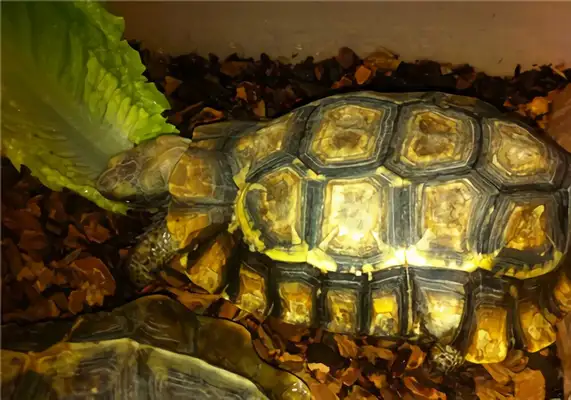
Given the small number of ground turtles raised domestically in Africa, research on these turtles is limited to studies in wild environments, including some life and reproduction habits, and is described briefly below.
I. Life habits in Africa
In Africa, where land turtles are found in the equatorial rainforest climate and are humid and hot throughout the year, the average annual temperature is about 25°C ~30°C due to the height of the habitat. The relatively clear range of the habitat is divided between the rainy season and the dry season, which lasts for seven months and lasts for approximately May-November.
II. Reproduction habits of ground turtles in Africa
For wild Africa, the turn-off is likely to take place throughout the year, with yields of about 5-8 of a body size, with conditions for incubation, temperature setting at about 30.5°C, humidity at about 90%, and hatching days at 130-160 days.
Although they are spread in Africa, they do not like too much light, and a large area of shade is required for a farm. The majority of folding turtles are collected in the wild, are vulnerable to in vitro parasites and must be dewormed. It is not difficult to breed and hatch leaf turtles as long as they are able to adapt to the new environment. Living conditions in Africa
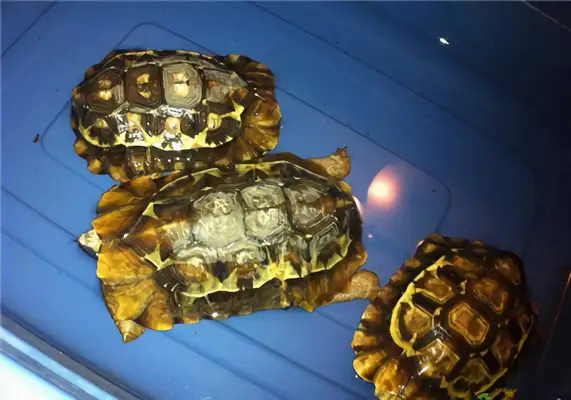
Africa has a high environmental demand for ground turtles, which, although they are resistant to extreme weather conditions in the wild, require high temperatures under artificially raised environmental conditions, so that in many places they are not suitable.
I. Appropriate temperature
Africa ' s reversible land turtles adapt to ambient temperatures of 27-30, 24-26, 20-22 degrees Celsius. Wild individuals have a habit of sleeping, so that the temperature is not too high, not more than 35 degrees Celsius, and can be reduced to 20 degrees at night, but at least 27 degrees before and after eating to help digest food.
II. Appropriate humidity
Africa needs higher humidity, usually 60-85 per cent of the water coming to Africa is the most basic requirement. Some say that this is a turtle spread across the continent, enduring drought, but more research is that it is more suitable for high humidity, which, because of its wide distribution and the apparent local tide season, adapts to a wide range of humidity.
III. Focus on feeding
Africa's back-land turtles are provided with high fibres, calcium, low phosphorus and appropriate proteins, which ensures that he is back-free and nutritionally balanced and is normal.
Time for activities
It is often when rain begins when Africa folds its turtles, but when the weather is hot, it digs holes in dried-up water to hide itself in order to save itself from loss of moisture and then wait for another rain. The feed point for African turtles.
It's our impression that the turtles should be standard vegetarians, and some of the turtle friends try to fill the calcium with some animal calcium for the turtles, but Africa's turnback turtles are a groin turtle in the tunnel.
I. ENFORCEMENT OF THE AFRICAN TURKEY
Africa's tortoises, though land turtles, are quite different from other African turtles in terms of environment and food, and are more of a red leg-like habit. They are standard groceries, high demand for protein food, and a variety of vegetables, fruits, weeds, snails, beetles, etc. Fruit should be the staple food. They also require very high humidity, at least 80-90 per cent. It's better to spill water sooner or later. Water basins are an indispensable element. Africa is vulnerable to being forced to refuse to eat, especially new turtles that have just been imported. Essentially, all the tortoises are not suitable for beginners and are more difficult species.
II. What do African turtles eat?
In Africa, ground turtles are widely fed in the wild, with near-acceptance of animal and plant foods, and can be fed in an artificially raised environment. Snail-eating or insects, even high-protein foods such as animals' internal organs, and plants can choose wet fruits or leaves, although food is still based on diversity and too monolithic foods can cause multiple diseases and overnutrition or undernutrition. Frequently eaten plants include insects, bananas, cabbage, carcasses, mushrooms, snails, tomatoes and various fruit melons.