A thousand and four hundred years ago, China's short-haired Cat returned to Japan in the name of the “Tang Cat” and became Japan's favorite pet of the court and social aristocrats, and the cat became, through Buddhist stories, an animal communicating the sun. By contrast, dogs aren't so lucky.
Dogs enter Japanese life earlier, are more involved and more useful in human life than cats, but do not stand in the same position as cats in Japanese literature.
A very different fate.
Archaeological excavations indicate that the dogs entered Japanese life as far back as 12,000 B.C. to 300 B.C. years ago. Initially used for ceremonial purposes or as a demonstration of military might, it became a hunting dog or partner in the palace who expelled prey during the hunting of nobles.
It's the first place in Japan to write about cats.
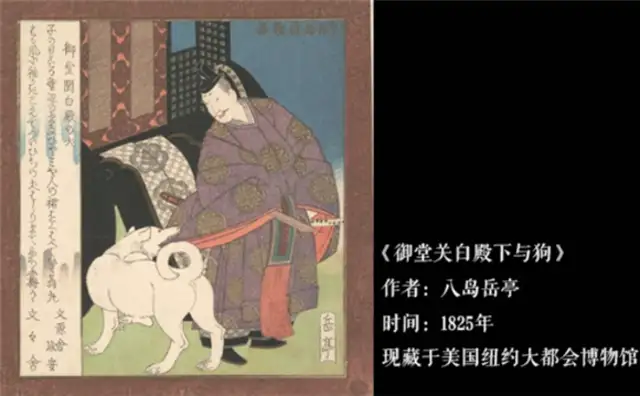
(in Japanese Spirits)
In the middle of the day, the dead returned to their homes, barking in front of their homes, being chased away by their families, and when they returned to their homes at the beginning of the following year, they received food and meals from their families. " The Spirit of Japan" is a collection of Buddhist stories from 810 to 824 A.D. In a compassionate Buddhist story, the dead spirits are more fortunate to produce cats than dogs.
Cats and dogs' very different fates are also reflected in Japan's peace-time female writer Qingxuana's Pillows. The Pillows describes a cat and a dog in the palace. The cat is a white-backed black cat with a row of five items, called “Little Woman”, and the dog is called “Oonmaru”. Women in the palace used to tease two animals and instigated Honmaru to bite her life: “It was at breakfast when the Lord was there and looked at it, and it was amazing. He held the cat in his arms, and when the men of the convenor's house arrived, the Queen said, ‘Break the owl and drop it on the island, and do it now!’ The guards exiled."
(Chou is translated)
As described by the court's officers, Honmaru was also a man of power before the Emperor's cat, “who wears a willow ring, with peach blossoms and has cherry blossoms in his waist, and goes around the yard”, and who was ordered to evict the Queen's dog, who came back after being exiled, and who was found dead by two Tibetans, Thong Long and the real house, was thrown outside the palace door, and his body was bruised and ugly, and never returned to the same time as the March festival, when the head of the cherries, the back of the cherries, the cherry blossoms, and the dog barking in the palace.
Another of the three talented women of the era of peace - the violet part of the book " Sourced languages " - the dog comes out as a tool for creating the atmosphere in the countryside. “At the end of the day, the Prince was riding and standing a little further. Several village dogs came out and barked at him. The sound was so gross and shocking.”
(Toyoko Kae)
Cats in spring, dogs in winter.
Japanese poets are also very useful in their writing, and in most cases the role of a dog is still opposed to that of a cat. For example, with Xie Hsiaomura, "Cats go out for love, loyal dogs cannot stop."
(GRUNTS)
The word "sweet" means "whoever" is serious and honest, and even though there are dogs in the phrase, the main point of expression is the cat seeking a spouse in the spring.
Many of them have adopted “cat love” as the subject of their spring writing, so the dog-to-cats have become the subject of winter writing, for example, the tea of the dog-in-law, who particularly likes to write dog tea, and has written over 20,000 words throughout his life, of which over 280 refer to “dogs”, such as “The Edos of Edo have a sense of love, and the pre-war dogs have an old age”.
Edo-Doo-Doo-Doo-Doo-Doo!
In the same year, even the dogs of the monastery will receive a gift. And it's like, "On snowy floats, the loneling walks away."
(Dogs squealing)
The lonely, cold winter scene is painted with the footprint of the dog on the road.
Sheung Village also likes to show the cold winter with the presence of dogs, such as “The Night to the Firegate Sleeping Dog, which smells of wood leaks”.
♪ Home dog ♪
The return of tourists on the winter night awakened a dog who had fallen asleep, and the hourly leak sounded like time passed. A similar creation was made by the famous Japanese twilight twirl, “The noises of the dogs come at night and there are no dreams of mourning”.
(Whispering rain and sounding)
Mingji's official rules also link dogs to the sound of the water, describing the cold night without sleep, echoing the sentiment of Edo's former hysteria, “The night dogs drink, the cold sounds”.
(Dogs squealing)
The silent night dogs bark not only in the cold door, but also in the Emperor of Chumen, who later recorded the song "The Jade Leaves and Songs"
(Assemble)
The song, "The Night Dog barks high, the moonlight of the village is low."
♪ A little night dog ♪
It is the work of the ninety-second generation of Emperors in Japan, where the noise dogs bark over time, forming an emotional resonance of Japanese literary creators.
In mythical legends?
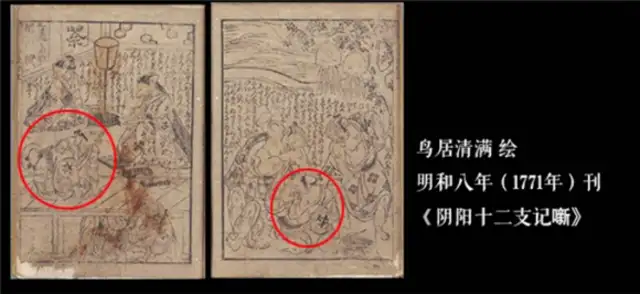
In addition to the actual dog, the legendary dog plays an important role in Japanese culture. The story of the relationship between the son of the first day of the tiger and the brother of the father, Yong Qingxiang, and Zhijiang Zhijiang, was described in the 12 Sages, which were printed in the next two years (1771), in which she sent a message to his loved ones, who did not intend to have the letter taken away by a monkey broker, who ate the letter 's tokens to the rabbit, the dog and monkeys, and in which a dispute had occurred between the snake and monkeys of the lover and the brother of the father, Yong Qing Qingxiang, and Zhi Zhi Zhi Zhi Zhijiang, was involved in the dispute, which was resolved only by Hoi and the ugly cow, and finally by the great black and rich heaven of the Japanese angels.
In this story of a 12-story hero, the dog is still not free from the low status that he had when he came out at the same time as the cat. However, it must be said that the most active role in the whole painting book is that of Sakasuke. In the 30-page story, Min-suke was involved in the incident shortly after its opening, and the scene was heavier than the male and female protagonists and the angels who followed him, and could almost be regarded as the real protagonist of the story.
In another mythical story, "See the Eight Dogs in the South."
"The Eight Dogs."
In the middle, the dog role starts to get weird. Eight Dogs is a white story written later in Edo, published for the first time in 11 years of culture (1814), and not officially finished until 13 years (1842). The entire creation, which lasted 28 years, consisted of 98 volumes and 106 volumes, the longest in the history of classical Japanese literature. One time after the creation of the book, Luoyang was expensive, and 500 sets were published each year after its first publication; in addition to renting and circulation, the readers were numerously representative of the plays of the Edo era, and at the same time of the martial literature in relation to public ( nobility) literature.
The story is dominated by warriors and is legendary. The background to the story of the Eight Dogs was set at the time of the battle of Japan's home country. The Lord of the Real Estate is a great name, called "Li Xian", whose daughter, Princess Volodya, is cursed, whose 8th house was turned into a demon after the death of the concubine, who brought Princess Volodya into the mountains, where one dog began to live as a couple.
One day, Princess Volodya was told by a fairy boy who suddenly visited that she was pregnant with an eight-bedroom child and, in shame, she committed suicide. At the moment of her death, the “dog” in her bellies drifted into the Quadrant in the form of “gas” and disappeared in the air with eight beads written in eight virtues. The scene coincided with the encounter of the man who had been married before her life, and the man who had shaving away from his home, in his capacity as a magician, began the search for eight scattered hymns, the story of the eight children of Foggy and Room 8.
After her death, the eight-named “dogs” with the same 8-bedroom birthmark as the 8-year-old child, the true character of the story, the “G8 Dogs”, was born in different parts of Kandong, Japan. The Eight Dogs were guided by destiny, met on various occasions, gathered in groups, and finally came to the Lord of the City to see their officers, to see military engineers and to protect their owners.
In the story of the Eight Dogs ' Battle, one of the “Father Cats of the Retired Ghessing Mountain”, when the dogs of the Eight Dogs were fed eight times through the country, confronted the cat of the Ghessing Mountain with an arrow in the eye. By the mouth of the dead, the dog has learned that the demonized adult form replaces the next man in the mountain known as the “One Point of the Red Rock”, and in order to prevent the evil of the cat, the dog has found the son of the cat of the Red Rock, the son of the son of the cat, Taro. After many waves of defeating the cat of the demon, the name of Taro in the corner of the dog village was changed to the name of the “Doggy Point”. This is probably a rare example of the victory of dogs in Japanese literature.
Because of the popularity of the Eight Dogs, later life has been adapted from the original text into styles such as song and dance, doll play, film and television drama and theatre. One of the adaptations of a unique Japanese character is the painting of the Edo era in Japan. The Edo-era painting artist Koogawa Kuo-jin, who wrote a book entitled " Eight Houses in Love " , boldly depicted the life of eight rooms with Princess Voji in the mountains, with the same visual impact as the octopus and seamaids of the octopus of Bei-Sai's tentacle. "Eight Houses in Love" also became a rare manifestation of the dog's brightness in the landscape. - After all, the animal world ruler of the floating world is the 2,321 cats painted by the brother and brother of Gogawa.