Designation: PET4686
English name: Galapagos Giant Tortoise
Origin: Galapagos Islands
Vulnerability to disease: Decay
Life: An overview of the species of elephants in Galapagos, around 200 years old
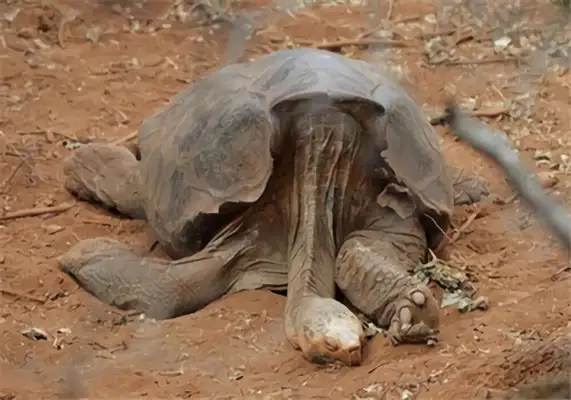
Galapagos is the largest marine turtle species in existence, with 12 subgenerous species, but the number of each subgenerous species is very small, and two subgenerous species have been identified for extinction, the most unfortunate of which is that his death, the “sorient Georges” who died in 2012, received worldwide attention, representing the death of the last of the subgeneric species.
Chinese literary name: Galapagos turtle
English name: Galapagos Giant Tortoise
Latin name: Chelonoidis nigra, Geochelone nigra, Testudo nigra, Testudo elephantopus, Geochelone elephantopus, Chelonoidis elephantopus
Context: Animals
Gate: Pipeline gate
Programme: climb
Tortoises.
Subtitles: Curvature turtle
Section: Marine turtles
It's a turtle.
Castes: Galapagos turtles
Asian: 12 Asians
Named by: Quoy & Gaimard, 1824
State of conservation: the Galapagos Islands are now protected by the Government of Ecuador as national parks and as a world natural heritage.
The species found in the Galapagos archipelago are classified as follows:
G.n. Bingdoni – Pinta Island (Eradicating, alone with George's old tortoise, who died in 2012)
G. n. becki – near the Volf crater north of Isabela Sea Island
G.n. Chathamensis - San Cristobal
G.n. darwini – San Diego.
G.n. Pheppium – Pinzon Island
G. n. guntheri — Isabela Sea Island Negra Mountains (Isabela Sea Turtle)
G.n. Hoodensis - Espanola Island
G. n. microphyes – close to the Darwin volcano.
G.n. nigra – southwest of Isabela Sea Island (elimination)
G.n. porteri — Santa Cruz Sea Island
G.n. Pentastica – Fernandina Sea Turtle
G. n. Vandenburghi – Isabela Sea Island, Alcedo Volcanic Port (Isabela Sea Turtle)
G.n. Vicina – Southern Isabela Island, Cerro Azul.
G. n. Galapagois — Galapagos morphological characteristics of turtles
Galapagos elephant turtles are the largest of the existing ones. With a length of 1.2 metres, adult elephant males are greater than females, and adult males weigh approximately 272 ~ 320 kg, while female females weigh 136 ~ 180 kg. Life expectancy is estimated at 200 years. Big head, long neck. High in the center of the vest, five pieces of vertebrae; four pieces of each side of the rib shield; nine pieces of each side of the visor, slightly serrated, slightly upward; one piece of the neck shield; one piece of the ass shield, larger. Four limbs big, column. The back armour, limbs and tails ranged from yellow to black, and some individual vertebrae and rib shields were irregularly blacked and their skin wrinkled. Galapagos has knowledge of turtle care.
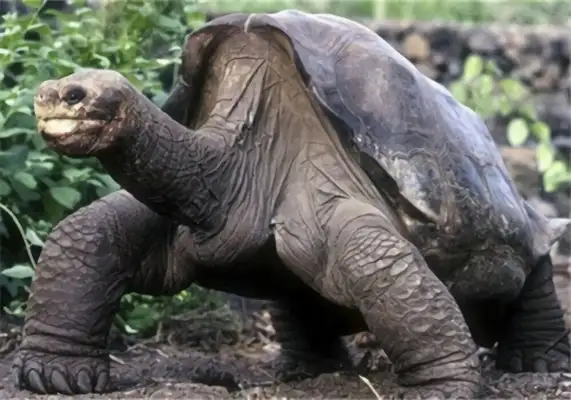
A 2012 news story generated reflection and grief, with the confirmed death of a Galapagos turtle called "The Lonely George", which means the extinction of the Pinta Island sub-species of the turtle species, a lonely George who has not had a successful reproductive record for 40 years.
The lonely George was found in 1971 until his death was confirmed in 2012 and is considered the last known individual in Pinta Island elephant turtles (name: Geochelonenigra bingdoni). The sub-species belong to one of 11 sub-species of the Galapagos elephant turtles living in the Galapagos Islands.
It is considered to be one of the rarest animals in the world and one of the symbols of species conservation in the Galapagos Islands and even globally. The tortoise “Lone George” is more than a metre long, weighs more than 90 kilograms and has lived alone for many years. George was first discovered on PintaIsland in 1971 by Joseph Vagvolgyi, an American molluscian. At that time, the vegetation on the island had been destroyed by wild goats from outside, and there was only one python in the island. For the purpose of protecting it, he was placed at the Darwin research station and raised with two other subgenerous female turtles to breed. However, although the female tortoise had produced two eggs for it, none had succeeded in hatching.
It is estimated that George is between the ages of 60 and 90 years and is in good health. Following the removal of the alien goats from Pinta Island, the vegetation on the island is now being restored.
On 24 June 2012, the Galapagos National Park on the island of Pinta, off the coast of Ecuador, South America, issued a statement stating that the “lone George” had died and that another species had disappeared from Earth forever. After George died, it was written on a blackboard on local Darwin Boulevard that “we witnessed the extinction”. Galapagos is living like a turtle.
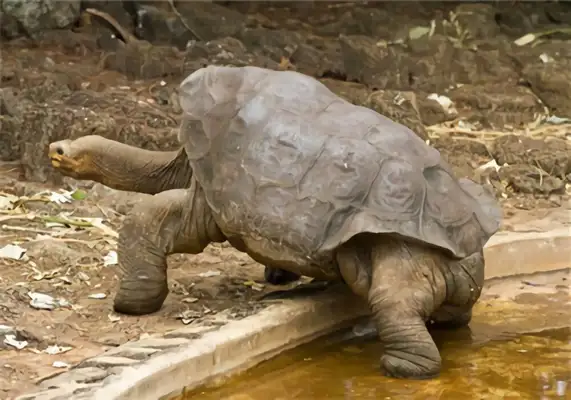
The Galapagos elephants live on an archipelago, and there are differences in the appearance and habits of the Galapagos elephants between the different islands. Thus, according to the different islands, the Galapagos turtles are divided into 11 subgeneric species, and a subgenerous species has now been identified.
The Galapagos Archipelago is located in the Pacific Ocean, 1,000 km from the mainland of Ecuador in South America. In 1535, Panamanian vessels travelling to Peru accidentally discovered the Galapagos Islands on their way of navigation. Over the following 300 years, the Galapagos Islands had been a safe haven for ships, and it was only in 1835 that Darwin had come to the Galapagos Islands for five weeks to gather and observe the original species, where his evolutionary theory had been tested, which had truly made the Galapagos Islands widely known. The theories published by Darwin are also corroborated by biological observations and research on the Galapagos Islands.
In addition to its rare and unique species of birds, the island has a unique species of reptiles and sea and land iguanas. The Galapagos Islands are volcanic islands in the sea that have never been connected to any land, so that all flora and fauna are derived from native species. Although small, most of the aerodynamics and plant species on the island have evolved, almost all herbs, reptiles and most of the landbird species can be seen only in the Galapagos.
Galapagos, which is built on horseback crust, is a turtle and lives in areas with high vegetation, such as cactus and cactus. The larger Galapagos elephant turtles are better adapted to the high altitude because they are resistant to cooler and cloudy climates. Generally live on larger and more humid islands and low elevations. Galapagos elephants migrate seasonally during the rainy and dry season from grasslands to areas up to 600 metres above sea level. The same migration routes have been created as inter-forest corridors by many generations of turtles, defined as “ turtle roads”. In the rain-fed islands, the back-hulled turtles are more congested, and large groups are often found, with saddle-type turtles relatively isolated in their territory. The Galapagos Tortoise.
Galapagos is a herbivorous animal whose food includes cactus, grass, leaves, moss and berries. On average, a turtle eats between 32 and 36 kg of food per day, but is less nutritious because of less efficient digestive systems. Land turtles receive most of the water from plant dew and juice, so they can not drink for long periods of time. They can also endure a period of 18 months without eating or drinking water, while when they are thirsty, they can drink water at great and fast speed, and store it in their bladders and hearts, so that they do not drink water for long periods. In arid islands, where turtles lick the dew on the boulders in the early morning hours, many rocks have formed rock puddles caused by successive generations of such practices.