No.: PET2851
English name: Thompson
Origin: Indian Ocean
Vulnerability to diseases: albino disease, rotting tail disease
Life Life: 4-5 years of Tung Tung Tung Tung
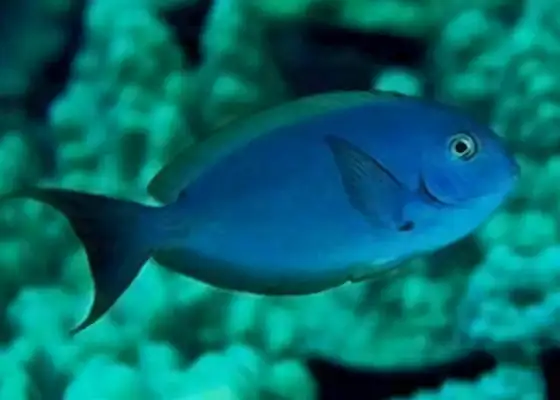
The color of the juvenile fish hanging by Thompson is blue and gray, and the tail is white when they reach adulthood, but whether the juvenile fish or the fish, the greatest characteristic of that hanging is the black spot on the back of the end of their back fin. Artificial rearing requires the preparation of more than 450 litres of aquariums so that Tomson has enough room to swim.
Chinese literary name: Tom Tung Tung Tung
Latin name: Acanthurus thompsoni
Context: Animals
Section: Crude Skin Prick
Distribution: Indian Ocean, etc.
English name: Thompson's Surgeonfish Tungsten
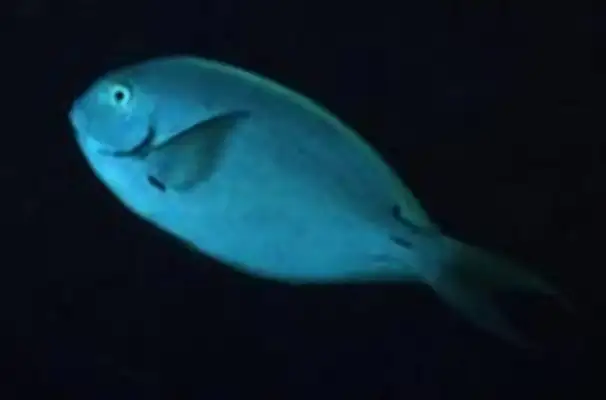
Tomson hangs with a more moderate character, with a maximum size of 27 cm, and to raise a fish like Tomson hangs requires a swimming space of not less than 450 litres of aquarium to ensure his hanging.
The fish he hangs is elliptical and flat, with small heads, and the contours of the back are slightly accentuated as they grow. The mouth is small, the end is flat, the upper and lower jaws are flat, the teeth are fixed, the teeth are etched. The back fins and the fins of the hips are sharp and do not lengthen the fins; the chest fins are near triangles; and the tail fins are beamed with an extended upper and lower leaf as they grow. Fish form is consistent with olive brown or blue gray, with a black mark under the chest fin and a small black spot at the end of the back fin base. The tail fin is white (the Indian Ocean community's tail fin is the same colour) and the residual fin is the same colour; the tail handle gutter is black and brown.
Tomson hangs as a kind of gentle fish-watching species. The colour of juvenile fish is blue and grey, and the tail of a fish is white, whether it is fish or juvenile, with a black spot on the back of the end of the back fin. Tomson's raising environment.
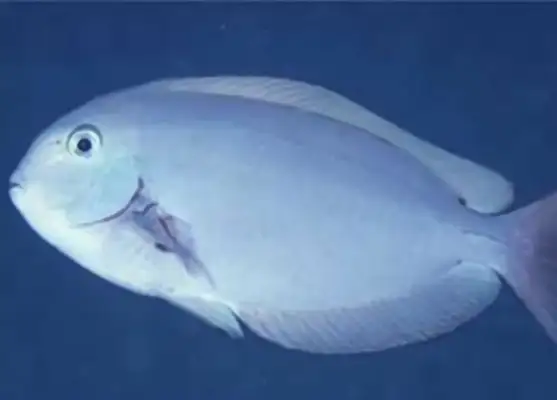
The temperamental nature of Tomson's hanging and his appearance are also very beautiful, and the demands for water quality and food are not high, so it is not difficult to raise. It is recommended that the temperature of the rearing soup be not less than 30°C and that the PH be 8.1-8.4.
In the wild environment, soups are held mainly in waters between 4 and 75 metres deep in steep slopes of outer reefs, usually living alone or in small groups, and occasionally in large migratory groups for food. Feeding soup is required to provide no less than 350 litres of water and to build caves for hiding. In addition, when adding fish, it should be arranged in the previous batch, so that when new fish enters the tank, they are not pressured by violent species. We'll have some food.
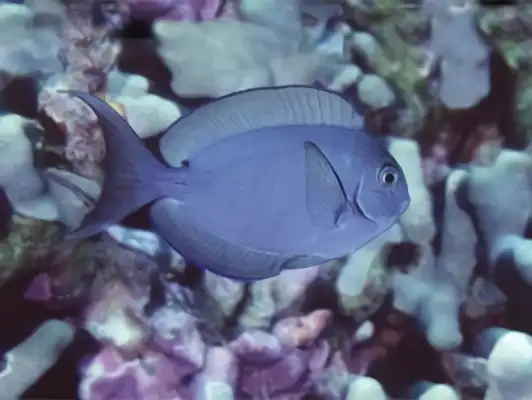
It is not very difficult to raise soup, they are not demanding water quality and they are also very strong. Wild soups are mainly fed by zooplankton, crustaceans and fish eggs.
As with most of the stabbing fish species, Tomson rarely pecks corals, so his friends in the eco-cylinder can be relieved. For food preparation, such as pickles, vegetables, frozen fish shrimp, invertebrates and high-quality plant fish feed with algae. The demands on the quality of water and food are not high, they are healthy and easy to raise.