Wednesday, 1 December 2021.
Zhuang Bay District, Tianzhou City.
On the first day of the last month, in the evening, in the winter, in the sun and in the evening, in the sun.
At the end of the interview in Jiachu, our best friend invited us to the neighborhood for a walk, while we talked about the city's street view and the red sun in the middle of the river.
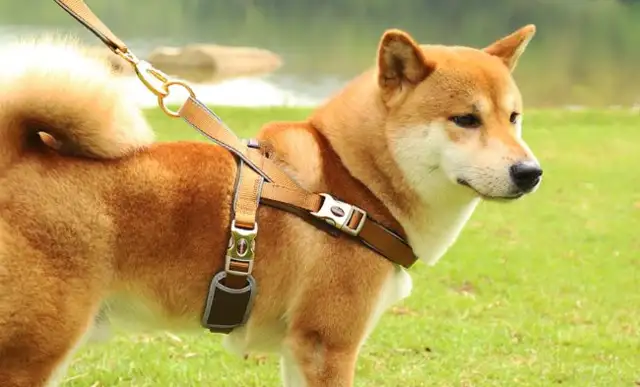
In the square of the district, the citizens are walking around with their own dogs.
A golden hair seems to know the little master's mind, and he's playing with his hip-hop ball, and we're envious.
Tanchon, a city towed by a train, young and inclusive, gives us life and vitality.
I am writing this city in such a way that I want to tell you that the city is worthy of its name.
The famous American planners, Sarinin, said that the city was an open book from which its ambitions could be seen. This ambition is reflected in both construction and management.
In a sense, the compatibility of an urban person with nature makes it possible to judge initially the capacity and level of governance systems of the city.
On 1 May this year, the Regulations on the management of dogs in the cities of Jiazhou became the second city in Hunan, except Changsha, to introduce local legislation on dog management.
The purpose of the legislation is to regulate and direct the conduct of the citizens' dog-keeping, and to remind our law-enforcement officers and managers “to administer and enforce the law”. This is in line with the people-centred concept of law enforcement and is an essential requirement for building a harmonious socialist society.
Serving the people is not an empty word; it requires more and better wisdom and capacity.
When the wind comes, it's better to chase it, to look at the light. As the lead agency for the management of canine dogs, the Civil Police of the Public Security Unit of the country is neither following the code nor blindly confident. They have studied many times, gone abroad, listened to the views of the population, and managed dogs in such a way as to achieve the goal of “doing things well and doing good”, which has received genuine praise from the citizens of the country.
In our interviews, we learned that the CAPSOP has achieved several first steps in leading the implementation of the Regulations and regulating the management of dogs: taking the lead in the open system terminals to accommodate the smart dogs of different companies; taking the lead in valuing and legalizing the participation of civil society organizations; taking the lead in combining the 110-link police and stray animal rescue management mechanisms; and introducing precision management into the daily dog management regulatory system.
At present, the thirteenth party assembly of the city has drawn up an ambitious blueprint for “bringing a famous city and building a happy continent”; and the party committee of the public security bureau of the city has also anchored the new strategic objective of “all-power, nation-wide, fighting for a public security locomotive”. We dare not to say that, in this matter of dog management, the public security authorities of the country have achieved the objectives of the Municipal Council's work ahead of time, but the innovative approach they have shown in small people's lives deserves our praise and full recognition.
We expect that their new results and practices will bring some useful thinking and inspiration to innovation in urban management, which in turn will benefit people and serve cities. That should have been the original purpose of the topic.
Half-year report card (one) for the implementation of the Town Dogs Regulation (one)
Pussy dogs: from legislation to implementation, six months of “a year of improvement”
As of today, after six months of full operation of the Jizhou City Dogs Ordinance (hereinafter referred to as the Ordinance), looking back at the work that has taken place for more than six months, Pa Yong-ji told us: “Our goal is to make canine management the top of the province, the best brand in the country!”
Bao Yong-ji, who is a large team of deputy captains of the integrated management unit of the Public Security Department of the city of Jiazhou, is aware of the changes that have occurred in the management of dogs in the city over the past two years, from legislation to law enforcement, but more of a sense of accomplishment.
Legislation is for people.
In January 2019, the "Twins" were held, during which a group of 17 delegates from Shaw and Your Majesty presented a paper on the development of a national plan of action.
The Ordinance legislation is intended to focus on four issues: first, highlighting the implementation of the spirit of the Civil Code, with the basic norms of dog-stabbing and environmental health in front of it; second, focusing on decentralization, the promotion of the registration of dogs, immunization, chip implantation, etc., in the same premises; third, the protection of dogs against injuries, with clear provisions to provide for prompt treatment in case of injury; and fourth, other matters, such as the handling of barking, prohibition of entry, prohibition of operation, retention and adoption.
Seminar on the study of dog legislation in the city of Jiazhou
The whole legislative process is open and transparent. More than 95 letters were received and processed and more than 100 recommendations were made. The second is full-time research. The team, led by the members of the conference of directors, conducted research in the districts (municipalities, districts) and received more than 300 recommendations. Three are simulation exercises. Simulation exercises were conducted on the basis of “twice” access to properties, communities, streets, police stations, pet hospitals, etc., and over 200 recommendations were collected. Four are multiple rounds. In written form, the Standing Committee of the Municipal People ' s Congress, in consultation with the relevant offices of the Standing Committee of the Provincial People ' s Congress, the first chamber of the city and the first chamber of the city, as well as the relevant departments, the municipalities, etc., conducted expert validations to collect and study over 100 comments.
In April 2021, a dispatch conference was held on the implementation of the regulations on the management of dogs in the cities of Jiazhou.
On 15 April 2020, the 69th Standing Meeting of the Municipality of Kaizhou resulted in a draft bill to be submitted to the Standing Committee of the Municipal People ' s Congress for consideration. On 12 October, it was considered for adoption by the Standing Committee of the Metropolitan Council of the city of Chico; on 3 November, it was adopted by a vote at the 34th meeting of the Standing Committee of the 15th People ' s Congress of the city. On 27 November, the twenty-first meeting of the Standing Committee of the Thirteenth People ' s Congress of Hunan Province approved its adoption.
On 1 May 2021, the Regulations on the Management of Urban Dogs in the City of Jiazhou were formalized.
The head of the Municipal Public Security Bureau made a clear request that the management of canine canine should be informed and focused on intelligent management. As a result, after many studies, a professional dog management company called Hunanan Kowloon Science and Technology Company Ltd. (hereinafter referred to as Nakchi Corporation) entered the public security landscape of the country.
Nachung is a subsidiary of the HSing Group, a leading mobile Internet company in Hunan Province and a leading Internet cultural industry model. The core founding team of Nagana is a graduate student from the University of Qinghua and currently has more than 100 members of the corporate team. As an enterprise that specializes in dog management services, it has successfully served more than 40 cities in Beijing, Guangzhou, Wuhan, Jenan, Changsha and Shenyang.
Hunanan Kowloon Technologies Ltd. introduced the dog management system to journalists
The canine management system of Hunanan Kowloon Science and Technology Company Ltd., with the country ' s state-of-the-art dog-marking technology, is accompanied by mobile law enforcement APPs, canine owners APPs, the management of the public security sector, the management of the urban sector, the agricultural rural management end and the property management end. Log-in management backstage, with real-time big-data mapping to keep track of all canine management. Support is provided to the Government in regulating the management of civilized dogs in cities through systematic management and canine certification services.
For the benefit of the people, the people and the people and the efficiency of the company, the company has developed a mobile phone self-service register for Jichua, online civilian police clearance, certification and immunization, electronic chip and canine services, and information systems shared for information management across sectors.
Smart Dog
The greatest feature of the canine management system is the liberalization of the system terminals. The dog management system in other cities can only choose the company canine card with the system, while the canine management system provides a system platform that is compatible with the different canine tags of the various companies and safeguards the rights of the dogkeeper to choose.
The representative of the Changsha City People's Congress, U Chiqiu, Chairman of the Hunanan Kowloon Science and Technology Company Ltd., stated that while pursuing economic benefits, our enterprises also focus on social responsibility and corporate responsibility. Our piloting of the system terminals to allow them to be compatible with the canine brands of different companies is intended to better support the city management of the Indian Government, to better serve the people of the country, and to look forward to providing a full range of services, including integrated social governance.
Social support. Take advantage.
Wang Lisa is the president of the Chico City Society for the Protection of Small Animals, a man of mid-life faith in Buddha, who likes dogs only by chance. On her way home late one night, she met a stray dog with tears staring at her, as if she were saying, "Take me away." There was a heavy rain, which drenched the dog's body...
Women's hidden hearts burst at this time.
At last, the stray dog grew up in health under the care of Wang Lisa. Since then, there have been one or two dogs at home. She thought, "How many stray dogs are out there?" She then brought together several friends who liked small animals, rented a 40-square yard to set up a shelter, adopted more than 40 pups and launched the Chico City Association for Animal Love in December 2011.
Wong Lisa and her dogs.
At first, the base was closed for three or four months, due to a lack of management experience, starting only at the dog-loving level.
In 2012, at a time of escalation in the creation of civilized cities throughout the country, the Integrated Management Unit of the Public Security Directorate of the city only conducted a survey of dogs in urban areas, which revealed that the problem of dogs was prominent in urban areas, particularly in the case of stray dogs, which resulted from the irresponsible and arbitrary abandonment of dogs. The growing number of uncivilized dogs and stray dogs had created new social tensions that the Government urgently needed to address. However, the extensive and complex nature of canine management is such that it is difficult for government departments alone to do so. If civil society organizations can be involved in dog management, the management of canine management in government will be more rigorous, precise and effective.
Zaco City Small Animal Protection Association's “Mow Child” Base
Thus, on 16 December 2013, under the direction of the Public Security Bureau of the city of Jiazhou, the Association of Caring Animals was legally registered as the Association for the Protection of Small Animals of the city of Jiazhou and became a legitimate public interest organization. The public security organs cooperate with the Association, whose aid base is responsible for the capture and placement of stray dogs, irregular dogs and forbidden dogs throughout the city, as mandated by the public security organs.
In the hot sun and in the rain, there are such groups of people from the grass roots of the people, with a broad base of people, who give their lives silently to rescue animals in the streets and to assist the public security organs in taking dogs. Mid-Autumn 2021, the day of reunification. In a small district of the Hundong district, there are reports that three stray dogs are operating in the district, affecting the movement of residents, especially the elderly and children. WSPA staff members were moved to the police, and Naho Puppy hid in the remote parts of the parking garage in a small area, where arrests were always empty. The neighborhood is surrounded by people who are excited and who say, “Burn the fire! Stimulate the fire!” and so on. Staff members Ling and Wang were determined to stay at the anchor with stray dogs and did not go home. They endure hunger, discourage the inhabitants, appease the security guards and, when the surroundings are quiet, place cages in places where stray dogs have to go, and buy hot hams and “caught” stray dogs in cages. You know, the dogs are smart. They've been eating food for three days. The staff members remained patient, unwittingly building trust with the dogs and walked into the cage after eating a large amount of ham. The moment I saw three dogs in the cage, it was worth all the effort.
In March 2021, the Regulations came into effect with the Government's decision to establish “canine-type residential facilities” by purchasing services. The Asociación de Conservación de Protección Smallo Animales, which has extensive experience in the management of accommodation bases, among others, won the award. With the support of the government sector, the Society for the Protection of Small Animals of the Continent has been changing its life and vitality. There has been an increase in public satisfaction with the establishment of a “narrow canine reception facility” with a capacity of more than 500 stray dogs. In practice, the “diversion” of the private aid base itself as a partner in the management of government has brought about a luxurious shift from “volunteers” to “participants”.