A four-month-old female sausage dog was referred to the author's hospital for vomiting. Patient dogs had repeatedly vomited and diarrhea in one month, and the first vet had conducted three examinations. The results of both the abdominal X-ray and excreta tests are normal, and veterinary treatment is done with medication. However, the dog continued to vomit shortly after eating, so the case was referred to the author ' s hospital. Medical and haematological examinations are normal. Considering that the dog is re-flowing rather than vomiting, abdominal ultrasound and chest X-rays are arranged. The chest X-ray shows a moderate expansion of the cooking tube on the skull of the contours of the heart (figure 1). The main identification diagnostics found in this video are vascular cyclic malformations or oesophagus.
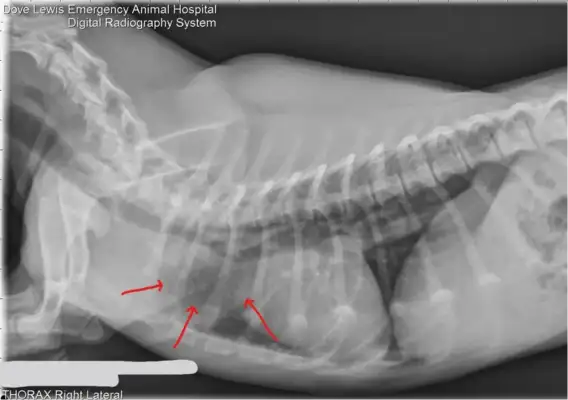 Figure 1
This case highlights the importance of distinguishing between vomiting and re-flow, as the methods of diagnosis and treatment differ. Backward movement is the passive excretion of food, usually caused by oesophagus diseases, but may also include stomach, stomach or neuromuscular diseases. The vomiting is the active excretion of food from the animal body, usually before vomiting. The case was diagnosed as re-flowing in conjunction with further inquiries into the master ' s medical history.
Diagnosis
Based on the age of the dog, history of the disease, medical examination and diagnosis, there is a high level of suspicion of vascular malformations. The diagnosis of the case was done using a surgical consultation and a chest CT scan. Upon confirmation of the presence of the persistent right arcal and the left-side pulmonary artery, surgery began to cut the dysentery around the oesophagus through chest cavities. After the operation, the dog successfully awoke and was temporarily fed at a high level before transitioning to normal dog food.
The vascular ring is a large-vascular development anomaly, resulting in a complete or incomplete ring structure surrounding the edible and trachea. There are several types of cyclic malformations, the most common being the persistent right arcal bow and the left lung artery.
 [including downloading] Veterinary Examinations required a full set of videos + documentation [with small stoves & Zeve video web lessons + mind charts + four colour notes + summary of mouths + reality + practice]
German sheepdogs and Irish slat dogs appear to be the main outbreaks. Animals are normally normal before weaning, and return symptoms begin when solid food is available. Clinical symptoms are the return of unindigent food after eating, slow growth, malnutrition despite good appetite, and respiratory symptoms that may involve inhalation pneumonia. Diagnosis can be made on the basis of animal characteristics, medical history, medical examination and radioactivity/CT scan or oesophagus.
The chest X-rays can be seen with an extended cooking tube in front of the heart, containing liquid, air or food. The back of the heart is usually a normal tubing. In the body of the abdomen, there is a characteristic left-hand bend of the tubes, accompanied by a narrow stove (figure 2).
Long-term drug use tends to be ineffective, as the extent of oesophagus expansion increases with age. Medical treatment is generally recommended as soon as possible after diagnosis. While some dogs require long-term dietary adjustment, most cases are forecast to be good or even excellent.
Figure 2