Of all the dogs in our country, the most visible type is that of a dog from the Tibetan plateau, which was admired by a large number of people in the 1990s and the beginning of the twenty-first century, when the price of the stash was so high that it even cost millions, a true “millions of pets”.
In fact, the hideaways were used in the early 1980s only in small circles, such as pastoralists. By the 1980s, he was the first to travel abroad because of his aggressive appearance and fierce personality, and was admired by a large number of foreigners. This fanaticism was transmitted back to the country after the 1990s, causing a “hidden fever”.
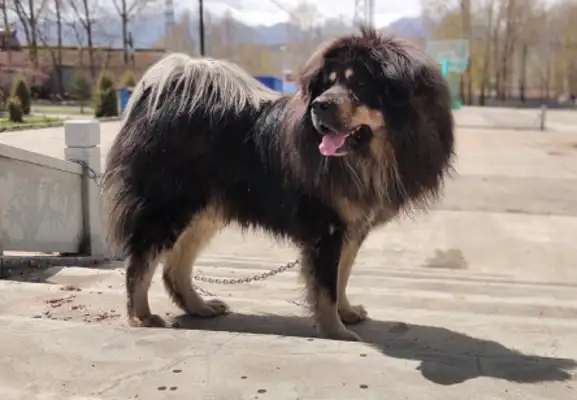
At the peak, many are proud of having a treasure, yet the end is predictable. After 2013, the fading of the styrofoam and the ensuing collapse of the slogans led to the evaluation of the styrofoam being reduced from its original praise.
In fact, it is simply not suitable for low-altitude areas to feed, but as a high-altitude dog breed and a large-scale dog, the place where its real advantage can be realized is in the highlands, as can be seen from a recent video.
Two of them were hidden in a snowstorm, and remained by the sheep's collar in less than 40 degrees of weather, surrounded by a net, laid on the ground, covered with snow, and constricted to sleep.
In this environment, the rest of the dogs have long been overwhelmed, but the Tibetan can still hold on to their posts and their resilience in the high cold. So how did such a fine highland dog be born?
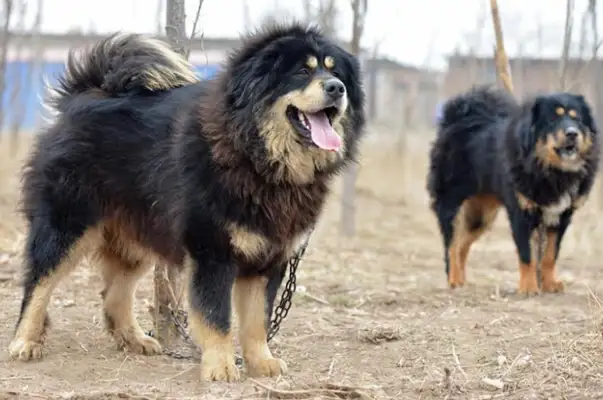
With regard to the birth of Tibetans, there are many kinds of claims on the Internet, and they are born of God. For example, the "Ten Dogs Show One" said: "The pastoralists would keep all the newly born pups in a small room without giving them any food, so that, driven by hunger, the pups would fight each other, and the last remaining dog, the most vicious and the strongest, would be a hideout.
This, of course, is a hypothetical statement, in fact, that the old Tibetan plateau was brought in by early human immigrants, not even dogs. As early humans enter the Tibetan plateau, the dogs are basically low-altitude dogs, which, like most dogs, are not viable.
We have observed that today's hideout is completely different from many low-altitude dogs with thick hair and large bodies, like lions, which were the main reason for their popularity by foreigners.
This kind of change is adaptation to environmental change. After entering the Tibetan plateau, their ancestors continued to reproduce in increasing numbers, and some dogs began to contact local wild wolves.
We all know that dogs are domesticated by some grey wolves in the late part of the new world, that they are not reproductively isolated, so naturally, some dogs and wolves come together.
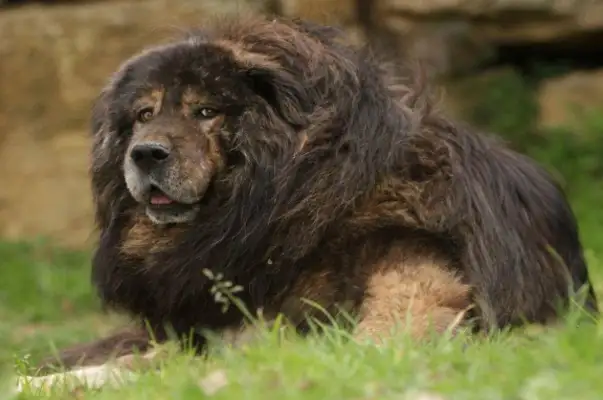
Convergence with the ancient wolves is the root cause of the ability of future generations to adapt to the plateau. It is well known that animals such as leopards and rabbits are able to survive for long periods of time in high cold and low oxygen conditions and have high mobility. In order to figure out the reasons, scientists have come across a gene called EPAS1.
This gene has been detected in many high-altitude species, such as snow leopards, rabbits and Tibetan foxes, but not in low-altitude species, such as grey wolves, dogs and goldbacks.
The study found that the EPAS1 gene can influence the mechanisms for regulating haemoglobin production in animals, making the organism sensitive to changes in oxygen and able to survive for long periods of time even in conditions of oxygen deficiency.
The marriage to a Tibetan wolf has given birth to an EPAS1 gene on the body of future-born dogs, which, together with their prolonged stay in cold conditions, have gradually changed their appearance. They can adapt to the environment, for example, by becoming huge, hairy and fattening.
Dogs and wolves split up a long time ago, and they evolved in different directions, but then, by coincidence, they got back together again.
Scientists built an evolutionary tree of the canine system for the area where the EPAS1 gene is located, and found that it is highly probable that it was 24,000 years ago that the ancestors of the hideaways began to climb with the wolves.
History has shown that Tibetans are the best sheepdogs in the highlands and are no less powerful than beasts, who, with their great ability, have left behind a huge amount of money in the history of pastoralists, known as the “snow-field dog”.
The people of the early Tibetan plateau were largely nomadic and were described as feeding people, and cattle and sheep were the livelihood of pastoralists. While there are no tigers in the Tibetan plateau, there is no shortage of beasts, such as snow leopards, twilights, brown bears, grey wolves, etc., which occasionally attack cattle and sheep, feed livestock and cause enormous losses and distress to pastoralists.
It is in this context that the role of Tibetans, whose size, character and fear of beasts, has created a great sense of security for pastoralists.
There is no doubt about the power of the hideout, and perhaps the “war of the wolves” is exaggerated, but if there are three or five herds of sheep, the beast would be afraid to approach.
With regard to the power of hideaways, it may be possible to see the strength of some of them. Since the “hidden fever” subsided, a large number of Tibetans have been abandoned in the wild, creating a large group of vagabonds.
In 2016, a Beijing scholar on the highlands took pictures of the wandering herds, led by the King of Yan, hunting for the rock sheep and fighting for food with the snow leopards. There were even six rare scenes of the hidden bear being forced back, which were enough proof of the strength of the hidden bear.
It is indeed a rare number of excellent dogs, as they can still stand in the snow, whose loyalty and bravery are commendable qualities. However, there are environmental constraints, and once they “go to the homes of ordinary people” and enter low-altitude areas, they show many incompatibilities.
They are fiercely capable of dealing with wolves in the highlands, and fiercely in the cities, but not for their families. At the same time, in a hot environment, the burden of hiding is increased, making them more vulnerable to disease.