No.: PET1244
English name: Malayan Giant Turtle
Character: Fragile
National origin: Indonesia and Malaysia
Vulnerability to disease: Decay
Life: 100-year overview of the Malaysian turtle species
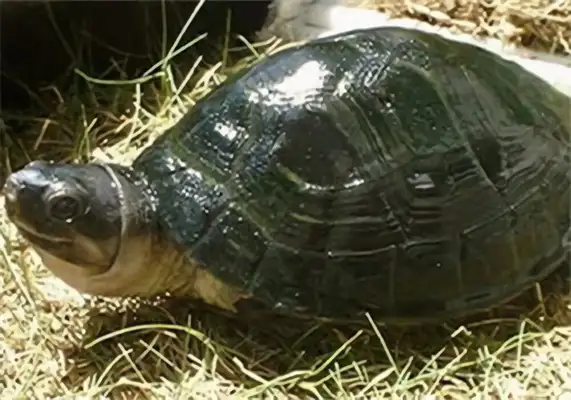
The Malaysian turtles, which are scattered in Malaysia and Indonesia, are a large species of water turtles, the only species of which are ferocious, daring and not suitable for domestic breeding, which is both spatial and difficult to domesticate, so that there are few breeders.
Chinese literary name: Malaysian turtle
Latin: Orlitia borneensis
English name: Malayan Giant Turtle
Don't call it Zawa. Zawa.
Context: Animals
Gate: Pipeline gate
Programme: climb
Tortoise.
Section: Freshwater turtles
It's a giant turtle.
A Malaysian turtle.
Distribution: Indonesia and Malaysia
(c) Eating: groceries, pigs, fish, beef and poultry, yellow powder, artificially mixed feed and melon vegetables (bananas, apples, cucumbers, green vegetables, etc.).
Lifestyle: Malay tortoises live in a popular community of 3-4 turtles on shore. The larvae of Malay giant turtles (under 3 kg body weight) are mild, do not bite, are timid and rarely eat when they are human.
A variety of characteristics: The maturation of Malay turtles (more than 3 kg body weight) is more brutal and less violent than the snake turtles, but bites when caught. Malai turtles who are artificially domesticated are bold, easy to domesticate and able to perform, such as eating, climbing stairs, etc.
Recommendations for domestication: Subtropical turtles, warm and cold. When water is 25-30°C, turtle activity is greater and best suited to water temperature 26-28°C; when water is 20°C, it is slow, and when water is 18°C, it eats only a small amount; and when water is 14-17°C, it enters hibernation. Malaysian turtle morphological characteristics
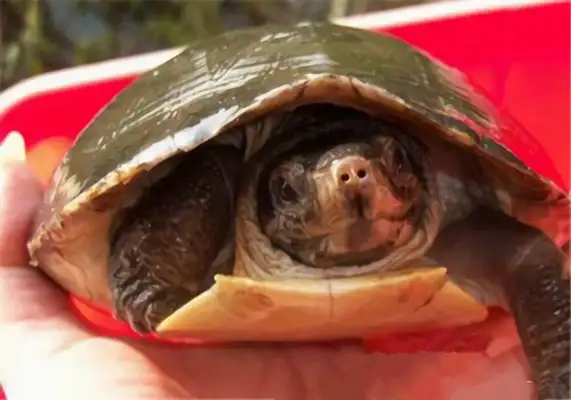
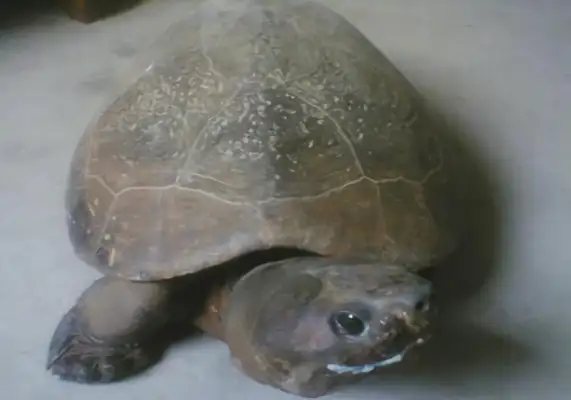
The size of the Malaysian turtle is huge and is the second largest water turtle species in Asia, with a flat back of a nail and a darker colour. The source of Malaysian turtles is usually wild, that is to say, all Malaysian turtles sold on the market are wild turtles.
I. The appearance of the Malaysian turtle
The Malaysian giant turtle has a size of 120 cm long, a wide head, an upswing in the kiss, a large nostrils, a sawn tooth on the upper beak, a stave on the back of the head, black or light brown on the back of the neck, and light yellow or milk white on the abdomen. The back nail flattens with a long egg shape, black and brown, with a concentric thread in the centre of each shield, a sawned edge behind the back nail, abdominal yellow, and no chromosomal spots. The bridge is wide, the shield is long. The four limbs are black on the back, light yellow on the abdomen, covered with large scales, strong toes and fingers, rich toes and moderate tails.
II. ELEMENTS FOR THE SELECTION OF THE MAJOR TORTURE
The Malaysian giant turtles sold on the market are wild and poor, some of them have been injured and have suffered internal injuries that are difficult to detect in the eyes and need to be examined in the water. Checking the turtle ' s appearance, skin, back, abdomen, no ulcers, no white dots in the eye membrane and no swelling in the eye. Putting turtles in water, water-sinking turtles are healthy turtles whose bodies are tilted and floating. Raise the tortoise, pull its front limbs and use a thick wooden stick to make the tortoise open and see if there are hooks in its mouth. Malaysian Turtle Care Knowledge
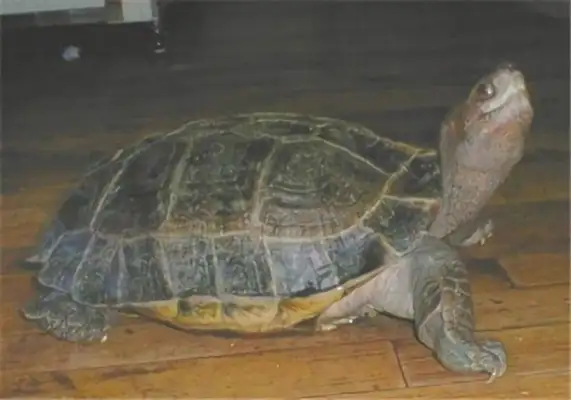
The main reason for the difficulty of raising Malaysian turtles is their large size, which many people have to choose to raise in a pool, so that, while saving space, water quality and temperature are difficult to control.
Water quality management for Malaysian turtles
Malaysian turtles have long lived in water, and good and bad water quality has a direct impact on the health of turtles, and when the water is less than 30 cm, water should be exchanged in a timely manner and lime and bleach should be poured over the pool to prevent disease. The water levels are moderate in spring and fall and deepen in summer and winter, which act as a cooling and cooling measure. Water should be replaced after feeding in spring, summer and autumn and before feeding in winter.
II. Winter management of Malaysian turtles
When water is at 22°C, antibiotic drugs are blended into the bait, increasing its resistance over winter. The tortoise is in hibernation at 14 °C, at which point the tortoise is examined, and the unhealthy tortoises are to be warmed up, maintained above 22 °C, treated accordingly and fed normally. Healthy turtles go to hibernate and change water once every half month.
The water temperature remains above 10°C. In hibernation, some floating tortoises should be recovered in time to isolate warmer breeding. With higher temperatures and water temperatures of about 15°C, turtles have small activity. At 18°C, a small number of turtles are available for feeding, and the first feeding is preceded by the cleaning of ponds and disinfection. The Malaysian Turtle Living Environment
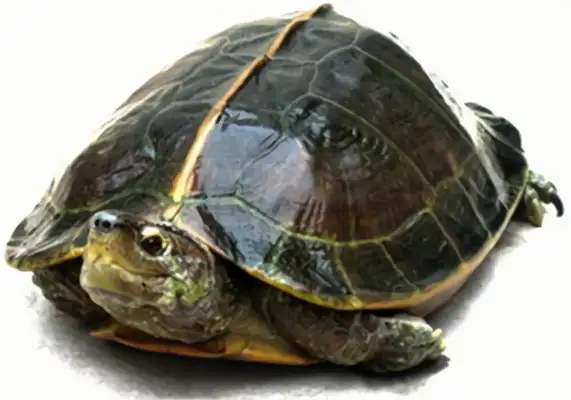
The Malaysian turtle needs to live in conditions different from those of the average water turtle, not only large but also deep-water turtles, which means that Malaysian turtles need a great deal of space and are therefore not suitable for family breeding, and it is recommended that they should not be readily available.
The Malaysian turtle, which is a large water turtle, is growing faster, so it is important that turtles be equipped with sufficient rearing space before they are raised. When the turtles grow older, demand the size of the breeding space, and the breeder's own freshness to the turtles is over, it is not responsible. So it is important that these turtles are prepared and have enough room to feed them.
The Malaysian turtle has a wide toy between its toes and claws, a typical deep-water turtle with a high ability to swim despite its heavy external body. There is some terrestrial habitivity, for example, in Malaysia, where turtles are used to tan, so don't forget to equip turtles with terrestrial habitats such as suntops when raising them.
Malaysia ' s giant turtles differ from the average water turtles because they have some terrestrial habitat, are more accustomed to living near half-water turtles, only for longer in the water, but also go to the ground to tan, lay eggs, feed, etc. So it's best to set up a land habitat for turtles when they're raised. Keys for Malaysian turtle breeding
There are many food options available to Malaysian turtles, but one important issue that requires attention is that Malaysian turtles are usually caught by wild turtles, and at this point they can easily be denied food because of changes in the environment. What if it refuses to change?
I. The food of the Malay giant turtles
The Malaysian turtle is grotesque. Under conditions of artificial breeding, animals and plants are fed. Thus, low-cost foods such as cucumbers, cabbage, small fish, weeds, tofu dry, etc. may be selected for feeding, taking into account the nutritional balance.
Two: What if the Malay turtle refuses to eat?
The shift of turtles from a wild environment to an artificially raised environment often results in “no food”. Therefore, new turtles need to be domesticated first.
Placing turtles in ponds, frequent exposure to turtles and washing their backs with soft hair, reducing their “fear”, observing their activities and feeding them.
2. Filling. Artificial filling is used for food-resistant turtles. When fed, the turtle in the left hand was forced into the mouth of the tortoise in the right hand with a larvae and then put the tortoise in the sink to swallow itself. At $3 ~4 a day, once a day, usually 2 ~ 3 weeks for food.
3. When turtles are normally fed, they should be fed regularly and quantitatively, adding a compound vitamin once a month.