Designation: PET4667
English name: Brief description of the eastern bell bell type in Bombina orientalis
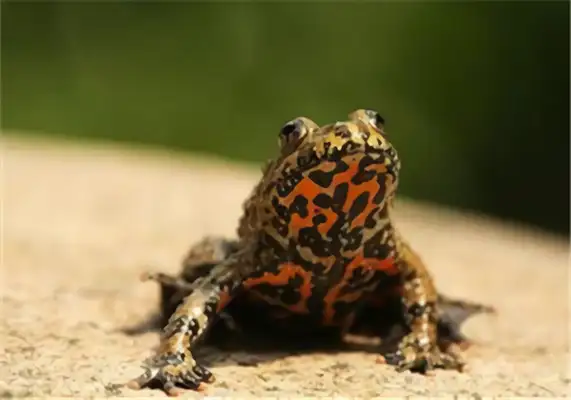
East bells are mainly in the north-east of the country and in Russia, North Korea and so on, and East bells are also called hot bells, stinking clams, red belly clams. The eastern bell bells are about 45 mm long, and their skin is rough, and their heads, bodies and limbs are covered with hedgehogs of varying sizes.
Chinese literary name: East Bell
Two words: Bombina orientalis
Context: Animals
Gate: Pipeline gate
Programme: amphibious programmes
Objective: No tails.
Section: Bombinatoridae bell section
Distribution: North-East China, Korea; mountain stream, coastal region.
Name: Boulenger, 1890
IUCN protection level: LC Eastern bell oscillation characteristics
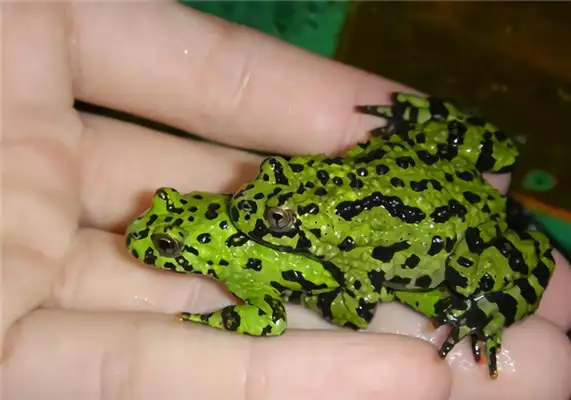
The male frontal limbs of the eastern bells are thicker, with black thorns on the inside of the male eastern bell bells' forearm, on the inside of the palms and on the inside of the three base fingers, so it is easier for females to identify them.
The eastern bell bell bells are about 45 mm long; the head is flat and the width is almost equal; the kiss is round, without any ambiguity; the nostrils are in the centre of the eye and the end of the kiss; the eye spacing is equal to the nose and is slightly smaller than the width of the upper eye bell; there is no drum membrane; the tongue is rounded and connected to the mouth mucous membrane; and there are ploughing teeth. The front leg is short, the end of the finger circle is short, the long sequences 3, 4, 2, 1 and the base is very thin; it is not related to the aneurysm and the palm is sharp and visible. The posterior limbs are short, with the shoulder in front of the joints, and the right and left are met or overlapped only; the toe is short and flat; the male is full; the female is slightly inferior and the larvae is in deep space; and the non-articular tumors are small and round, with only internal tumours.
The rough skin of the eastern bell bell bellheads, with stings on the back of the head, body and limbs of varying sizes, is black; the bells on the side are generally arranged in a more dense manner; the abdominal larvae have a small amount of thorns on the chest; the rest of the skin is smooth. It's not clear. Orient bells living environment
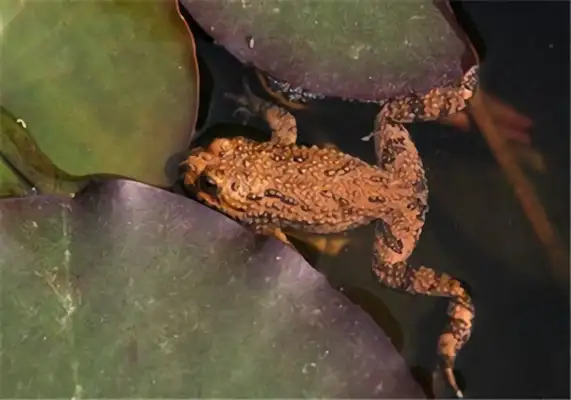
The Orient Bell has been included in the List of Land-based Wild Animals under State Protection, which is useful or of significant economic and scientific value, published on 1 August 2000. So it's not recommended that a person raise an oriental bell.
Eastern bells are white and brown in their backs, with green velvet in their shoulders, or green and irregular black spots in their backs, and bright in their abdomen, black and red or orange, as well as in their palms and thighs. When disturbed, hands and feet are turned and visible on the back. The liquid immersion specimens are black brown, red or orange in white.
Oriental bells prefer to live beneath ponds or mountain streams. More than 100 eggs are produced each during the month of May-July in groups or on plants attached individually to the rocks of the mountain stream or to the water pit. In case of physical disturbance, the front limbs are raised, the head and the back of the leg are arched, the bow is formed and the abdomen are visible. This reaction to the risk (forecast reflection) may be a signal to the predator that its skin is toxic; the Germans call it a police frog. Orient bell feed.
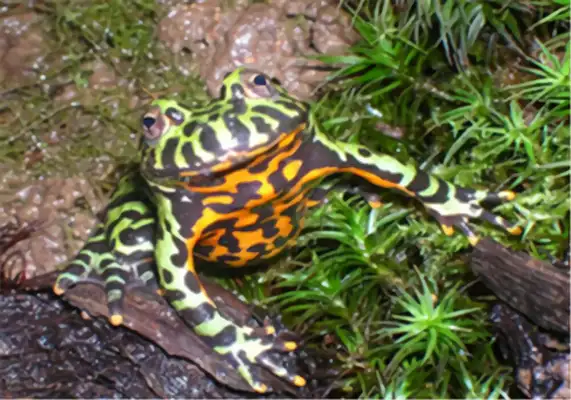
Eastern bells, like other toads and frogs, eat mosquitoes and small insects, and as they were included in 2000 in the State-protected List of Land-based Wildlife, which is useful or of great economic and scientific value, try not to raise them manually.
The tongue of the eastern bell is in the form of a disc. The mouth of the aluminum is surrounded by a lip mascara with horny teeth, consisting of two to three rows of small teeth per row, with an outlet in the centre of the abdomen; it is of the abdomen type. The back skin is very rough. Kisses are round and tall, pupils' hearts or circles. The whole abdominal colour is extremely visible, with oranges or oranges in between black and oranges, and oranges in the palm. They live in and around mountain streams. Entering ponds or mud pits during the breeding season. We're slow, we're crawling. When disturbed or attacked by an enemy, the head and limbs were raised to the back, revealing visible orange red and black clots as false deaths. Two to three minutes from now. The eggs are laid in May-July each year.