Designation: PET2420
English name: Lion Head
Character: Gentle, lovely
Nationality: Netherlands, United States
Epidemic: ballworm disease
Life: 5-7 years
Price: A brief description of the lion's rabbit species, 80~150
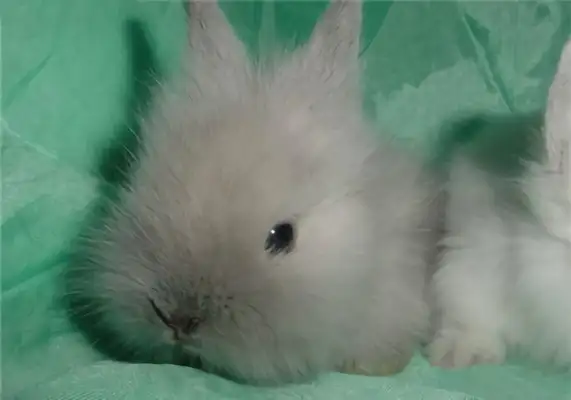
Lion rabbits are gentle and small, giving the impression of being nice and sweet, and because they look like a little lion, they are called lion rabbits. Lion rabbits have always appeared in the country in the form of pet rabbits, which are more widely distributed and cheap and are always popular with girls and children.
The lion rabbits are of Belgian origin and are European species but have not been recognized by ARBA. They are similar to binni rabbits, with round circles and flat noses, but with long front feet and hair around their necks (with the word "V" around their necks), which makes them look like lions, while ears are triangleed, with no hair and not longer than 3 inches.
Chinese literary name: Lion Bunny
Don't call it a lion rabbit.
English name: Lion Head
Origin: Netherlands, United States
Size: 1 foot adult rabbit
Weight: an average of 3 to 4 pounds
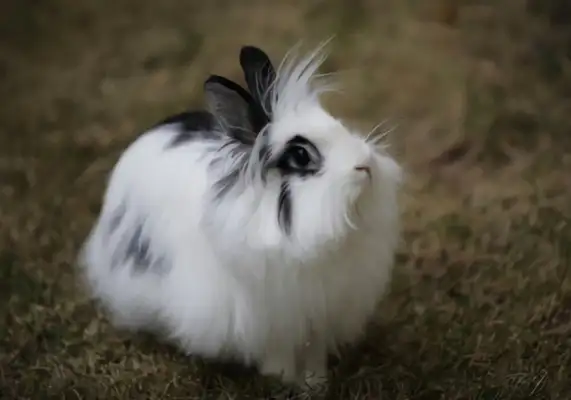
Varieties: Pure white, wild rat color, brown, white base black spots, etc.
Characteristic characteristics: timid, clean, gentle.
Reproductive mode: birth
Prices: Lions rabbits are relatively expensive and the prices of ordinary rabbits fluctuate around $20, but the prices of lion rabbits have been around $80-150. Lion rabbit form characteristics
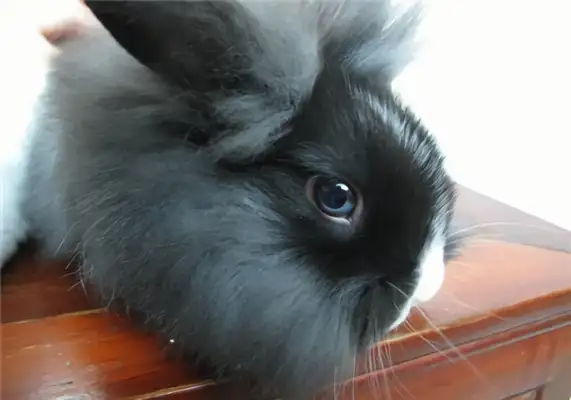
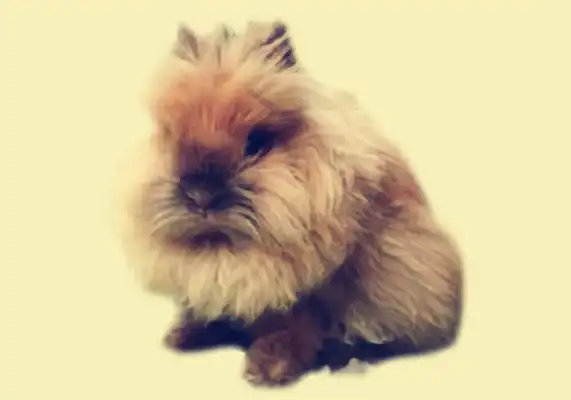
The lion rabbit looks like a little lion because it has a long hair under its neck and a relatively short hair on its body, forming a contrast, just as the lion's neck will have a circle of hair, so you like to call it a lion rabbit.
Lion rabbits, originating in the Netherlands, the United States, Belgium, etc., are very valuable pets. Adult rabbits can grow as long as a foot, they are small, they are lovely, and they are very colourful, with white, brown, cyan, etc. Its greatest characteristic is that its hair is very thick and loose. Especially the head. Let's see if this horny, long eyebrow is very much like a cartoon lion, which is the origin of its name.
Lion rabbits have flat noses, long front feet, necks, cheeks, hairs all over their heads, white, rat-colored, brown, white-faced black spots. Lion rabbits and Angolan rabbits are close, but their ears are wide, like a triangle, and their neck hair is longer, like the hair of a lion, so they are called lion rabbits. Adult body weight is around 1.5 kg and size is around 35 Cm.
Society for Accreditation: British Rabbit Association. However, the lion rabbits were not recognized by the American Rabbit ' s Reproduction Association because their offspring had not yet been stereotyped; however, the species had been confirmed in the United Kingdom and on the European continent. Conservation knowledge of lion rabbits
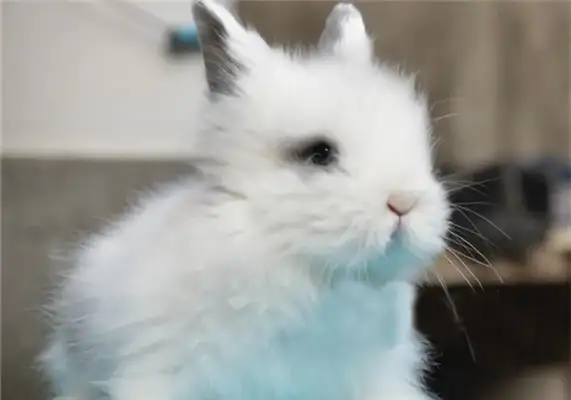
Lion rabbits as a pet rabbit breed have always been very popular. It's an unfrequently ill breed with a tenacity of life, but we all know that rabbits live a short life compared to dogs, so the best care in their limited lives requires continuous learning.
I. MAINTENANCE OF CONCLUSION
The placement of rabbit cages must not be left unattended: first, try not to use net floors, preferably with a soft pad or a soft cloth under the cage, because the rabbit's back leg was born with a sensory pillow to detect enemy attacks. Long periods of strangulation at the bottom of a cage may cause the rabbit's feet to produce meat, and the feet to become eight-worded, suboptimal and potentially resistant to being held up.
The rabbit chooses the first of the four corners of the cage, and the corner is the bed of sleep, so that it can sleep without fear. It is designed to be used for urinating, and to keep the hair of the defunct rabbit from rising and constantly changing, otherwise rabbits are vulnerable to skin diseases such as toe-toe hair removal, cocoons, etc. It's best to put a wood in the rabbit toilet. To train it to use the toilet, it is best to take it to the toilet as soon as it takes a shit, and it will know what is “convenient”.
Do lion rabbits want a bath?
Regular hair cutting is essential to keep the lion's rabbit in shape. It would be better to comb the rabbits once a day, otherwise the hairs would be bound together, which would make appearance ugly and again difficult. Hair cutting should preferably be done by the Commissioner of the pet shop, otherwise it would be vulnerable to injuries to his young skin.
While bathing for pets was also an academic matter, the rabbit itself was so clean that it would not be a problem to wash for three months only if it was wiped off every day. But remember to give it a warm bath while the sun shines, and then a sunbath, and it's nice and not afraid of "cold relatives"!
Three, don't let the lion rabbit get sick.
The dangerous signal from the diarrhea is that it either eats too much or is nervous or suffers from gastrointestinal or liver diseases. In the case of under-age lion rabbits, who suffer most from ball bugs, take them to the animal hospital.
Lion rabbits can grow up to 2 pounds, which is a very fragile small life, so they must be given the best care. Lion rabbit living environment
Lion rabbits are less demanding in the environment and are able to adapt quickly to the new environment. Even so, we need to be careful to provide a reasonable environment for the Lion Bunny not only to have a comfortable life, but, more importantly, to prevent disease. So, what kind of environment is that?
I. Temperature of lion rabbits
Rabbits are temperate animals with an ideal temperature of 30°C to 32°C. They live in conditions of constant temperature and air flow, which must not be too cold or too hot.
II. Range of humidity adapted by lion rabbits
Rabbits are fed with an appropriate humidity of 40 to 60 per cent. Rabbit mortality during the May rainy season is high, wetness causes disease in rabbits and rabbit nests must be kept dry and ventilated.
III. Avoiding the wind and rain
If the rabbits are not raised indoors, be careful not to let the rabbits stay in the sun for long periods (sun baths) and not to let the rabbits enjoy “rain-fed” which makes them susceptible to disease.
IV. Protecting furniture, household electricity
Rabbits naturally eat or chew any object in order to grind their teeth, and furniture, mats, wires or curtains are likely to be damaged, with particular attention to the presence of hazards. Especially electrical appliances, wires, etc., be careful that they get electrocuted.
V. SEATER-BASED ENVIRONMENT
Summer against heat, winter against cold. It's too hot to prepare rabbits with an electric fan in case of heat; it's winter when the nice owner can put old clothes and blankets around the rabbit's cage and prepare a yellow light bulb to warm the rabbit's winter. But watch out for the light bulb, preferably outside the cage, and don't let the rabbit burn.
Lion rabbits try not to live in cages all the time, so that the master can move them out while they are at home, which is more healthy and interactive with the owner. The lion rabbit feed.
What should rabbits eat? Carrot? In fact, the rabbit's favorite food is weed, and lion rabbits are no exception. A proper diet can guarantee their healthy growth. So here's a suggestion for how to feed them.
I. Selecting different feeding methods according to the stage of growth
1.0 ~ 4-month-old rabbits: unlimited Timmussi/Timosi grass + 2 grasses per day + 2 rabbits per day + 1 rabbit food + unlimited drinking water (cool water or pure water)
2.4 ~ 6-month-old rabbit: unlimited Timmussi/Timosi grass + 1 grass a day + 1 rabbit grains + 2 potable water a day (cool white or pure water)
Rabbits older than 3.6 months: Infinite Timmucie/Timosi grass + 1 grass a day + 1 rabbit grains a day + 1 bottled water (cool, white or pure)
Why do you feed them like this?
In the case of rabbits in 0 to 6 months, at a time when they are growing up, there is a need for a transitional phase in food, which, of course, is the beginning of a reduction in the delivery of sorghum. Why should it be reduced? Because weeds are high calcium-high protein grass (the first-born rabbit needs calcium intake and supplementation to grow as much as possible), for rabbits who are in their biological stages of development, they are consolidated, but do not need supplementation. When the rabbit reaches full age (six months old), he doesn't need grass.
Rabbit water is necessary, and secondly, we can provide snacks such as carrots, vegetables, peanuts, cereals, etc., but not many.