When it comes to the dominance of freshwater waters, it may be that alligators are the first to come to mind, and the brutal image of crocodiles does scare many people, but because their distribution is, after all, limited, especially in my country, many of them are devoid of crocodiles.
There is also an animal that is also the top predators in freshwater lakes, but because they look so cute they make many people lose sight of its brutality.
Such animals are otters, popularly known as “dogs”, and in some places they are called “wolves”. Many people live in rivers and lakes, especially in the middle of rivers where trees are abundant.
The southern sand wetlands, located in the town of Wansha in the southern sand area of Guangzhou City, far from the city, are fresh and ecologically superior, including mangroves, reeds and so on, and many species of habitats attract wildlife to thrive here, including otters.
The presence of otters in the southern sand wetland of Guangzhou is a happy development, a testament to the ecological well-being of the wetlands and an affirmation of the conservation of ecological results over the years. As top predators in freshwater, otters are relatively demanding for habitats and are often considered an important biological indicator of the environmental well-being of wetlands.
Over the past few decades, the decline in stocks due to environmental damage, climate change and so on, has been a surprising re-emergence in the southern sand wetlands.
Long body, flat head, sharp teeth.
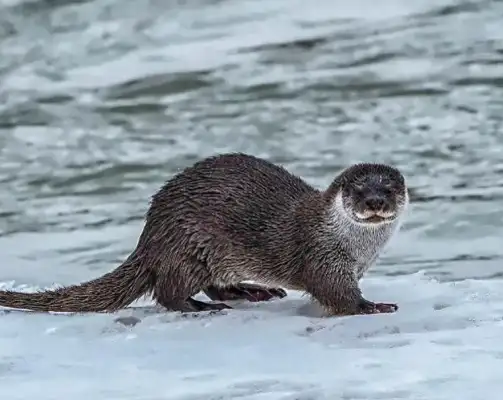
The otter is similar to a giant mouse, with long bodies, short limbs, small ears, round eyes and a little bump, flat head and short mouth. The body's back is of coffee colour, the abdomen is of grey brown, the jaw to the neck area is of grey white, and the hair of the body is luminous, especially when it appears flashy after wet water, standing in the sun.
The otter's body is long and very dense, with about 500 fumes per square millimetre of skin so warm and waterproof.
This would have been their advantage, but it is precisely because fur is too good to be killed in large numbers, leading to a sharp decline in the number of species, which at one time threatened to extinction.
From the outside, the otters are very cute and make the noises of “single”, which make them feel more harmless. But if you really think so, then it's a big mistake, and when the otter opens his mouth and shows his teeth, you'll find out how vicious this animal is.
The otters have three pairs of front teeth, and the outside side is large, twice as large as the other two. The big dog's teeth are cone-shaped and the upper is longer than the lower. Their upper teeth are large and their outer edge is a knife, and they can see how powerful they are.
It's deep water. It's fun. It's always in the water. Watch
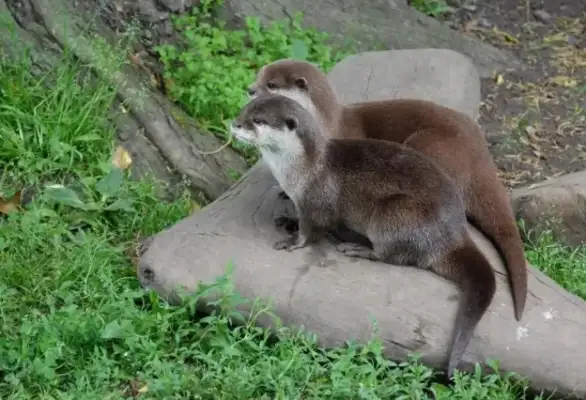
As can be seen from the names of the otters, this is a deep-seated animal that lives mainly along rivers and lakes and is extremely hydrogenic. The otter's limbs are short, but the toes are long and can move in the water.
In addition, the ears and noses of otters are characterized by small petals in their ears and nostrils, which, when otters dive into the water, act to close holes and prevent water from entering the ear or nostrils.
They are very good at swimming and diving, their body is very soft, their swimming is wave-like and twisting, and their long tails are also conducive to their activities in the water.
An otter is a more playful animal, often standing in the water in a “scrambling” way, excavating the surface of the head and making far-sighted moves, which look funny. As a result of this otter move, people are often misconstrued as “water monsters” or “water monkeys”.
Also, in snowy days, the ground and lakes form a layer of ice, and otters slide on slopes, ice, or roll around, which, like large pandas, is a very serious animal.
When an enemy is found in a play, the otter goes to the ice hole or snow. Although they are less able to operate on shore, once they enter the water, they change their awkwardness and become very smart.
He's a ferocious man. He's strong in revenge. Fish
An otter is a predator whose food is mainly fish, but it occasionally preys on birds, frogs, small animals, etc. Summer otters like to chase fish, and in winter they prefer to ambush their prey.
The otter is long and hiding in an ice hole, and when the fish swims, they rush out to catch it. In hunting waterbirds, otters prefer to sneak in from underwater and then bite their prey.
When otters catch fish, they often prefer to feed after they are released. The otters also appear to be ferocious, with powerful bites and sharp teeth that can easily bite a large piece of fish.
As a skunk, otters inherit the ferocious characteristics of such animals, which are aggressive and retaliatory, and who, when bullied, always seek their replacement.
For example, one of the otters in the zoo had been bullied by a monkey, and then the otters had found their companions, dragged the monkey into the water and drowned alive. This is similar to the character of their “relative” beads, which are vengeful.
In addition to their brutal character, the otters are very strong in terms of their ability to attack prey many times its size and to win, and they are not shy in the face of crocodiles.
The otters have a strong sense of territory, and even small-sized crocodiles who enter their territory are brutally beaten. The otters are flexible and have sharp teeth and claws that tend to grab the crocodiles in their hands, which are like spicy bars.
When we see otters in the wild, be careful not to be confused by their appearances, because the otters rise up to attack humans on their own initiative, and many of them are attacked by otters in reality.