No.: PET3062
English name: Blood parrot
Origin: Overview of the species of parrots in Taiwan Province of China
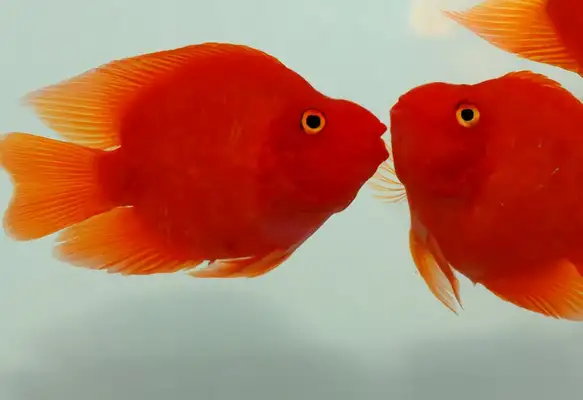
The macaws are also known as the fish and the red. Because the blood parrots are all red, very peachy, and its chubby shape is very much in the image of the rich, it has the alias of the rich fish. It is also very easy to feed the fish, which is an artificially created species.
Chinese literary name: Red parrot
Don't call it "Red Monopoly, Monopoly."
Context: Animals
Gate: Trondata Gate
Actinopterygii
Section: Tzu Chi
Cast: Goldfish
Region: Taiwan Province of China
English name: The appearance of the blood parrot
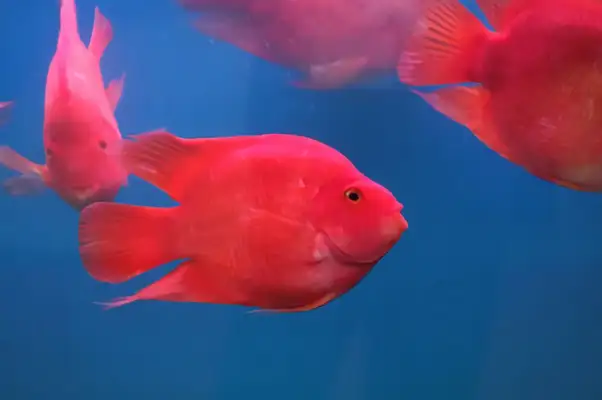
The blood parrots were the first species to emerge from the mouths of the red devil and the purple fire, but they were not a natural species. The blood parrots are red and chubby. They look like a brook of peaches with adult parrots of 15-20 centimetres and ellipses. In addition, the haemo parrots can be divided into the following six species:
First, a blood parrot: red in colour and short in width. Parakeet: big eye, small mouth, 20 cm size;
ii. Parrots: mutated parrots of blood, with tumours on top of their heads, with large reds of up to 30 centimetres and a lifetime of about 8 years;
iii. Ultimate parrots: individuals who choose strong parrots to feed special feed to artificially coloured parrots;
iv. A parrot: a blood parrot who uses surgery to cut off the tail of a fish and looks like the shape of a heart on its back;
(v) Unicorn parrots: a blood parrot using surgical methods to trim the front end of the back fin of a fish to the horn of a rhinoceros;
Candy parrots: The blood parrots are made purple, blue, yellow, orange by injection. But the color doesn't last long. In addition, there are laser-colored macaw fish. Blood parrot breeding environment
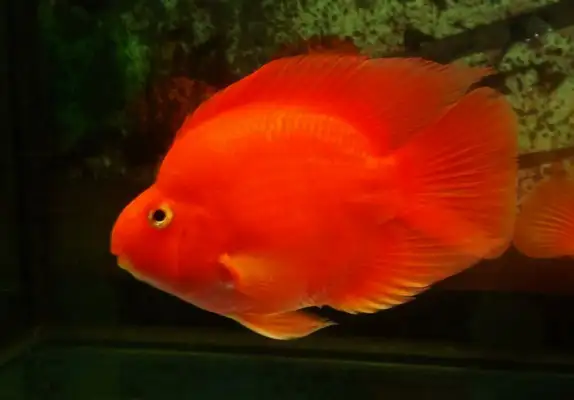
The blood parrots are sensitive to temperature, and it is important to prepare a suitable living environment for the haemo parrots when they are in a state of low water temperature and when the temperature changes dramatically.
In order for the blood parrot to be beautiful and dynamic, water temperature must be contained at 26°C-27°C. If the blood parrot were to live in a low water temperature for a long time, it would not only affect its color, but would also be prone to disease or even death. In order to raise the blood parrots, it is essential to maintain good water quality in order to avoid the growth of bacteria in water that affects the health of fish. Therefore, the excreta in the fish tank is regularly cleaned, usually every three to four days, and water is exchanged for the fish in due course to keep the water in a state of discomfort. Red parrots are more active and play-like and need a more relaxed living space. Therefore, it is not appropriate to have too many in the fish tank. In the case of 80 centimetres, the larger fish can feed around 10 pairs; in the case of smaller fish, an appropriate number of extra pairs.
Now, many people like to set the scene for fish tanks, but there is little need for blood parrots. This is mainly related to the habits of the fish. It's sexually active, it likes to drill, and it has a relatively greater impact, and it can easily destroy a good view, to the detriment of viewing. The blood parrot feed.
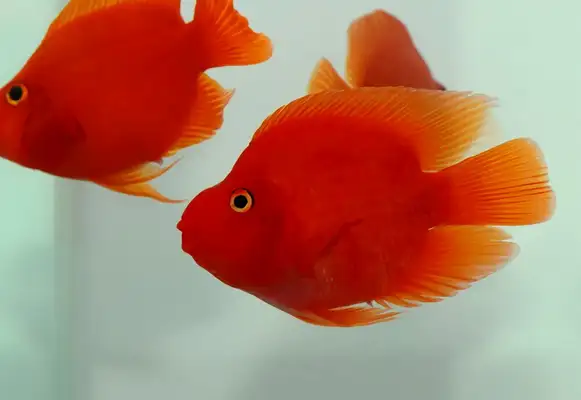
How can the colours of the blood parrots, which are mainly red-red during the period, be made more beautiful? In addition to a stable breeding environment, it is important to feed fresh, nutritionally balanced baits.
Feeding is also important if the blood parrot is to remain bright. It is now generally sold on the market for carrots, where red is added, so that the red colour of the macaw can be maintained in a red state as long as it is fed directly. In addition, it was learned from a number of sources that feeding the blood parrot with shrimp would also keep it red. This is because shrimp erythroacin in shrimp promotes the color of parrots.