Title: PET1350
English name: Malayan Flat-shelled Turkle
Origin: Spreading from southern Thailand through Viet Nam, Peninsular Malaysia and Singapore to Sumatra, Java and Borneo.
Vulnerability to diseases: manicure, denial of food
Life: An overview of the species of Malay fruit turtles for about 50 years
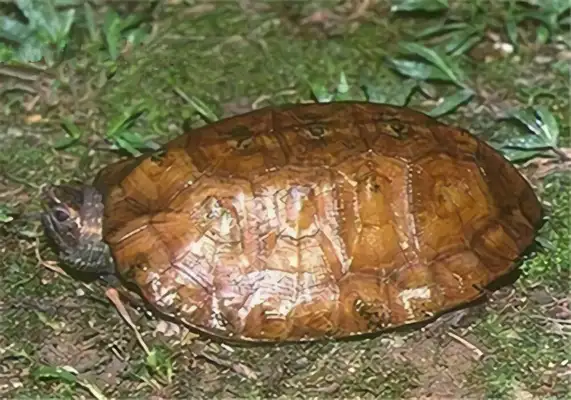
The Marego turtles prefer a wet natural environment and are less resistant to high water levels, usually living on shallows rich in aquatic plants in the wild, with the main food being plants, which usually do not eat meat.
Chinese literary name: Malego turtle
Chinese alias: flatback turtles
English name: Malayan Flat-shelled Turkle
Two words: Notochely splatynota
Context: Animals
Gate: Pipeline gate
Amen: vertebrate Amen.
Programme: climb
Tortoises.
Subtitles: Curvature turtle
Section: Freshwater turtles
Crop: Maregole turtle
Distribution: Range from southern Thailand through Viet Nam, Peninsular Malaysia and Singapore to Sumatra, Java and Borneo.
Lifestyle: This turtle lives in shallow waters with abundant aquatic plants, such as marshes, wetlands and streams in forests.
Eating: It is a herbivorous animal that eats mainly aquatic plants, but there have been two records of attacks on one cobra.
Reproduction: We know very little about reproduction, except for one 20.5 cm female with three large hard-shell eggs measured at 56 x 27-28 mm. Marego turtle morphological characteristics
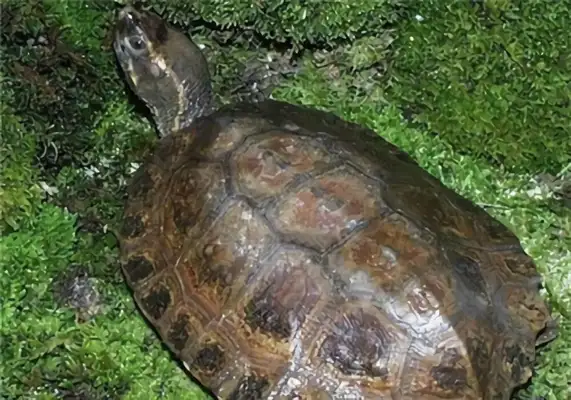
There's a big difference between the larvae's appearance, especially in adult form, which is very peculiar because its back is flat, as if someone had deliberately squeezed it on its back, and it looks strange and cute.
Male fruit turtles, with yellow to apple green backs, are one of the most beautiful turtles in the world.
The size of the body: a grown-up marego turtle can grow to 13. The most obvious feature of this turtle is that when it's in shape, its back is flat and it can run a car up there! Another significant feature is that the turtle has six vertebrae (i.e. the shell of the axis in the turtle's back). So it's also called "The Six Turtle." The vast majority of turtle vertebras are five dollars. Most turtles, including Brazilian turtles, grass turtles, maple turtles, Myanmar turtles, yellow throat turtles, eagle turtles. All of them are five vertebras, so six vertebras are the best way to decipher this turtle.
Maregoe turtles can be identified by six or seven vertebrae in flatbacks (five vertebraes for all other freshwater turtles). There is a low discontinuity of ellipses, flatbacks of olives, light browns or red browns, and the turtle's backs are green. The head is brown and the larvae has two light yellow stripes. There's an incomplete chain structure in the abdomen and an entire toe. In addition to this, adult male tails appear to be relatively longer and thicker, with a slight dent in the abdomen. Maligo turtle care knowledge
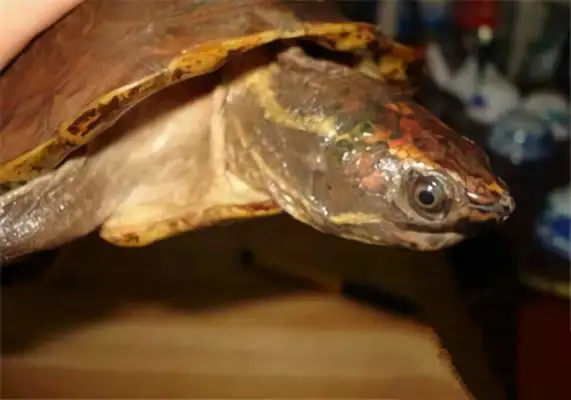
The Marego turtles are more difficult to breed, and there are no successful cases of artificial reproduction, so it is usually a wild individual who is seen on the market, who is weak in their ability to adapt to the environment, and who usually survives only one in 10.
It ranges from southern Thailand through Viet Nam, Peninsular Malaysia and Singapore to Sumatra, Java and Borneo. If you have to, you really have to be healthy and healthy. They are afraid of the heat, often hiding in the dark or in the water, not moving, not having fun. At birth, he had a green back, purple abdomen, beautiful but soon became the top brown. They are fed mainly by raw fruit and vegetables.
Because the Marego turtles have a reputation for being hard-to-feed when in captivity, they have little knowledge of how to contract, reproduce and spawn. With tight management, strong deworming links and a large, “safe” perimeter with good vegetation, players will eventually acquire beautiful, artificially grown marego turtles. The newly hatched Marego turtles, as well as their larvae, have an orange to lemon green backnail, which is very visible. The larvae in the above figure is undergoing a chromosomal shift towards khaki and brown like adult. Marego turtle living environment
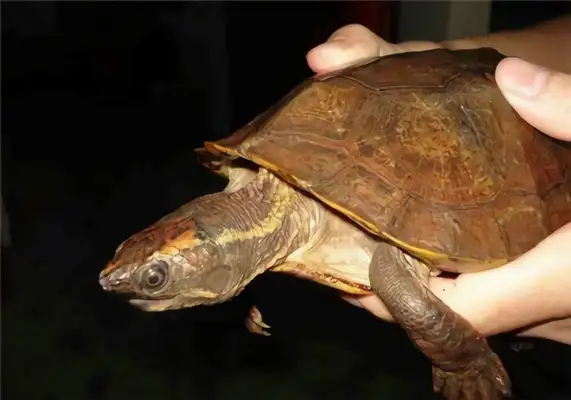
Marego turtle survival rates are low, mainly due to physical wear and tear during transport and the irrationality of the breeding environment. First, we need to know that the marego turtles are very timid, so we need to keep the environment as low as possible and have reasonable shelter.
Marego turtles have proved to be rather vulnerable. Give them three to four thick, filtered hot water and a land with many natural hideouts. These can include tropical plants and small green shrubs. Leaves and palm piles can add more “security”.
The base should consist of a layer of fine gravel, followed by a layer half of peat and half of humid sand, and then a thick plaster branch to maintain humidity. A UVB fluorescent light bulb should be placed above the perimeter and a 100 watt spotlight should be placed above the tan field. The Marego turtles rarely tan their backs, and when someone approaches them, they retreat to the nearest shelter.
Most of the time, they were hiding, and their movements were very secretive. However, they occasionally ventured out after the water was sprayed. In the early morning hours, they were often found bathing in the ponds of the fence. Most of their activities appear to have taken place early in the morning or in the evening. What do you want?
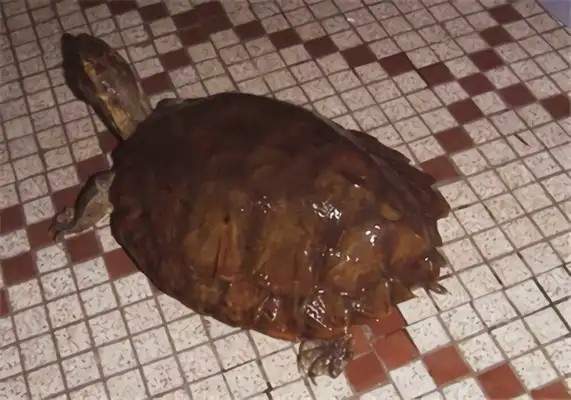
Marego turtles in a wild environment are usually food-planted, and some meat foods are not particularly likely to be eaten, but some people try to feed meat in an artificially raised environment to ensure their health.
The marego turtles fed artificially are groceries. They have been found to feed on earthworms, snails, snails and crickets. In addition to invertebrates, they should be supplied with a large variety of salads on a three-day basis. The salad should be made up of fine Roman broccoli, kale, pumpkins, carrots, sweet potatoes, apples, bananas, cucumbers, strawberries and pears, even mangoes and papayas, if they can be bought — and the selection need not be too fine. In addition to earthworms, bananas and mangoes have also proved to be effective in feeding new marego turtles. When they start eating, it is proposed to add higher protein foods, such as wet commercial turtle foods, and to mix them into salads to increase their nutritional intake.
Dehydration, stress and particularly large amounts of parasites have proved to be part of the health problems of imported Marego turtles. There are many cases of food denial and very high individual mortality rates from imports.