Designation: PET5432
English name: terrapene ornatta
Origin: United States, Northern Mexico.
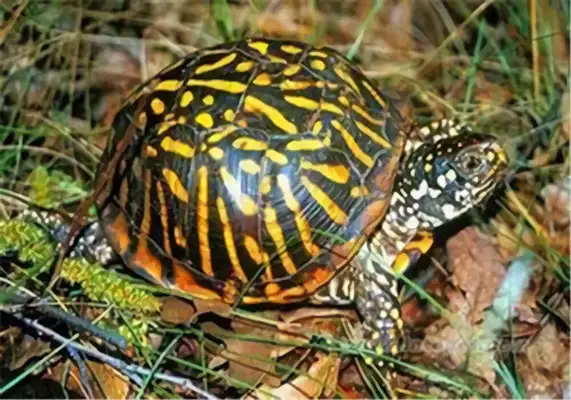
In the biological classification, northern turtles belong to the animal community, tortoises, and tortoise species, distributed in the United States and Mexico. The northern turtles live in the desert and belong to the land turtles, so it is a turtle with a very strong water storage capacity and a strong ability to withstand drought.
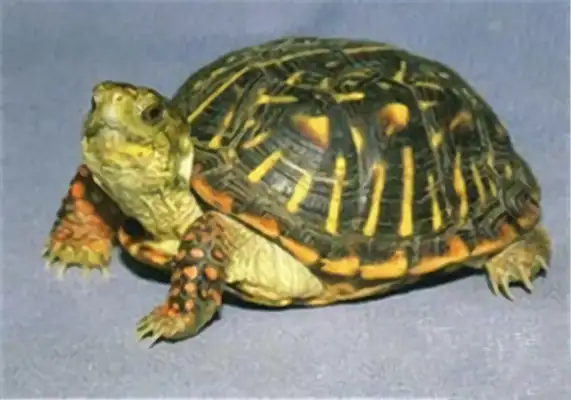
The maximum acetal length is 16 centimeters, the vertebrae is non-done, the first cobra is in a triangle or elliptical shape, and the abdominal artery is at the edge or lower of the 6th cobra. Two sub-species. North and South. There are fewer yellow stripes on the back of the northern trunk turtles and they are darker in colour. In the arid savannah between the United States and Mexico, the capacity to withstand drought is much higher than in other cases.
Section name: Zhetoru
Chinese name: Tortoise North
School name: terrapene ornatta
Name: terrapene
Distribution: United States, Mexico
Habitat: turtles
Eating: Insect eating, sometimes eating a little fruit and vegetables.
Lifestyle: Living in forest-free areas covered by grass and leaves, where insects are the staple food. In May and July, two to eight elliptical eggs could fall. The north box turtle.
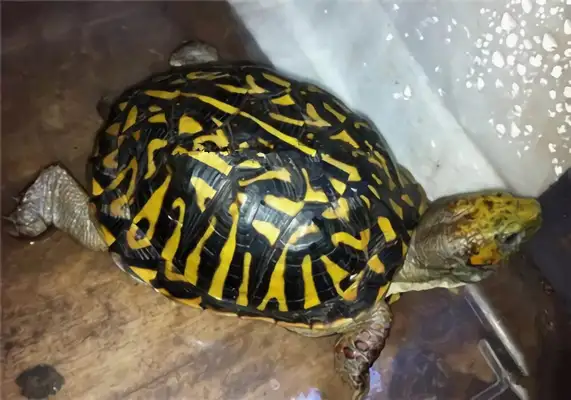
The northern turtle is a turtle under the box turtle. Living mainly in North America, in 1986 it became a state reptile in Kansas. It is a protected and endangered species, and the difference between northern and southern turtles is that the northern turtles have a slightly deeper backnail color and have a smaller distribution of flowers.
The maximum acetal length is 16 centimeters, the vertebrae is non-done, the first cobra is in a triangle or elliptical shape, and the abdominal artery is at the edge or lower of the 6th cobra. Two sub-species. North and South. There are fewer yellow stripes on the back of the northern trunk turtles and they are darker in colour.
In central America, the eastern part of Indiana goes to Texas and Louisiana. Within this range, they prefer irrigated areas and sands that can be drilled in at night. The body is 5.5 inches (14 cm) long, with four claws on each of the back feet. There are bright radiation marks on the brown-coloured back of the vest. Compared to other box turtles, the top of the trunk tortex is not so round and has yellow marks on its face and front limbs. Tortoises are the most drought-resistant turtles, as are pet turtles, which are quite common in the same way as tritoe turtles. They can be openly marketed in United States pet stores, with a significant number of trunk turtles on the market each year. Unfortunately, they tend to be difficult to adapt to an artificial environment and thus to raise. The north box turtle.
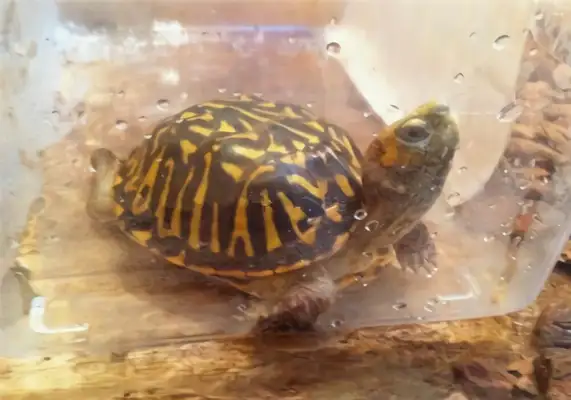
In the conservation of the northern trunk turtles, we should know that, although the turtles in the wild are drought-resistant, the absence of water-free environments, especially the control of moisture, should be noted in the human-rearing process.
The northern tank turtles have this name because of their ability to close their abdomen tightly and form a strong “box” against predators. This evidence of effective protection can be confirmed on the shell of the northern trunk turtle. Many of the northern turtle shells caught in the wild had bite marks and claw marks on them. After several unsuccessful attempts, many predators threw away their northern trunk turtles in search of other, more vulnerable foods. When the danger was defused, the northern turtle opened up its shell and returned to its condition.
But young northern turtles cannot use this defence. It takes two to six years for the northern trunk turtle abdomen to mature. The larvae of the northern trunk turtles are timid and usually live in hiding near the pond.
The subgenerous species of the northern turtle have long been raised as pets and are still very popular. Environmental factors are important in farming. Properly raised, they quickly lift their guard and fall in love with this lifestyle. The northern trunk turtle is a suitable breed for both new and old birds. The north box turtle.
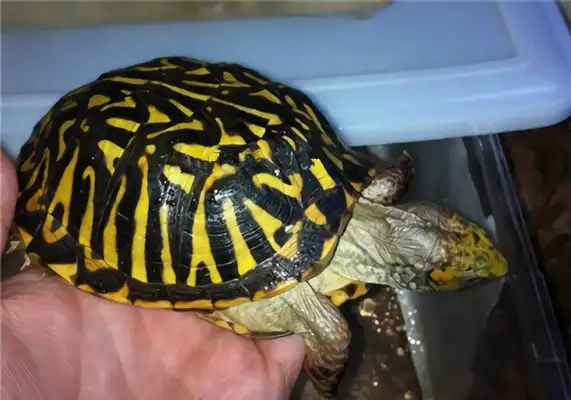
The environmental requirements of the northern turtles are not high, but it is difficult to manage the temperature in the case of outdoor farming. Northern turtles prefer a relatively dry environment, with relatively high temperatures, sunburning and excavating.
I. Indoor breeding environment
Indoor breeding is appropriate for young children, for pathogens, for injured individuals. Owing to the preference of the owner, indoor breeding grounds are easily available. All turtles have similar demands on the breeding environment. The only difference is how humid the environment is and how humid the matrix is. To provide a water basin in which the turtle can be fully immersed, but the water cannot be so deep that the tank turtle can drown. All kinds of box turtles spend hours or even days in the water basin. The water in the basin must be kept clean.
As for the substrate, you can use barks (but not cedars or pines), mud, paper towels, sand, smooth river gravel, outdoor carpets, newspapers, moss, dead leaves, etc. The humidity of the environment depends on what you raise. For example, Eastern box turtles are more suitable for high humidity than subspecies in the west.
The size of the breeding site depends on the size, character, number and gender of the turtle. A simple 90-cm x 60-cm box is suitable for several sub-forms. However, a container of this size may contain only one pair or one constituent. If there is more than one adult tortoise in a field, the site should be as large as possible, because during the breeding period, the tortoise will become very effective. A comfortable and safe hideout for turtles must be provided in the rearing containers.
II. Outdoor breeding environment
The availability of outdoors depends on the climate in the area and the type of animal you raise. As in the indoor environment, out-of-house breeding grounds require a food basin, a water basin large enough, and a comfortable shelter. You can decorate with old trees, rocks, etc.
In order to create a more suitable habitat, you must have a full understanding of the habits of your breeds and the climate in your area. If you live in a very hot and dry area (for example, in the southern and western parts of the United States), you must plant your breeding grounds in the shade. Under these climatic conditions, the type of box-breeding that prefers high humidity must be fitted with a water dispenser at the breeding site. The north box turtle.
Often, turtles are easy to eat, but northern turtles are very groceries, and can eat a lot of vegetables and catch insects, which are important for food control when raising northern turtles.
I. Vegetable feed
The reptile feed should be made of various raw materials and its calcium phosphorus ratio should be maintained at around 1:1. Too much phosphorus in food can cause metabolism problems. Dark, multileaf vegetables (e.g. long leaves, mustard), kale and so on are suitable for vegetable feed. It is not recommended because it has little nutritional value. Because of the high levels of herbic acid, spinach can only be fed occasionally, as over-ingestion causes kidney problems.
II. Animal feed
The tortoise can quickly bite to the creeping insects and worms. Insects of all kinds, including cricket, grasshoppers, pink lice, waxworms, red worms, earthworms, larvae, etc., seem to be popular with adults, especially submersibles.
Other animal feeds include fresh small fish, cattle hearts, chicken and internal organs, and high-quality, low-fat dog food.
III. Vitamin and mineral supplementation
This is a subject that has been the subject of much debate and where weekly vitamin and calcium supplements are more appropriate. If your turtles can tan for more than 20 hours a week, there will be no vitamin D3 supplement, and there will be problems with too much. Vitamin D3 helps to absorb calcium, and if your tortoise is indoor, it needs regular replenishment.