Designation: PET1193
English name: River Cooper
Origin: Northeast Mexico to the southeast of the United States.
Vulnerability to disease: decomposition
Life: Overview of doughnut turtle species for about 50 years
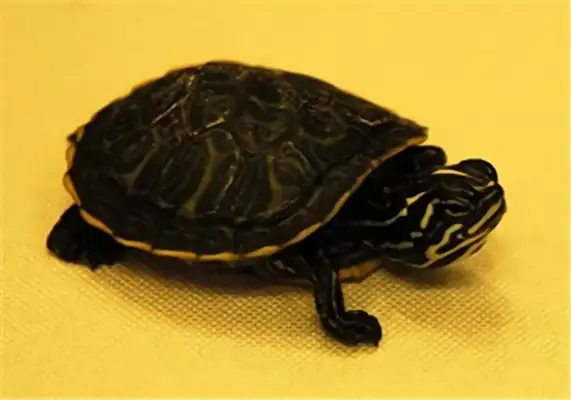
There are many categories of donut turtles, not very different, living in the same area, so the phenomenon of multiplicity is common, making intra-species identification difficult, but it is indeed an easy-to-breed turtle species, and it is common, and it looks gorgeous.
Chinese literary name: Donut turtle
Two words: Pseudemys concinna
English name: River Cooper
Context: Animals
Gate: Pipeline gate
Amen: vertebrate Amen.
Programme: climb
Tortoises.
Subtitles: Curvature turtle
C: Tortoises
Crop: Donut turtles
Distribution: North-East Mexico to South-East United States.
Lifestyle: no fear of cold. Water temperatures above 0°C are natural hibernation, water temperatures about 15°C, and water temperatures of 20°C are predators and fit to live in 25°C water.
Food: In nature, shellfish, crustaceans, fish and algae. Under the conditions of artificial rearing, there is a preference for skinny meat, fish and vegetable leaves.
Characteristic characteristics: sexual and dynamic, non-intrusive.
Reproduction: 1 to 9 eggs per year for the May to July breeding season. The egg has a long diameter of 33-43 mm and a short radius of 22-33 mm.
Identification: There is a high degree of multiplicity among members of donut turtles, which makes it more difficult to distinguish between abdominal and head stripes. Donut turtle morphology
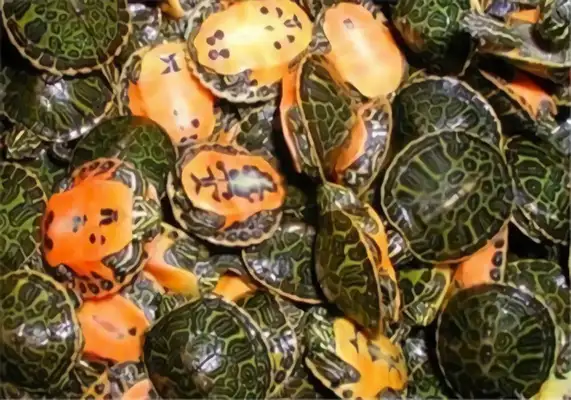
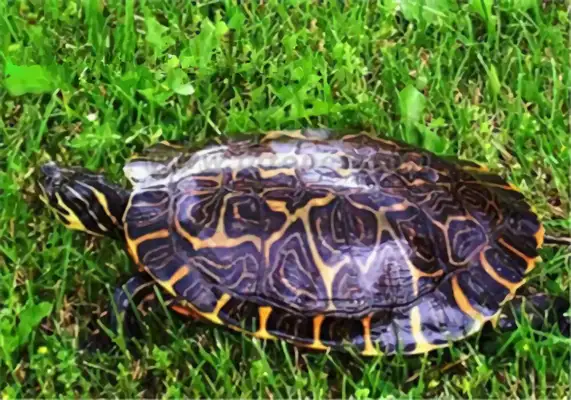
Donut turtles are the larger turtles in the color turtles, with a little similar to Brazilian turtles in their backs, but the pattern is clearly like a donut, and there are some differences between sub-species, some of which are mixed with some other colours that make them look better.
Donut turtles are large freshwater turtles. The vests are rather flat, rather than tall, with brown or olive colours and yellow or creamed stripes, which vary according to the subspecies. There is a characteristic “C” pattern on the second shield. The pattern on the back of an older man's tortoise can become gray and blurred (blacking). There's a lid in the middle of the turtle's back, and it'll disappear when you're grown up.
The wide stripes on the chin of the donut turtles constitute a reverse "Y" word, sometimes with black sides. The abdominal acetal is yellow with at least one large dark pattern in its front. The pattern on the abdominal armour tends to fade after adulthood. Male turtles have more visible tails and may be dimmed in abdomen, while female turtles tend to be larger than male turtles. It is possible to select as many healthy turtles as possible when buying them, which are often better coloured than larger turtles, most raising them for good, and only when they are young can satisfy this element, but the turtles are prone to disease, so be careful. Donut turtle care knowledge
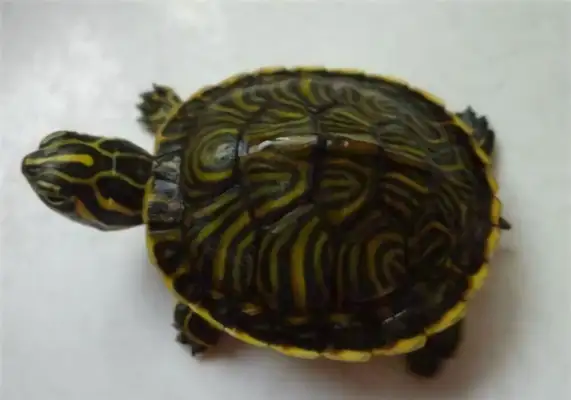
It's easy to feed donut turtles, but the best thing that makes them look like they're all the same. In fact, donut turtles have a lot of sub-species and a lot of hybrids, so we can call them all donut turtles.
Classification of donut turtles
Due to their geographical location in many parts of the south of the United States, the doughnuts are also divided into different types: eastern doughnuts, Florida doughnuts, thin doughnuts, Alabama red belly turtles, Nelson fake turtles, etc. In fact, there are a lot of more subtle names, but those are not sub-species because of distribution. Nor is it visible on the domestic market, and there is no more mention here to avoid confusion.
II. Common species of donut turtles
These are common on the market, one with yellow belly and one with red belly. The yellow belly is the normal eastern donut turtle, also known as the river turtle, and the red belly of Alabama. The nazi turtles are also known as Florida Red belly turtles, and the larvae abdomen are red, but their faces are thicker and can be distinguished from donuts.
iii. Is it hard to feed donut turtles?
It can be said that the turtles of the Tortoise Family are not hard to feed, can generally be used as an entry-level species for water turtles, and at a reasonable price, if you like, can try to buy a little. But it is not the right option to remind you that the turtle is growing fast, so it should soon be less attractive to look at it, and not to throw it away because it is not. Donut turtle living environment
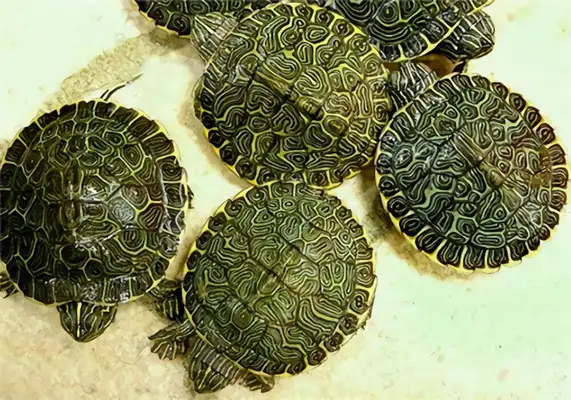
Donut turtles are less environmentally demanding, but in the absence of water quality, young donut turtles are prone to corrosive nails and pneumonia in the event of unsatisfied temperatures. So, what kind of environment is reasonable?
I. Initial environment for new turtles
Buying a new tank and not rushing to put turtles in it should be properly disinfected, with some potassium permanganate disinfected for more than 12 hours, then immersed with water for more than 12 hours to remove bacteria from the tank and some toxic substances, so as to ensure that turtles are not harmed by objective causes. It is then possible to place turtles in their new home with piped water in the sterile tank and drop a few drops of chlorine. Finally, you can put some pets in there to climb sand, create an environment to live in the wild, and at the same time make the whole body more beautiful.
II. TORTURE RESPONSIBILITY
An ideal care setting requires certain minimum elements. Each tortoise should have five litres of water, and the depth should not exceed the length of the tortoise so that the tortoise can reach the ground as it breathes. It is also necessary to make or purchase tanners for them with bricks and stones to allow turtles to tan. The water temperature that a turtle can adapt is about 23-28 degrees Celsius. When it is cold, the air above the container should also be warmed up, and a lamp should be added to the incubator to make it both beautiful. If the water temperature is still too low, heat sticks can be placed in the water and can be adjusted as low as possible. Donut turtles.
The food choices of donut turtles are similar to those of Brazilian turtles, which are easy to feed as they are in colour, and are also rich in food choices, which are generally easy to adapt to humans and like the days when they eat.
Under artificially raised conditions, food can not be carried with thorns or bones to avoid injuries to turtles, preferably by feeding fresh raw meat, hard meat when cooked, and the turtle does not like hard food.
Donut turtles love shrimp. Adult turtles or older donut turtles eat plants such as vegetable leaves, rice and molluscs under conditions of extreme hunger, but are rare. Tortoises eat essentially meat. Donut turtles have no selectivity in feeding time and are fed day and night. Hunger is accompanied by predatory behaviour and a high incidence of eating. Pork is not fit to feed more, otherwise it is prone to leukemia or gastroenteritis. They can also feed small muddocks (infinite care to salvage, otherwise polluting water quality is not conducive to their survival or to their visibility).