Designation: PET4299
English name: Narrow-breasted Snake-necked Turkle
Country of origin: Overview of the species of long-capture snakes, located 170 km north of Persia, Australia
Viper neck turtles inhabit small rivers, wetlands or marshes off the coast, which are highly water-habiting and can penetrate into the bottom mud. It is a fully aquatic turtle, and even hibernation or mating is done in water. The female will only land when she lays eggs. And when drought drys up, they go into the ground until the rainy season. Neckback turtles have community characteristics. Each year in May, eggs are laid, with a capacity of 7-24 eggs per nest, starting to hatch some 180 days later, 11-12. morphological characteristics of a snake's neck
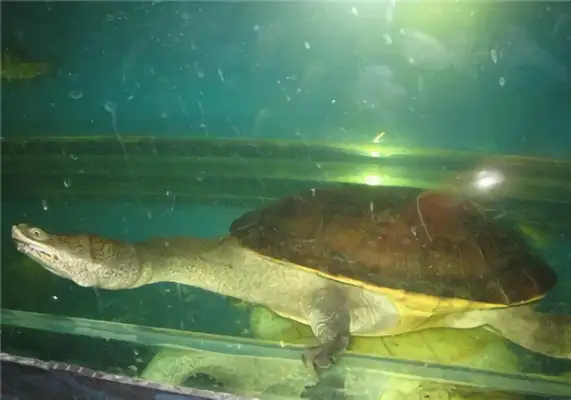
The look of a snake-neck turtle looks amazing, because it's a snake-like tortoise with a long neck, and it feels as a whole like a thin lined body, but with a small number of animals.
I. Looks like snake neck turtles
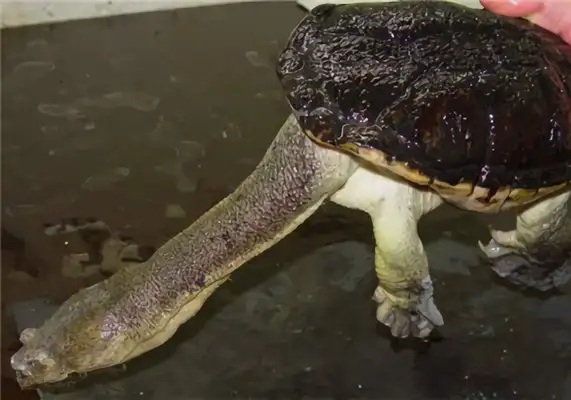
It has a smooth, elliptical back armor and is quite flat, with a slight dimple along its long radius and a long back armour. The back armor is brown, black or dark green. The abdominal armour, the bridge and the edge shield are cream coloured, and deep brown or black stripes follow the seams. Characteristic long necks are almost as long as back armour. When caught, wild snake neck turtles release a smelly liquid from musk glands, which is often not the case for artificially raised individuals.
II. EQUIPMENT OF ENOUGH RANCH HOLDERS
Snake necks, also known as long necks, are born in Australia and are now seen in the market mainly by artificial individuals who are less difficult to raise and who are fully capable of raising.
2. The most important is the miscalculation of the nail, which is particularly prevalent in the neck. High
3. Fish shrimp eats a lot of food. Not necessarily land. Sunshine is not necessary.
4. Neck turtles grow at a fast pace and are large in size, requiring some space for breeding. It's almost easy to feed. Knowledge of the care of snake neck turtles
The search for a spouse began immediately after waking up in hibernation. Their mating and end-of-life rites are somewhat different. The male would approach the female and circle around her repeatedly and then stop and face her face. He would stretch his neck, stare straight at her face and pull his head up and down. During this process, male tortoises and female tortoises are occasionally found. The end was accompanied by a series of high-strength “black” and “creaking” sounds. The living environment of a snake's neck.
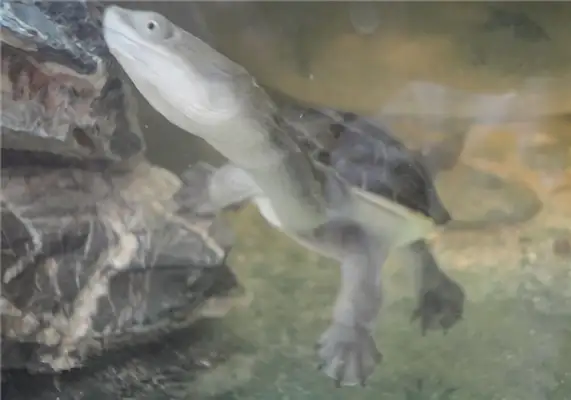
The environmental requirements of long-lived snake neck turtles are high and, as water turtles, long-term living in water can have a great sense of water quality, so it is important not to be stale in the environmental setting, but also to be tanned.
Viper neck turtles can be raised in large aquariums with sunback sites and light. The use of peat beams could be considered and some of them extended to water. There are indications that if the pH of water is kept at a low level, these turtles can be fine around 6.5 and can avoid some common skin problems, while peat or peat can reduce pH. Some feeders add a small amount of tea to reduce pH. In warmer or more mild areas, it would be better to raise snake neck turtles in an outfield with abundant sunlight, ponds and protective vegetation.
The rearing boxes for snake-backback turtles can be set at 70-80 per cent of the total water and 20-30 per cent of the total land area, which is somewhat different from those for flat-backbackbackbackback turtles and tattooed snake-back turtles, which are species that prefer sunbaths onshore and therefore require land provision. On the land side, some large stones, sunken logs or bricks can be chosen as completely water-free land, with a bold addition above the land, with a gill light on the land and with the use of the reptile UV light tube, which, as it climbs up to the land in a sunbath, can give it heat and UVA/B, like nature's sun, although a gill reptile UV light tube is a substitute for sunlight, but is still far from good. What do you mean?
It is difficult to determine the food quality of a snake-backed turtle, but studies have found that he/she prefers foods such as vegan, but in the case of artificial farming, some turtles choose to feed some meat, which is also very effective.
Viper neck turtles are vegan turtles and staple foods of various plants and fruit. Tortoises particularly love watermelon, strawberries and tomatoes. Often they do not like sunbaths, but rather hide under dead wood or leaves, so they do not need strong light or warm light. Most of the time on the shore. Only one third of the water bathing area in the rearing box is sufficient and water is only a few cm deep.
Viper neck turtles are usually food-fed under natural conditions, although they sometimes eat meat in artificial corsets. They are best fed two to three times a week with a variety of fruits (especially tomatoes), vegetables and kale leaves. Tortoises can be fed every fortnight to skin-skinned mice or to fleshed mice, but not to meat. Most turtles and turtles like tomatoes more than any other food, and tomatoes are the best option for those who choose them to eat regularly.
Viper neck turtles in a field living environment feed on plants and animals. Living in shallow water, occasionally climbing over land. By the dry season, they sleep in the pond mud until the rainy season. The larvae that eat large numbers of mosquitoes are very useful animals for people.